This volume encompasses deeply critical dialogues that question how the field of psychology exists within and is shaped by the current neoliberal political context.
A Casebook of Mental Capacity in US Legislation: Assessment and Legal Commentary employs an applied and accessible approach to the assessment of mental capacity.
A Casebook of Mental Capacity in US Legislation: Assessment and Legal Commentary employs an applied and accessible approach to the assessment of mental capacity.
This book exposes the myriad of victims of wrongful conviction by going beyond the innocent person who has been wrongfully incarcerated to include the numerous indirect victims who suffer collaterally.
This book exposes the myriad of victims of wrongful conviction by going beyond the innocent person who has been wrongfully incarcerated to include the numerous indirect victims who suffer collaterally.
#MeToo for Women and Men provides an overview of sexual violence and an accessible guide to the #MeToo movement, presenting a timely look at the evidence from diverse fields.
#MeToo for Women and Men provides an overview of sexual violence and an accessible guide to the #MeToo movement, presenting a timely look at the evidence from diverse fields.
Public Corruption in the United States provides a comprehensive view of public corruption, including discussion on its types, methods, trends, challenges, and overall impact.
Public Corruption in the United States provides a comprehensive view of public corruption, including discussion on its types, methods, trends, challenges, and overall impact.
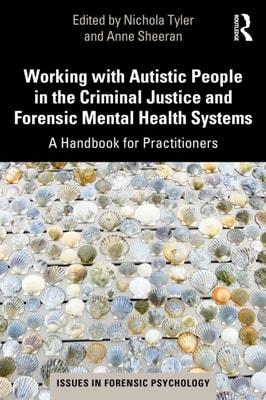
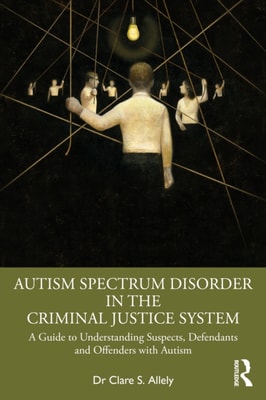
Working with Autistic People in the Criminal Justice and Forensic Mental Health Systems: A Handbook for Practitioners is the first book to focus specifically on best practice for working with autistic people in criminal justice and forensic mental health settings.
Working with Autistic People in the Criminal Justice and Forensic Mental Health Systems: A Handbook for Practitioners is the first book to focus specifically on best practice for working with autistic people in criminal justice and forensic mental health settings.
With contributions from international policing experts, this book is the first of its kind to bring together a broad range of scholarship on translational criminology and policing.
With contributions from international policing experts, this book is the first of its kind to bring together a broad range of scholarship on translational criminology and policing.
A Fresh Look at Fraud features psychologists, criminologists, and computer scientists to address the state-of-the-art research on the rising problem of fraud, scams, and financial abuse, stimulating a cross-disciplinary exchange of ideas, theories, methods, and practices.
A Fresh Look at Fraud features psychologists, criminologists, and computer scientists to address the state-of-the-art research on the rising problem of fraud, scams, and financial abuse, stimulating a cross-disciplinary exchange of ideas, theories, methods, and practices.
The Ethics of Group Psychotherapy provides group psychotherapists with the ethical and legal foundation needed to engage in effective decision-making in their everyday group practices.
The Ethics of Group Psychotherapy provides group psychotherapists with the ethical and legal foundation needed to engage in effective decision-making in their everyday group practices.
Terrorism, Law and Policy: A Comparative Study is a textbook offering a comparative study of the terrorism-related legislation, policy and practice introduced from international governmental bodies such as the UN and the European Union, and individual states, with a focus on Australia, Canada, New Zealand, the UK and the US.
Terrorism, Law and Policy: A Comparative Study is a textbook offering a comparative study of the terrorism-related legislation, policy and practice introduced from international governmental bodies such as the UN and the European Union, and individual states, with a focus on Australia, Canada, New Zealand, the UK and the US.
This book is a practical and thoughtful guide for the forensic interview of children, presenting a synthesis of the empirical and theoretical knowledge necessary to understand the account of child victims of abuse or witnesses of crime.
This book is a practical and thoughtful guide for the forensic interview of children, presenting a synthesis of the empirical and theoretical knowledge necessary to understand the account of child victims of abuse or witnesses of crime.
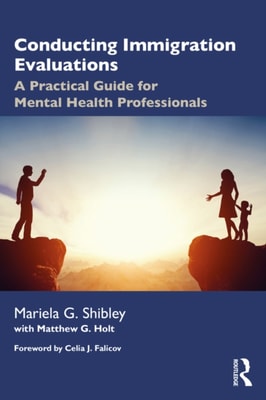
This book prepares mental health professionals to conduct a thorough psychological assessment of individuals involved in immigration proceedings and present the results in a professional report.
This book prepares mental health professionals to conduct a thorough psychological assessment of individuals involved in immigration proceedings and present the results in a professional report.
Based on 30 years of experience as a surgeon working in the field of pediatric colorectal and pelvic reconstructive surgery, author Marc Levitt shares the tips and tricks that he has developed to make operations and patient management easier and reproducible.
Based on 30 years of experience as a surgeon working in the field of pediatric colorectal and pelvic reconstructive surgery, author Marc Levitt shares the tips and tricks that he has developed to make operations and patient management easier and reproducible.
David Houston Jones builds a bridge between practices conventionally understood as forensic, such as crime scene investigation, and the broader field of activity which the forensic now designates, for example in performance and installation art as well as photography.
David Houston Jones builds a bridge between practices conventionally understood as forensic, such as crime scene investigation, and the broader field of activity which the forensic now designates, for example in performance and installation art as well as photography.
Justice for All identifies ten central flaws in the criminal justice system and offers an array of solutions - from status quo to evolution to revolution - to address the inequities and injustices that far too often result in courtrooms across the United States.
Justice for All identifies ten central flaws in the criminal justice system and offers an array of solutions - from status quo to evolution to revolution - to address the inequities and injustices that far too often result in courtrooms across the United States.