This key book in the Basic Texts in Counselling and Psychotherapy series is an authoritative and accessible introduction to psychodynamic counselling and its basic principles.
This book brings together psychoanalysis, clinical and theoretical, with history in a study of remembering as reparation: not compensation, but recognition of the actuality of perpetration and the remorseful urge to rejuvenate whatever represents this damage.
This book depicts how Freud's cocaine and Benjamin's hashish illustrate two critiques of modernity and two messianic emancipations through the pleasures of intoxicating discourse.
This book explores the discipline of psychology through in-depth dialogues with scholars who have lived at the turbulent edges of mainstream psychology in the USA, and who have challenged the most cherished theoretical frameworks.
This book presents a theory of the self whose core principle is that the consciousness of the self is a process of self-representing that runs throughout our life.
The book explores concepts throughout the history of philosophy that suggest the possibility of unconscious thought and lay the foundation for ideas of unconscious thought in modern philosophy and psychoanalysis.
This book digs into the complex archaeology of empathy illuminating controversies, epistemic problems and unanswered questions encapsulated within its cross-disciplinary history.
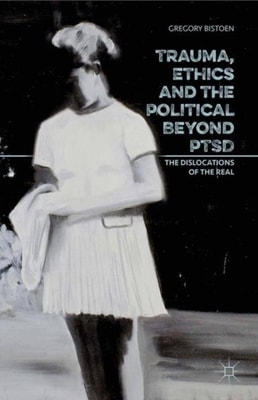
The contemporary psychiatric approach to trauma, encapsulated in the diagnostic category of PTSD, has been criticized for its neglect of the political dimensions involved in the etiology and treatment of trauma.
This book examines the use of myth in contemporary popular and high culture, and proposes that the aporetic subject, the individual that 'does not know', is the ideal contemporary subject.
This book identifies and explores what is missing in therapy practice, namely the 'craft' aspects of skilled psychoanalytic work: how theories and models are actually used in practice, what kind of reasoning is employed in conducting a session, and how interventions are composed and evaluated.
This book draws on recent developments across a range of perspectives including psychoanalysis, narrative studies, social practice theory, posthumanism and trans-species psychology, to establish a radical psychosocial alternative to mainstream understanding of 'environmental problems'.
Current Lacanian ideas on psychosis have much to contribute to the complex and often surprising forms of psychotic symptomatology encountered in clinical practice.
Examining contemporary films, sculptures, and graphic novels influenced by the Gospel of Mark, Hal Taussig and Maia Kotrosits break new ground in ways of understanding traditional religious texts.
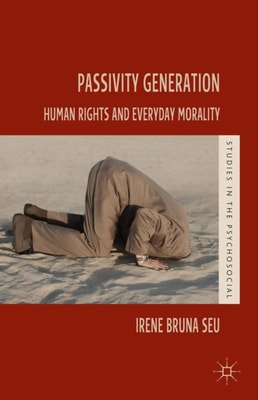
The book applies a unique mix of psychosocial methods to understand the complexity of emotional, cognitive and ideological responses to human rights violations and examines the banal quality of the everyday vocabularies that people use to make sense of human rights and their violations, and justify not intervening.
This book extends the critical scope of the previous volume, De-Medicalizing Misery, into a wider social and political context, developing the critique of the psychiatrization of Western society.
A collection of 18 contributions by well-known scholars in and outside the US, The Unhappy Divorce of Sociology and Psychoanalysis shows how sociology has much to gain from incorporating rather than overlooking or marginalizing psychoanalysis and psychosocial approaches to a wide range of social topics.
An interdisciplinary study of skin bridging cultural and psychoanalytic theory to consider how the body's "exterior" is central to human subjectivity and relations.
Adopting a friendly but critical approach to the talking therapies, this book places psychotherapy in a social and historical context, exploring its relationship to contemporary culture and recommending a different way of thinking about practice.
Sociological explanations of racism tend to concentrate on the structures and dynamics of modern life that facilitate discrimination and hierarchies of inequality.
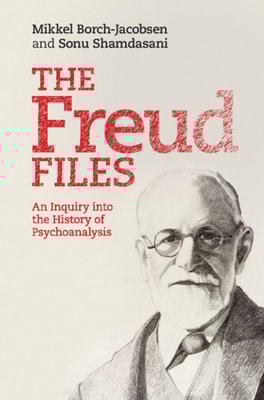
Today, a widening range of historical phenomena are being examined through the psychoanalytic lens, while the psychoanalytic tradition itself is coming in for unprecedented historical scrutiny.
More than a hundred years after its founding, psychoanalysis remains influential and controversial far outside its core sphere of activity in the 'clinic'.
This is the first book in English to explore in detail the genesis and consequences of Lacan's concept of the 'Real', providing readers with an invaluable key to one of the most influential ideas of modern times.
(Post)apartheid Conditions: Psychoanalysis and Social Formation advances a series of psychoanalytic perspectives on contemporary South Africa, exploring key psychosocial topics such as space-identity, social fantasy, the body, whiteness, memory and nostalgia.
Cultures and Identities in Transition returns to the roots of analytical psychology, offering a thematic approach which looks at personal and cultural identities in relation to Jung's own identity and the identities of contemporary Jungians.
Cultures and Identities in Transition returns to the roots of analytical psychology, offering a thematic approach which looks at personal and cultural identities in relation to Jung's own identity and the identities of contemporary Jungians.