Communicating with Vulnerable Patients explores ways to improve the communication process between highly vulnerable patients and the therapist, based on the assumption of the permanent presence of an 'outsider' or potential space in the communication field between them.
Increasingly, therapy practitioners and researchers position themselves within a pluralistic perspective that draws on the value of multiple sources of knowledge.
In The Theorist's Mother one of our subtlest literary theorists turns his attention to traces of the maternal in the lives and works of canonical male critical theorists.
In The Fantasy of Feminist History, Joan Wallach Scott argues that feminist perspectives on history are enriched by psychoanalytic concepts, particularly fantasy.
Pills replaced the couch; neuroscience took the place of talk therapy; and as psychoanalysis faded from the scene, so did the castrating mothers and hysteric spinsters of Freudian theory.
Cultures of the Death Drive is a comprehensive guide to the work of pioneering psychoanalyst Melanie Klein (1882-1960) and to developments in Kleinian theory to date.
Sigmund Freud infamously referred to women's sexuality as a "e;dark continent"e; for psychoanalysis, drawing on colonial explorer Henry Morton Stanley's use of the same phrase to refer to Africa.
Black Venus is a feminist study of the representations of black women in the literary, cultural, and scientific imagination of nineteenth-century France.
In Fair Sex, Savage Dreams Jean Walton examines the work of early feminist psychoanalytic writing to decipher in it the unacknowledged yet foundational role of race.
A pioneering ethnography of psychoanalysis, Illusions of a Future explores the political economy of private therapeutic labor within industrialized medicine.
A timely interdisciplinary study that applies psychoanalysis and the rhetorical tradition of the sublime to examine the cultural aftermath of the Atomic Age Every culture throughout history has obsessed over various "e;end of the world"e; scenarios.
The first book-length rhetorical history and analysis of the insanity defense The insanity defense is considered one of the most controversial, most misunderstood, and least straightforward subjects in the American legal system.
More than a mere overview, the book offers readers a strong grounding in the basic principles of Jung's analytical psychology in addition to illuminating insights.
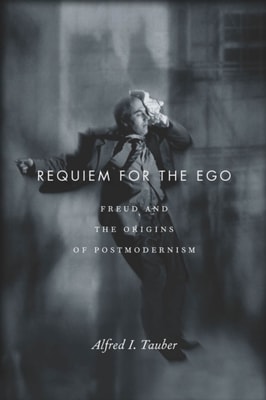
Requiem for the Ego recounts Freud's last great attempt to 'save' the autonomy of the ego, which drew philosophical criticism from the most prominent philosophers of the period-Adorno, Heidegger, and Wittgenstein.
The Time of the Crime interrogates the relationship between time and vision as it emerges in five Italian films from the sixties and seventies: Antonioni's Blow-Up and The Passenger, Bertolucci's The Spider's Stratagem, Cavani's The Night Porter, and Pasolini's Oedipus Rex.
When Freudian sexual theory hit China in the early 20th century, it ran up against competing models of the mind from both Chinese tradition and the new revolutionary culture.
Drawing on her clinical practice and pioneering efforts in workaholism Dr Killinger describes the personality traits and psychological, philosophical, historical, and familial influences that help develop and maintain integrity.
Steinberg focuses on the narcissistic personality, identifying it as intensely self-involved and preoccupied with success and recognition as a substitute for parental love.
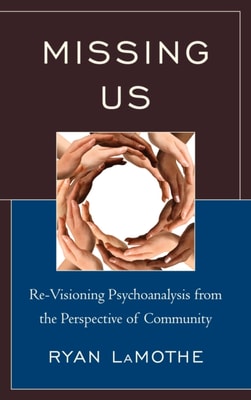
In Missing Us: Re-Visioning Psychoanalysis from the Perspective of Community, Ryan LaMothe questions the ways in which psychoanalytic and psychodynamic theorists and clinicians have historically relied principally on a two-person psychology to understand psychosocial development and practice.
This book presents the unconscious mind as the product of interpersonal interactionin its formation and in its growth and development across the life cycle.
How do we position ourselves, moment by moment, in relation to our patients and how do these positions inform both what we come to know about our patients and how we intervene?
This book is a psychoanalytic detective story that takes the reader back to the late 1890's and to the generally unappreciated, yet single most important, turning point in the history of psychoanalysis.
This book is a lexical ambassador with the dual responsibility of bridging the West and East and enhancing psychoanalytic conceptualization in the course of such an encounter.
The extensive literature about averting ecological disasters, nuclear catastrophe, and unsupportable overpopulation typically describes dangers, analyzes their implications, and presses for remedial action.
Object Relations Theory and Clinical Psychoanalysis is a collection of Kernberg's papers published or presented during the period from 1966 to 1975, with some new material included as well.
Volume one of this comprehensive approach to one of Freud's most important conceptual achievements, the theory of thinking, examines the emergence and changes in his conceptions of primary and secondary process thought in their theoretical and clinical contexts.
The privileged link of psychoanalysis to spoken language does not necessarily facilitate communication among analysts and psychotherapists of different mother tongues.
Loving Psychoanalysis is written by an analyst who loves doing psychoanalysis, and who believes that psychoanalysis is a fundamentally loving endeavor.