The author's lexicon - The Language of Winnicott - has proved to be the definitive comprehensive guide to Winnicott's thought since it was first published in 1996, Winnicott's centenary Year.
If a person is struggling with feeling that involve pain or anxiety, then we find a complex network of difficulties affecting that person's capacity to express what torments him.
This book describes a series of cases where the child's presenting complaint is seen to be the expression of an underlying emotional conflict that the child expects the parents to understand and help him or her to overcome.
Considering that introductory books cannot replace an author's original words,and that Bion' s concepts are often found to be difficult to grasp, Dr Sandler has compiled an unusual style of dictionary.
The Klein-Winnicott Dialectic: Transformative New Metapsychology and Interactive Clinical Theory brings together the theories of Melanie Klein and Donald W.
Throughout the year of 1995, a series of debates took place under the auspices of the Higher Education Network for Research and Information in Psychoanalysis.
Coping with modern technology in the life sciences (biology and medicine) became a major issue for people living in the Twentieth Century, and continues to be so in the present century.
The subject of this book is the study of dreaming from a specific point of view, one that provides useful and enlightening results: the analysis of the complex patterns of links among the memory sources of dreams.
This book attempts to create a dialogue between the infant as revealed by the experimental approach and as clinically reconstructed, in the service of resolving the contradiction between theory and reality.
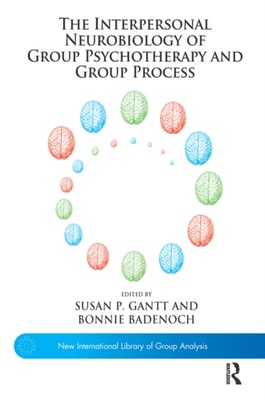
Might it be possible that neuroscience, in particular interpersonal neurobiology, can illuminate the unique ways that group processes collaborate with and enhance the brain's natural developmental and repairing processes?
The book argues the case for the usefulness of an empirically based understanding of the internal world of juvenile sex offenders as a way of humanely relating to their difficulties.
The field of child and adolescent psychotherapy is still relatively young and its short history has resulted in a paucity of mental health services for this neglected group.
Although best known as a disseminator of Freudian and Kleinian ideas, the author also contributed important and original material to the body of psychoanalytic literature.
Examining the assertions and fallacies of the theories conceived (or contrived) by some of today's most brilliant scientists and thinkers (including Dan Ariely, John Barrow, Pascal Boyer, Frank Close, Nicholas Humphrey, Richard Dawkins, Stanley Milgram, Oliver Sacks, and Carl Sagan), the author explores why these varied attempts at joining the world of experience and the world of measurement so regularly fail, how consciousness explained is really a concentrated effort to explain away the subjective phenomena of consciousness.
Centred on the study of sixty-four 6-line figures (The Hexagrams) representing the yin and yang of the ten thousand things under Heaven, The Classic of Changes or I Ching is one of the oldest books in the world.
This book brings together the papers written by the authors over the last fifteen years on the historical and philosophical foundations of Albert Ellis' Rational Psychotherapy (later Rational Emotive Behavior Therapy, REBT) and its relationship to Stoicism, especially the later practical form represented by Epictetus.
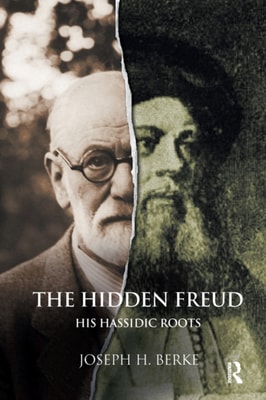
This book explores Sigmund Freud and his Jewish roots and demonstrates the input of the Jewish mystical tradition into Western culture via psychoanalysis.
This remarkable series of introductory lectures on psychoanalysis is, in fact, a lucid, elegant and profound overview of classic psychoanalytic theory, in which the main aspects of psychoanalytic psychology are spelt out.
This book examines the ways in which we make use of the Group Relations model, set up in the experimental field of the Group Relations conferences, to understand and modify the functioning of working groups.
The influence of Andre Green on psychoanalysis has been immeasurable - his theoretical, clinical and cultural contributions have identified him as one of the most important psychoanalytic thinkers of our times.
The God of the Left Hemisphere explores the remarkable connections between the activities and functions of the human brain that writer William Blake termed 'Urizen' and the powerful complex of rationalising and ordering processes which modern neuroscience identifies as 'left hemisphere' brain activity.
This book bears witness to the author's psychoanalytic journey from the years 1994-1995 to the present, and as such is a completion and a continuation of his previous Psychoanalysis as a Journey of 1999.
This book is a collection of "e;stories"e;, and just as the Stories of the Dreaming act as a container of experiences for the indigenous people, it attempts to be a container for experiences that had not had enough exposure in psychoanalytic literature.
This book presents the theories and observations of each major contributor to the discussion of psychoanalytic technique and reveals the particular advantages and disadvantages which fall to the various theoretical positions and orientations adopted by each contributor.
This study consists of a twofold, interrelated enquiry: the Orientalism of psychoanalysis and the psychoanalysis of Orientalism - bringing into conversation Sigmund Freud and Edward Said and, thereby, the founding texts of psychoanalysis and postcolonial studies.
This is a new translation of the classic 1932 Dictionary by the author, for which Freud wrote a Preface praising the "e;precision and correctness"e; of the author's work and calling it a "e;fine achievement"e;.
This book examines some of the oldest preserved texts on dreams, such as Artemidorus' Oneirocritica, Sigmund Freud's favourite ancient dream theorist, and dream books by Aristotle, the grandfather of modern dream theory.
This book gathers together a number of cutting edge contributions about the female body, inside and out, from a large group of psychoanalysts who are at the forefront of new thinking about issues of femininity, the female body, sex and gender.
This book examines the so-called War on Obesity as an example of a cultural complex, how that complex shapes the way fat is treated in psychotherapy, including the classical Jungian approach to fat, as written by Marion Woodman.
This reissued classic contains material specifically related to work with schools and reflects the major changes in society, in legislation and in the interaction between families and the education system.
This book, concerned with psychoanalytic conceptualisations, helps to lay the foundation for a biologically and evolutionarily sensible model of human social behaviour and personality, and also helps to bridge the gap between psychoanalysis and neuroscience.