Originally published in 1988, this book outlines a new evolutionary paradigm for understanding human society and mental structure, originating from the editor's work in primate ethology.
Originally published in 1988, this book outlines a new evolutionary paradigm for understanding human society and mental structure, originating from the editor's work in primate ethology.
Originally published in 1983, this clear-sighted study built an understanding of what human behaviour meant at the time: an understanding which can still be of practical use for those who work with people in their everyday lives today.
Originally published in 1983, this clear-sighted study built an understanding of what human behaviour meant at the time: an understanding which can still be of practical use for those who work with people in their everyday lives today.
Although widely taught to undergraduates, teachers, managers and adult students, practical work and demonstrations in social psychology were often found very difficult to carry out satisfactorily.
Although widely taught to undergraduates, teachers, managers and adult students, practical work and demonstrations in social psychology were often found very difficult to carry out satisfactorily.
The relationship between the cognitive and social spheres of human functioning and their context has long been regarded by social and behavioural scientists as a central theoretical issue.
The relationship between the cognitive and social spheres of human functioning and their context has long been regarded by social and behavioural scientists as a central theoretical issue.
This book explores the psychological trauma affecting soldiers and civilians who have encountered the violence of war or terrorism, arguing that the enigmas surrounding war trauma are rooted in culture, collective memory and social norms.
This book explores the psychological trauma affecting soldiers and civilians who have encountered the violence of war or terrorism, arguing that the enigmas surrounding war trauma are rooted in culture, collective memory and social norms.
Work organizations are a major site of gender politics for professional women and men, and although there are more women in senior positions than ever before, these increased opportunities have not been gained without psychological consequences.
Work organizations are a major site of gender politics for professional women and men, and although there are more women in senior positions than ever before, these increased opportunities have not been gained without psychological consequences.
The idea of comparing rewards with others has a long and persistent presence in the social sciences, and can be found in many psychological, social and managerial theories.
The idea of comparing rewards with others has a long and persistent presence in the social sciences, and can be found in many psychological, social and managerial theories.
Social psychology remains unbalanced as long as we study human behaviour exclusively 'from the outside', leaving out of account people's own reasons for acting as they do.
Social psychology remains unbalanced as long as we study human behaviour exclusively 'from the outside', leaving out of account people's own reasons for acting as they do.
On its first publication in 1908 this pioneer book received immediate acclaim and was thought to have probably done more than any other single publication to stimulate study of the foundations of social behaviour.
On its first publication in 1908 this pioneer book received immediate acclaim and was thought to have probably done more than any other single publication to stimulate study of the foundations of social behaviour.
Popular interest in body image issues has grown dramatically in recent years, due to an emphasis on individual responsibility and self-determination in contemporary society as well as the seemingly limitless capacities of modern medicine; however body image as a separate field of academic inquiry is still relatively young.
Popular interest in body image issues has grown dramatically in recent years, due to an emphasis on individual responsibility and self-determination in contemporary society as well as the seemingly limitless capacities of modern medicine; however body image as a separate field of academic inquiry is still relatively young.
From the Preface: 'In these few lectures delivered in the University of London (May 1935) I have returned to the always interesting, but generally quite futile, task of criticizing the teachings of Professor Sigmund Freud and his school.
From the Preface: 'In these few lectures delivered in the University of London (May 1935) I have returned to the always interesting, but generally quite futile, task of criticizing the teachings of Professor Sigmund Freud and his school.
In the early 1980s we witnessed the birth of one of the most complex and perplexing social problems faced by modern society: the epidemic of infection with human immunodeficiency virus (HIV), which causes acquired immunodeficiency syndrome (AIDS).
In the early 1980s we witnessed the birth of one of the most complex and perplexing social problems faced by modern society: the epidemic of infection with human immunodeficiency virus (HIV), which causes acquired immunodeficiency syndrome (AIDS).
Age, Gender and Sexuality through the Life Course argues that the gendered structure of temporality (defined in the dual sense of everyday time as well as age and stage of life) is a key factor underpinning the stalling of the gender revolution.
Originally published in 1977, the aim of this volume was to demonstrate in a concrete way the relevance of some of the most important individual variables for various domains of social behaviour.
Originally published in 1977, the aim of this volume was to demonstrate in a concrete way the relevance of some of the most important individual variables for various domains of social behaviour.
Combining the efforts of sociologists and psychologists, this work, originally published in 1952 and revised in 1966, embraces these two disciplines to show how social-psychological problems must be viewed in individual as well as general terms.
Combining the efforts of sociologists and psychologists, this work, originally published in 1952 and revised in 1966, embraces these two disciplines to show how social-psychological problems must be viewed in individual as well as general terms.
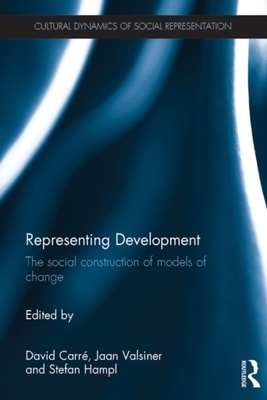
Representing Development presents the different social representations that have formed the idea of development in Western thinking over the past three centuries.