This timely, insightful, and data-led book fills a gap in gang scholarship by examining gangs in rural areas, specifically focusing on youth gang activity.
This book draws on an in-depth ethnographic study to explore the meanings and consequences of race and ethnicity in daily life within two Finnish male prisons.
This book draws on an in-depth ethnographic study to explore the meanings and consequences of race and ethnicity in daily life within two Finnish male prisons.
This innovative work tells the story of a unique partnership between a state prison administration and a team of incarcerated women, prison administrators, researchers, artists, and students known as The WoW Collective due to their joint efforts in developing a peer mentoring program called "e;Women's Words/Women's Worlds (WoW).
This authoritative, balanced, and accessible reference resource provides readers with a wide-ranging survey of capital punishment in America, including its history, its legal and cultural foundations, and racial and economic factors in its application.
Offering a lively, international, and interdisciplinary introduction to research on arts programmes in prisons, Arts in Criminal Justice and Corrections is the first volume to bring together leading figures from the USA, the UK, Australia, New Zealand, and Belgium to explore key methodological approaches and issues through the lens of the researchers themselves.
How does someone come to live a life of activism, supporting the fight to abolish the death penalty in the US; to defend Indigenous peoples' rights in the US, Central and South America; and to free prisoners of conscience in South Korea, Indonesia, Chile, Sudan, and South Africa?
Finalist: PROSE Awards 2025 - Education Theory and PracticeWritten by activists and scholars based in Australia, Kenya, Pakistan, New Zealand, South Africa, Uganda and the USA, The Bloomsbury Handbook of Prison Education offers the first global state-of-the-field overview of research into educational practices and programs in prisons.
Beyond Courts is a collection of resources created for organizers, advocates and community members working together to build the organizing-power we need to defund, divest, and ultimately to dismantle criminal courts for good.
This book contributes to and broadens the field of Border Criminology, by bringing together a collection of chapters from leading scholars engaged in cross-national and comparative conversations on bordered penality and crimmigration practices, with a specific focus on research conducted in places that may be considered peripheral and semi-peripheral jurisdictions.
People in prison are usually (and often exclusively) seen and approached as persons who have committed one or more crimes and who have to pay their debt to society.
People in prison are usually (and often exclusively) seen and approached as persons who have committed one or more crimes and who have to pay their debt to society.
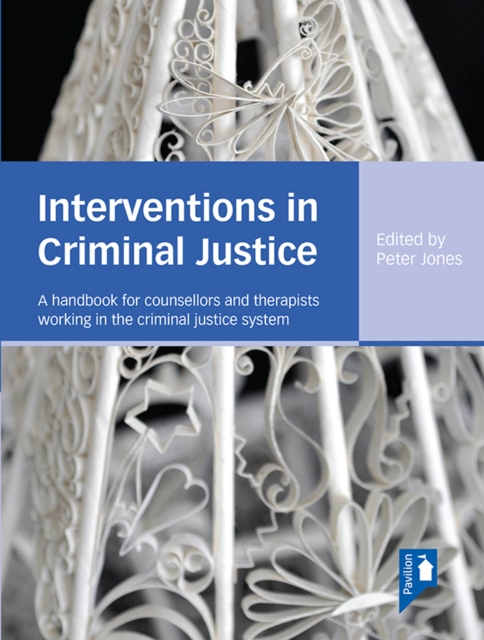
A handbook for counsellors and therapists working in the criminal justice system is an exciting second edition of Interventions in Criminal Justice and is a response to therapy in the criminal justice setting and addresses additional contemporary issues and challenges faced by counsellors and therapists working in the criminal justice system.
Letters for the Ages Behind Bars is a history of imprisonment told through the letters of people incarcerated over many centuries, for crimes committed or sometimes even for no reason at all.
Letters for the Ages Behind Bars is a history of imprisonment told through the letters of people incarcerated over many centuries, for crimes committed or sometimes even for no reason at all.
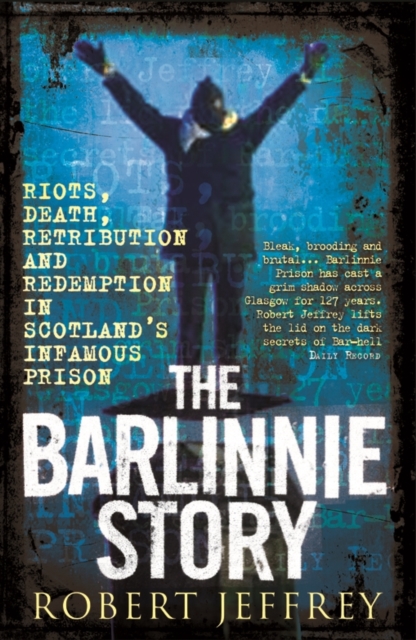
Barlinnie is one of the most notorious prisons in the world and for a hundred years it has held Glasgow's toughest and most violent men, swept up from the city streets.
This exciting new book brings together the experiences and expertise of a range of practitioners who work within criminal justice and provides a broad and informative account of a variety of intervention techniques.
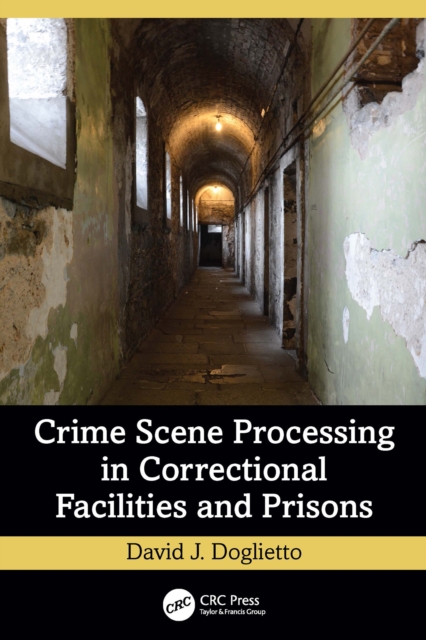
Crime scenes within correctional facilities present investigators with myriad challenges, not only in working, investigating, and collecting evidence but also in obtaining reliable eyewitness accounts.
Key Contested Issues in Criminology and Criminal Justice addresses the key issues within criminology and criminal justice that are strongly contested among scholars in the field.
This exciting new book brings together the experiences and expertise of a range of practitioners who work within criminal justice and provides a broad and informative account of a variety of intervention techniques.
Through different legal and criminological angles and perspectives, this book addresses the controversial question of whether prisoners should have the right to vote, as well as the optimal modalities for such a vote.
Through different legal and criminological angles and perspectives, this book addresses the controversial question of whether prisoners should have the right to vote, as well as the optimal modalities for such a vote.
This book moves beyond rehabilitative strategies in corrections to engage a more holistic understanding of the communal experiences behind prison walls.
This book explores how the themes and insights of official Catholic Social Teaching (CST) and broader Catholic social thought might illuminate, and be illuminated by, a deeper engagement with the context of prisons.
This book explores how the themes and insights of official Catholic Social Teaching (CST) and broader Catholic social thought might illuminate, and be illuminated by, a deeper engagement with the context of prisons.
Increasing concerns about the accountability of criminal justice professionals at all levels has placed a heightened focus on the behavior of those who work in the system.
It is imperative that educators, parents, and potential victims be aware of sexual predators, the danger they pose in our society, and the resources available to help prevent this growing epidemic.
Millions in our nation are under some type of judicial sanction, with some individuals behind bars but the majority serving their sentences while living and working among us.
"KRIEGER DES EXILS - PATRIA NOSTRA IN DER FRANZÖSISCHEN FREMDENLEGION" – Tauchen Sie ein in eine Welt voller Abenteuerlust, Opferbereitschaft und Geschichten von mutigen Männern, die den Ruf zum Abenteuer beantworteten.
A pioneering history of medical care in Stalin's Gulag-showing how doctors and nurses cared for inmates in appalling conditions A byword for injustice, suffering, and mass mortality, the Gulag exploited prisoners, compelling them to work harder for better rations in shocking conditions.
Higher Education and the Carceral State: Transforming Together explores the diversity of ways in which university faculty and students are intervening in the system of mass incarceration through the development of transformative arts and educational programs for students in correctional institutions.
This edited collection articulates a future direction for research at the nexus of criminology and human rights by bringing together experts from different branches of criminology and criminal justice who, while they may be sceptical about certain aspects of human rights theory or practice, share an interest in realising many of the objectives set out in human rights instruments.
On a cold, damp January night in 1961, 19-year-old Pearl Gamble made the final goodbye to her Mother an set off excitedly with two friends to the local dance.