This volume explores the role played by conspiracy narratives in the contemporary Italian political, cultural, and social context, through a series of case studies.
From Yale professor and bestselling author of How Fascism Works, a searing confrontation with the authoritarian right's attacks to undo a century of work to advance social justice action on race, gender, sexuality and class.
Computational Thinking erfährt vor dem Hintergrund des technologischen Fortschrittes und der zunehmenden Automatisierung von Prozessen durch Algorithmen eine steigende Relevanz.
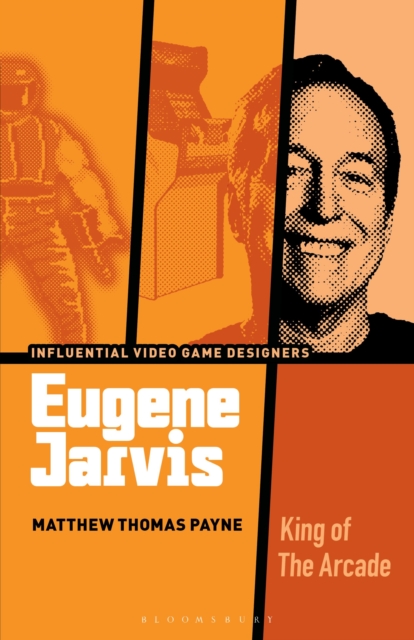
This book explores the influential work of Eugene Jarvis, designer of the wildly-successful arcade games Defender, Robotron: 2084, NARC, Smash TV, and Cruis'n USA, among others.
In Pop & Postfeminism, Nathalie Weidhase conceptualises the female dandy as a figure that simultaneously embodies and disrupts postfeminist notions of femininity, including maintaining a physique conforming to contemporary beauty standards, constant self-surveillance and self-improvement, and the naturalisation of gender difference and heterosexuality.
This book contains the proceedings of the International Conference on Public Relations and Media Communication (PRMC 2024) which explore the dynamic intersections of public relations and media in today's rapidly evolving landscape.
Corona as a staged instrument of oppression, secretly kept vaccination deaths or politicians drinking children's blood: at the latest since the outbreak of the Covid 19 pandemic, conspiracy ideologies are booming and harm social peace and democratic will formation through their dogmatism.
This book examines how sociopolitical and intercultural ideologies surrounding globalisation and neoliberalism are constructed and negotiated in travel documentaries, focusing on the role of the BBC in reproducing neo-imperialistic and neoliberal values.
Human Rights, Impunity and Anti-Press Violence is a qualitative, comparative and interdisciplinary exploration of journalists' responses to impunity for anti-press violence in two Latin American partial democracies, Mexico and Honduras.
Das vorliegende Buch Der Mensch, das Spiel und der Zufall bietet eine historisch-systematische Analyse des Gewinnspiels und seines ewigen Reizes für uns Menschen.
The second in a two-volume series that explores the interplay between social transformation and visual culture in contemporary China, this book examines the profound changes in the cityscapes, visual regimes, and visual technologies that shape the aestheticization of everyday life.
This book illustrates how young people engage with pop culture-music, TV, films, fashion, dance, video games, memes, and digital content in its many forms-and outlines lessons that support them in engaging more actively, critically, and strategically.
Das vorliegende Buch Der Mensch, das Spiel und der Zufall bietet eine historisch-systematische Analyse des Gewinnspiels und seines ewigen Reizes für uns Menschen.
Recent debates regarding abortion law in the US, China, and many EU countries, the rise of far-right politics, and conservatist and extremist movements indicate elevated threats for women rights and the LGBTQ community in a global context.
In the book, Yousry Al -Fakhrani narrates some of our contemporary social life crises, and we did not drown in these sorrows and depression, when we abandoned "simple details".
This innovative collection makes the case for a push within the discipline to adopt user-centric perspectives on translated video games and their corresponding accessibility features.
Die Perfektion digitaler Technologien hat uns eine makellose Welt versprochen – doch gerade im Fehlerhaften finden wir eine überraschende Quelle für Kreativität und Inspiration.
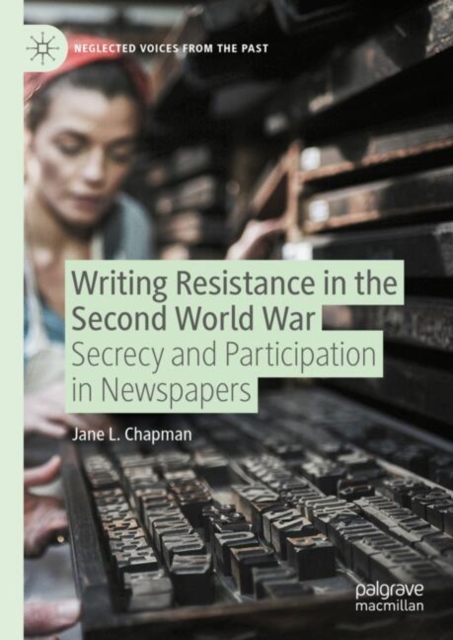
This book aims to extend existing historical, literary and media knowledge of neglected written voices as a form of print participation in the Second World War.
An accessible and exciting new textbook that provides students with an in-depth historical and conceptual understanding of the nature and function of media in society.
This book examines how compression can be understood not only as a digital process enacted through computing, but as a wider economic and political phenomenon that impacts on the ecology of waste, diversity and social inclusivity.
This book explores how social and mobile media have been used in political campaigns since 2008, examining how social media are already being implemented as well as how these types of messaging platforms might be used in the future.
This book examines how British politicians, national and local newspapers, writers and commentators discussed the mass killing and deportation of Armenians during the period 1915-1923.
This book investigates the politics of language in Hong Kong from a multidisciplinary perspective, showcasing original studies on language use in protest movements, written Cantonese, language attitudes, literary creation, mass media, and popular music.