Peruvian author Ricardo Palma (1838-1919) was one of the most popular and imitated writers in Latin America during the late nineteenth and early twentieth centuries.
The story of Noah's flood is one of the best-loved and most often retold biblical tales, the inspiration for numerous children's books and toys, novels, and even films.
Drawn from Oxford''s acclaimed International Encyclopedia of Communications, published jointly with the Annenberg School of Communications at the University of Pennsylvania, Folklore, Cultural Performances, and Popular Entertainments offers all the articles on folklore and drama as well as related articles on verbal and non-verbal communication, music, and history.
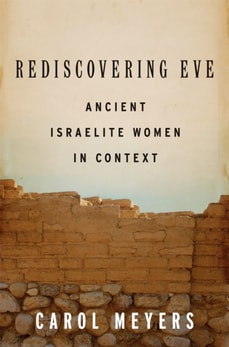
This groundbreaking study looks beyond biblical texts, which have had a powerful influence over our views of women's roles and worth, in order to reconstruct the typical everyday lives of women in ancient Israel.
Drawn from Oxford''s acclaimed International Encyclopedia of Communications, published jointly with the Annenberg School of Communications at the University of Pennsylvania, Folklore, Cultural Performances, and Popular Entertainments offers all the articles on folklore and drama as well as related articles on verbal and non-verbal communication, music, and history.
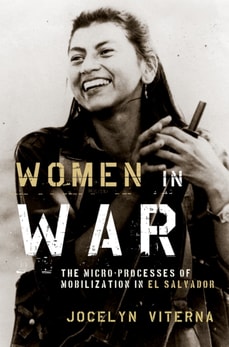
Waging war has historically been an almost exclusively male endeavor, yet over the past several decades women have joined insurgent armies in significant and surprising numbers.
The first comprehensive, fully documented biography of the most important woman suffragist and feminist reformer in nineteenth-century America, In Her Own Right restores Elizabeth Cady Stanton to her true place in history.
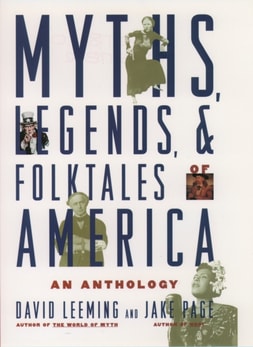
In this marvelous collection, David Leeming and Jake Page have gathered together the great myths and legends of America, ranging from the creation stories of the first inhabitants, to the tall-tales of the Western frontier, to the legendary outlaws of the 1920s.
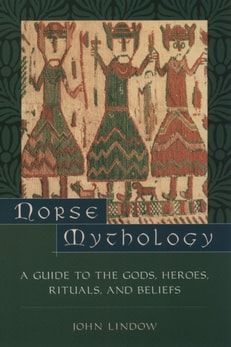
Norse Mythology explores the magical myths and legends of Norway, Sweden, Denmark, Iceland and Viking-Age Greenland and outlines the way the prehistoric tales and beliefs from these regions that have remained embedded in the imagination of the world.
In The Victimization of Women, Michelle Meloy and Susan Miller present a balanced and comprehensive summary of the most significant research on the victimizations, violence, and victim politics that disproportionately affect women.
In The Victimization of Women, Michelle Meloy and Susan Miller present a balanced and comprehensive summary of the most significant research on the victimizations, violence, and victim politics that disproportionately affect women.
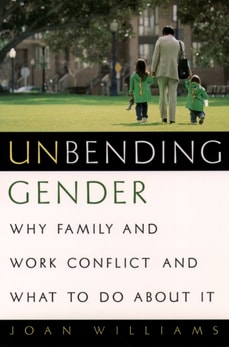
In the contentious debate about women and work, conventional wisdom holds that middle-class women can decide if they work, while working-class women need to work.
When the noted political philosopher Iris Marion Young died in 2006, her death was mourned as the passing of "e;one of the most important political philosophers of the past quarter-century"e; (Cass Sunstein) and as an important and innovative thinker working at the conjunction of a number of important topics: global justice; democracy and difference; continental political theory; ethics and international affairs; and gender, race and public policy.
In Leaves from the Garden of Eden, Howard Schwartz, a three-time winner of the National Jewish Book Award, has gathered together one hundred of the most astonishing and luminous stories from Jewish folk tradition.
The first comprehensive, fully documented biography of the most important woman suffragist and feminist reformer in nineteenth-century America, In Her Own Right restores Elizabeth Cady Stanton to her true place in history.
Recognized as a turning point in Brazilian literature, this entertaining novel of urban manners follows the ne'er-do-well Leonardo through his various romantic liaisons and frequent scrapes with the law.
In a quiet town of Seneca Falls, New York, over the course of two days in July, 1848, a small group of women and men, led by Elizabeth Cady Stanton and Lucretia Mott, held a convention that would launch the woman's rights movement and change the course of history.
Hailed as "e;a feast"e; (Washington Post) and "e;a modern-day bestiary"e; (The New Yorker), Stephen Asma's On Monsters is a wide-ranging cultural and conceptual history of monsters--how they have evolved over time, what functions they have served for us, and what shapes they are likely to take in the future.
Exploring classic works such as the Song of Songs, the Tao Te Ching, the Rg Veda, the New Testament, and the Indonesian myth of Hainuwele, Myth: A Biography of Belief reveals the cultural energies that ancient "e;mythmakers"e; sought to corral in their creations.
Bart Ehrman, author of the highly popular Truth and Fiction in The Da Vinci Code and Lost Christianities, here takes readers on another engaging tour of the early Christian church, illuminating the lives of three of Jesus' most intriguing followers: Simon Peter, Paul of Tarsus, and Mary Magdalene.
Bart Ehrman, author of the highly popular Truth and Fiction in The Da Vinci Code and Lost Christianities, here takes readers on another engaging tour of the early Christian church, illuminating the lives of three of Jesus' most intriguing followers: Simon Peter, Paul of Tarsus, and Mary Magdalene.
The story of Noah's flood is one of the best-loved and most often retold biblical tales, the inspiration for numerous children's books and toys, novels, and even films.
In this marvelous collection, David Leeming and Jake Page have gathered together the great myths and legends of America, ranging from the creation stories of the first inhabitants, to the tall-tales of the Western frontier, to the legendary outlaws of the 1920s.
In 1865, The Christian Recorder, the national newspaper of the African Methodist Episcopal Church, serialized The Curse of Caste; or The Slave Bride, a novel written by Mrs.
Peruvian author Ricardo Palma (1838-1919) was one of the most popular and imitated writers in Latin America during the late nineteenth and early twentieth centuries.
Hailed as "e;a feast"e; (Washington Post) and "e;a modern-day bestiary"e; (The New Yorker), Stephen Asma's On Monsters is a wide-ranging cultural and conceptual history of monsters--how they have evolved over time, what functions they have served for us, and what shapes they are likely to take in the future.
Minos and the Moderns considers three mythological complexes that enjoyed a unique surge of interest in early twentieth-century European art and literature: Europa and the bull, the minotaur and the labyrinth, and Daedalus and Icarus.