Ideal for students taking law modules on construction, surveying, real estate, planning and civil engineering courses, Galbraith's Construction and Land Management Law for Students is an excellent overview of the key legal issues in the built environment.
Ideal for students taking law modules on construction, surveying, real estate, planning and civil engineering courses, Galbraith's Construction and Land Management Law for Students is an excellent overview of the key legal issues in the built environment.
Everyday Life in the Old City of Jerusalem: Historical Transformations and Biographical Emplacements offers an intimate, ground-level exploration of everyday life in one of the world's most contested and symbolically charged urban spaces.
Everyday Life in the Old City of Jerusalem: Historical Transformations and Biographical Emplacements offers an intimate, ground-level exploration of everyday life in one of the world's most contested and symbolically charged urban spaces.
Spatial Justice: The Basics offers a concise and accessible introduction to spatial justice as both a theoretical framework and a practical agenda for urban transformation.
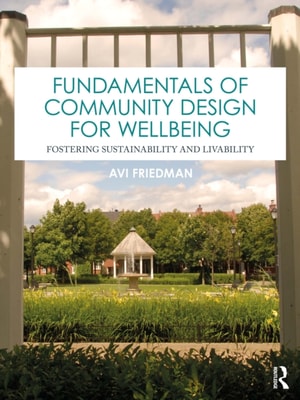
Fundamentals of Community Design for Wellbeing addresses the need to rethink the philosophy and form of residential environments due to recent social, economic, environmental, and cultural shifts, including depletion of non-renewable resources, elevated levels of greenhouse gas emissions, and climate change.
Spatial Justice: The Basics offers a concise and accessible introduction to spatial justice as both a theoretical framework and a practical agenda for urban transformation.
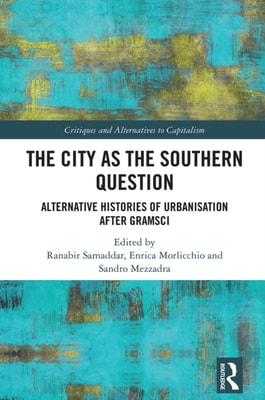
This innovative edited volume places global urbanism in the context of the phenomenal growth of cities of the South, investigating their colonial contentiousness and asking how their history plays out in the twenty-first-century phenomenon of urbanisation.
This innovative edited volume places global urbanism in the context of the phenomenal growth of cities of the South, investigating their colonial contentiousness and asking how their history plays out in the twenty-first-century phenomenon of urbanisation.
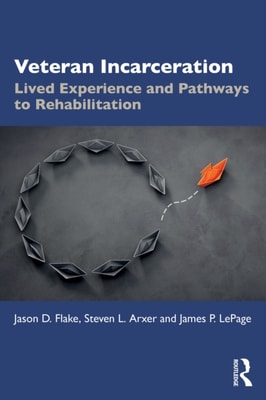
Through qualitative interviews with formerly incarcerated veterans, this book focuses on the lived experiences, and behaviors associated with the incarceration of veterans.
Fundamentals of Community Design for Wellbeing addresses the need to rethink the philosophy and form of residential environments due to recent social, economic, environmental, and cultural shifts, including depletion of non-renewable resources, elevated levels of greenhouse gas emissions, and climate change.
Arab Modernism(s) is an exploration of how the Arab world encountered modernism - sometimes inadvertently, sometimes deliberately - and how those encounters continue to shape the built environment of its cities today.
Through qualitative interviews with formerly incarcerated veterans, this book focuses on the lived experiences, and behaviors associated with the incarceration of veterans.
Arab Modernism(s) is an exploration of how the Arab world encountered modernism - sometimes inadvertently, sometimes deliberately - and how those encounters continue to shape the built environment of its cities today.
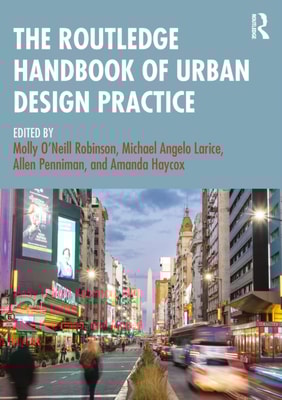
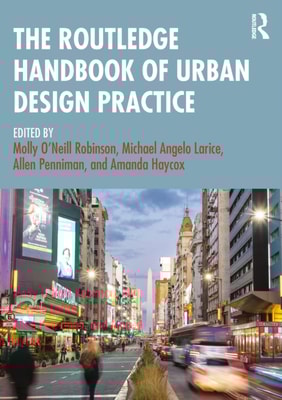
The Routledge Handbook of Urban Design Practice brings together diverse voices in urban design, emphasizing the urgent need for innovative approaches to address shared challenges and offering actionable steps to empower practitioners, students, and academics in creating vibrant and sustainable cities.
The Routledge Handbook of Urban Design Practice brings together diverse voices in urban design, emphasizing the urgent need for innovative approaches to address shared challenges and offering actionable steps to empower practitioners, students, and academics in creating vibrant and sustainable cities.
This book is motivated by a simple observation: Privately Owned Public Spaces, or POPS, are overlooked sites when it comes to exploring the subject of taste in architecture and urban design.
This book is motivated by a simple observation: Privately Owned Public Spaces, or POPS, are overlooked sites when it comes to exploring the subject of taste in architecture and urban design.