This book discusses the impact of information and communication technologies, particularly social media, on the structure and landscape of contemporary cities.
The authors collected here address youth street cultures in different cities from the Ibero-American world, bringing together contributions on Brazil, Argentina, Mexico, Chile, Portugal, Spain, and beyond.
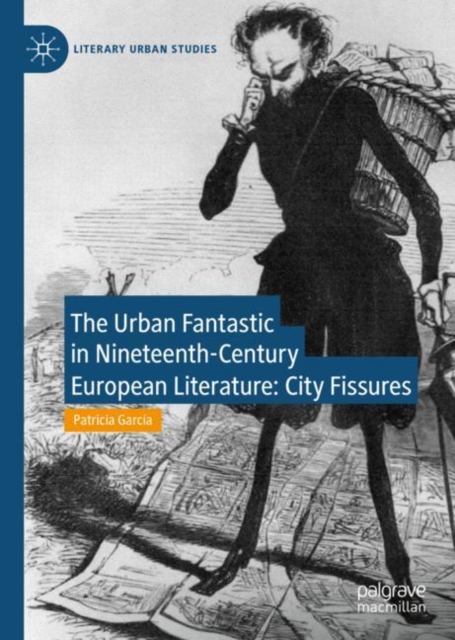
The Urban Fantastic in Nineteenth-Century European Literature explores transnational perspectives of modern city life in Europe by engaging with the fantastic tropes and metaphors used by writers of short fiction.
This book looks at the UEFA European Championship (Euro 2012) as both a crowning achievement of, and a way to sustain, the urban entrepreneurial strategy of Poznan, Poland.
This book examines air pollution of a big city using multi-year and multi-season data from ground-based air monitoring stations and satellite sounding data, which provides more clear and detailed information on the main sources of air pollution, the long-term trend of pollution, the influence of meteorological parameters on pollution levels, and trajectories of polluted air masses.
In a series of essays, this book describes and analyzes the concept and theory of the recent smart city phenomenon from a global perspective, with a focus on its implementation around the world.
This book presents and discusses methodological approaches and operational tools aimed at increasing the awareness and skills necessary to face the social, economic and environmental challenges usually encountered in spatial planning.
This book provides an overview of the environmental problems that arise from construction activity, focusing on refurbishment as an alternative to the current crisis in the construction sector, as well as on measures designed to minimize the effects on the environment.
This book features ten high academically achieving, low-income, inner city students from Newark, New Jersey, who graduated from public high schools at or near the top of their class and continued to excel in college.
This book gives an overview of frameworks, methods, and case studies useful for the analysis of the relations between agriculture and the city, in Europe and the Mediterranean.
The book deals with urban reactivation, a particular form of regeneration intervention which in addition to the physical-spatial dimension of the places also-and above all-considers the social and relational dynamics that the intervention is able to activate.
This edited collection critically discusses the relevance of, and the potential for identifying conceptual common ground between dominant urban theory projects - namely Neo-Marxian accounts on planetary urbanization and alternative 'Southern' post-colonial and post-structuralist projects.
This book explores the growing spatial inequality in contemporary cities, and the opportunity of reframing the role of public open space as a tool of inclusion in a context of an increasing economic gap between the urban poor and rich.
This book explores a more human-centered development pathway associated with the ideological shift from "e;quantity"e; to "e;quality"e; growth in the new era of Chinese urbanization.
This book offers a critical account of studies of local immigration policy and a relational approach to explain its emergence, variation, and effects in a context of interdependence and globalization.
This book is a sociological description and analysis of urban collective actions, protests, resistance, and riots that started in the 1990s and continue in different forms to this date in Rome, Italy.
This book is an empirically rich case-study of what is currently the most popular alternative-fuel vehicle in the history of motorization - the electric two-wheeler (e-bike).
This book advances the agenda of informality as a transnational phenomenon, recognizing that contemporary urban and regional challenges need to be addressed at both local and global levels.
This book explores different emergent spaces where diverse urbanites spontaneously negotiate, make and remake urban spaces, create opportunities, produce social change, challenge urban life, culture, and politics, or simply ask for their right to the city.
The book investigates the development of community gardens with self-built structures, which have existed as a shared public open space land use form in New York City's low-come neighborhoods like the South Bronx since the 1970s.
This book seeks to push forward the boundaries of current practices and knowledge to embrace innovative solutions, novel approaches, and grounded technologies within realistic comprehension of economic risks and environmental implications.
This edited collection investigates the human dimension of urban renewal, using a range of case studies from Africa, Asia, Europe, India and North America, to explore how the conception and delivery of regeneration initiatives can strengthen or undermine local communities.
This book is about the entanglement of heritage and resistance in different situations of conflicts, and the opportunities this entanglement may provide for social justice.
This book presents pioneering work on a range of innovative practices, experiments, and ideas that are becoming an integral part of urban climate change governance in the 21st century.
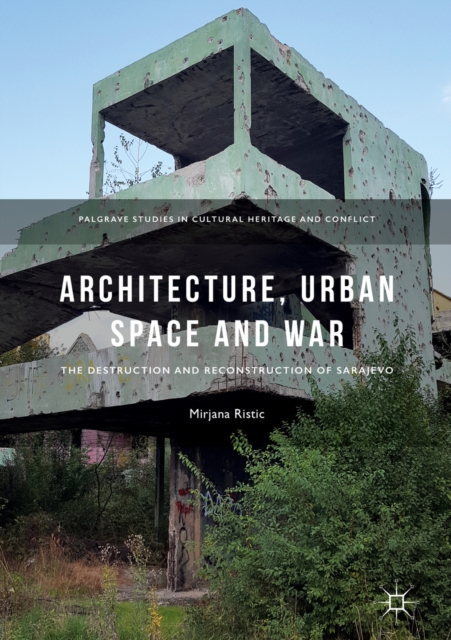
This book investigates architectural and urban dimensions of the ethnic-nationalist conflict in Sarajevo, the capital of Bosnia and Herzegovina, during and after the siege of 1992-1995.
This book presents an accessible overview of the seven key concepts of city diplomacy (development cooperation, peacekeeping, economy, innovation, environment, culture, and migration).