This book analyses the implications of eco-urbanism re-making for policy and practice under the transformational trends of economic decentralization and market reform in China.
Public transport in low-income Asian (LIA) cities fails to meet people's mobility needs, generates high greenhouse gas (GHG) emissions and worsens social exclusion.
This book provides a comprehensive view of the quality of life of older people from culturally and linguistically diverse (CALD) backgrounds living in Australia.
This book tells the story of local-level controls on liquor licensing ('local option') that emerged during the anti-alcohol temperance movement of the late 19th and early 20th centuries.
This book offers an essential introduction to the phenomenon of shrinking cities in China, highlighting several case studies, qualitative and quantitative methods, and planning responses.
This book addresses a wide range of social issues in connection with urbanization, which is providing new momentum for China's economic restructuring and social progress, including the educational gap; the middle class in urbanization; consumption; division of labor; and social integration.
Using quantitative research, this volume investigates the characteristics, problems and trends of the automobile society in China's mega cities and large cities.
This book addresses a central dilemma of the urban age: how to make the vast suburban landscapes that ring the globe safe and sustainable in the face of planetary ecological crisis.
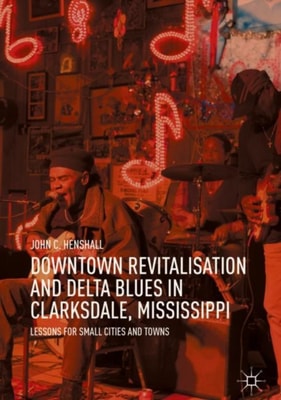
This book is about Clarksdale, a small town in Mississippi, USA, and how the local community has revitalised the long-dilapidated downtown, with the renewal based on the town's intimate association with Blues music and the culture that flows through the Mississippi Delta.
This text explores how architectural and urban design values have been co-opted by global cities to enhance their economic competitiveness by creating a superior built environment that is not just aesthetically memorable but more productive and sustainable.
This edited volume advances our understanding of urban activism beyond the social movement theorization dominated by thesis of political opportunity structure and resource mobilization, as well as by research based on experience from the global north.
This book asks how thinking, governing, performing, and producing the urban differently can assist in enabling the creation of alternative urban futures.
This book focuses on the 'functionings' and capabilities generated from land by their owners and the challenge in satisfactorily recreating these through the compensation paid in the case of compulsory acquisition of private land.
This book considers the impact of climate change on cities, advocating that people are the panaceas and antidote to mitigating climate change, by enhancing their involvement in achieving sustainable development Goals (SDGs).
Power, Glamour and Angst is about the social and cultural life of three Australian neighbourhoods - Toorak (Melbourne), Mosman (Sydney) and Cottesloe (Perth) - which are home to some of the nation's wealthiest and most powerful citizens.
In this book Krzysztof Nawratek explores the possibility of a post-capitalist city, and in so doing, reclaims and develops the idea of total mobilisation as originally formulated by Ernst Junger.
This book describes the concept, characteristics, methodology, design, management, business, recent advances and future technologies of plant factories with artificial lighting (PFAL) and indoor vertical farms.
Location-based games emerged in the early 2000s following the commercialisation of GPS and artistic experimentation with 'locative media' technologies.
This book considers the concept of resilience in a global society where coping with the consequence and long term impact of crisis and disaster challenges the capacity of communities to bounce back in the event of severe disruption.
This important volume focuses on the sensitive issue of interrelationships between national parks situated near or within urban areas and their urban environment.
This book explores China's eco-development strategies and practices from a multi-scalar perspective, discussing the importance of interplay between multi spatial levels of the built environment, as well as the stakeholders who are key players for China's eco-development.
This book takes readers on a journey through the evolution of agricultural communities in southern India, from their historical roots to the recent global neo-liberal era.
This book examines rural-urban migration policies in China, and considers how Chinese workers cope with migration events in the context of these policies.
Focusing on Mostar, a city in Bosnia Herzegovina that became the epitome of ethnic divisions during the Yugoslav wars, this cutting edge book considers processes of violent partitioning in cities.
This book introduces the highly topical issue from many different angles, sensitizing readers to the various challenges to human life posed by climate change, identifying possible intentional and inadvertent anthropogenic factors and consequences, and seeking socially and environmentally viable solutions.
This book examines Tokyo's changes, current challenges, and future trends through a new kind of regional geography and serves as an important source of comprehensive information about the past, present, and future perspectives of Tokyo as a global city.
This book discusses one of the most noticeable and significant transformations in China over the past three decades is the rapid and massive urbanization of the country, which has brought shifts in political culture of Chinese urbanites.
This multidisciplinary book examines the diverse ways in which environmental disasters with compounding impacts are being governed as they traverse sovereign territories across rapidly urbanising societies in Asia and the Pacific.
This book assesses various intelligent-city evaluation systems around the globe, and subsequently combines that assessment with local-government and enterprise practices to create an evaluation index system for quantifying the Intelligent City concept.
This volume presents a novel framework to understand urban climate co-benefits in India, that is, tackling climate change and achieving sustainable development goals in cities.