First published in 1965, this reissue is a report on the Second Rehovoth Conference of August 1963, convened by the then Deputy Prime Minister of Israel, Mr Abba Eban, in order to enable the scientists and political leaders of developing countries to establish meaningful communication on the overall topic of comprehensive planning of agriculture in developing countries.
First published in 1965, this reissue is a report on the Second Rehovoth Conference of August 1963, convened by the then Deputy Prime Minister of Israel, Mr Abba Eban, in order to enable the scientists and political leaders of developing countries to establish meaningful communication on the overall topic of comprehensive planning of agriculture in developing countries.
Describes and analyses the corollaries of declining fertility in Southern India to discover how familial and gender relations are affected by the new situation of women giving birth only to 2-3 children.
Describes and analyses the corollaries of declining fertility in Southern India to discover how familial and gender relations are affected by the new situation of women giving birth only to 2-3 children.
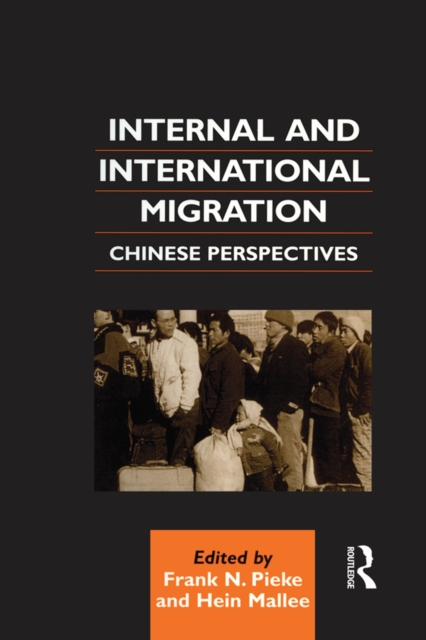
Comparing migration in China itself to Chinese migration to Europe, this book critically assesses received ideas, perceptions and theories concerning internal and international migration.
Comparing migration in China itself to Chinese migration to Europe, this book critically assesses received ideas, perceptions and theories concerning internal and international migration.
Various forms of partnering - such as officially registered marriages, cohabiting relationships, and other kinds of relatively stable relationships - are crucial in the formation of families throughout the world.
Various forms of partnering - such as officially registered marriages, cohabiting relationships, and other kinds of relatively stable relationships - are crucial in the formation of families throughout the world.
This book, first published in 1951, focuses on the hitherto ignored contemporary critics of Malthus, giving them the attention they so rightly deserve.
This book, first published in 1951, focuses on the hitherto ignored contemporary critics of Malthus, giving them the attention they so rightly deserve.
Encompassing the areas of economics, sociology, social biology and genetics, and drawing on studies from the UK and Australia, this volume charts and analyses the factors affecting population growth.
Encompassing the areas of economics, sociology, social biology and genetics, and drawing on studies from the UK and Australia, this volume charts and analyses the factors affecting population growth.
This study provides a general outline of Palestinian population growth between 1948 and 1987 and then focuses on the town of Nablus for a detailed analysis of the main aspects of Palestinian migration and high rates of natural increase.
This study provides a general outline of Palestinian population growth between 1948 and 1987 and then focuses on the town of Nablus for a detailed analysis of the main aspects of Palestinian migration and high rates of natural increase.