In this lively and accessible study, David Lyon explores the relationship between religion and postmodernity, through the central metaphor of 'Jesus in Disneyland.
This new book offers a comprehensive and accessible introduction to Frege's remarkable philosophical work, examining the main areas of his writings and demonstrating the connections between them.
This book reassesses theories of agency and gender identity against the backdrop of changing relations between men and women in contemporary societies.
The works of Walter Benjamin (1892-1940) are widely acclaimed as being among the most original and provocative writings of twentieth-century critical thought, and have become required reading for scholars and students in a range of academic disciplines.
In this major theoretical statement, the author offers a new and provocative interpretation of the institutional transformations associated with modernity.
In this book, one of the world s leading social theorists presents a critical, alarmed, but also nuanced understanding of the post-traditional world we inhabit today.
Today the smallest details of our daily lives are tracked and traced more closely than ever before, and those who are monitored often cooperate willingly with the monitors.
Siblings and all the lateral relationships that follow from them are clearly important and their interaction is widely observed, particularly in creative literature.
Liquid Love: On the Frailty of Human Bonds This book is about the central figure of our contemporary, 'liquid modern' times the man or woman with no bonds, and particularly with none of the fixed or durable bonds that would allow the effort of self-definition and self-assertion to come to a rest.
Performativity has emerged as a critical new idea across the humanities and social sciences, from literary and cultural studies to the study of gender and the philosophy of action.
This new edition of a well-regarded book provides a concise and exceptionally clear introduction to Habermas's work, from his early writings on the public sphere, through his work on law and the state, to his more recent discussion of science, religion and contemporary Europe.
Modernity was supposed to be the period in human history when the fears that pervaded social life in the past could be left behind and human beings could at last take control of their lives and tame the uncontrolled forces of the social and natural worlds.
The production of 'human waste' or more precisely, wasted lives, the 'superfluous' populations of migrants, refugees and other outcasts is an inevitable outcome of modernization.
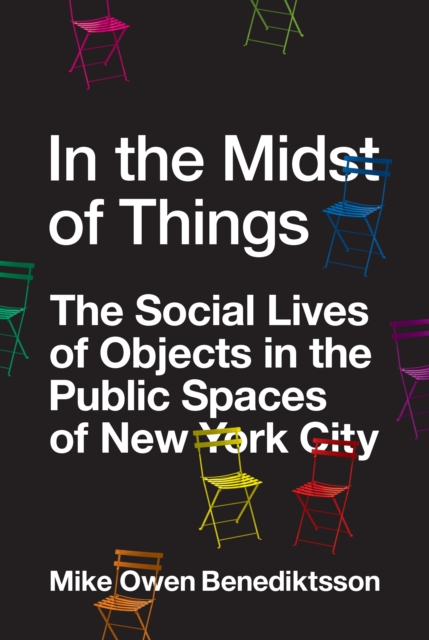
How ordinary urban objects influence our behavior, exacerbate inequality, and encourage social changeAssumptions about human behavior lie hidden in plain sight all around us, programmed into the design and regulation of the material objects we encounter on a daily basis.
Modern social thought ranges widely from the social sciences to philosophy, political theories and doctrines, cultural ideas and movements, and the influence of the natural sciences.
Rush Rhees, a close friend of Wittgenstein and a major interpreter of his work, shows how Wittgenstein's On Certainty concerns logic, language, and reality topics that occupied Wittgenstein since early in his career.
In this important study, Michael Luntley offers a compelling reading of Wittgenstein s account of meaning and intentionality, based upon a unifying theme in the early and later philosophies.
This unique volume gathers Weber's writings on a broad array of themes, from the nature of work, to the political culture of democracy, to the uniqueness of the West, to the character of the family and race relations, to the role of science and the fate of ethical action in the modern world.
In this important and engaging volume, international scholars present opposing viewpoints to debate ten of the most important issues in contemporary social philosophy.
The Blackwell Guide to the Philosophy of the Social Sciences collects newly commissioned essays that examine fundamental issues in the social sciences.
In this illuminating and concise collection of readings, Karl Marx emerges as the first theorist to give a comprehensive social view of the birth and development of capitalist modernity that began with the Second Industrial Revolution and still exists today.
Details the magical war that took place behind the scenes of the 2016 election Examines in detail the failed magical actions of Trumps opponents, with insights on political magic from Dion Fortunes war letters Reveals the influence of a number of occult forces from Julius Evola to chaos magick to show how the political and magical landscape of American society has permanently changed since the 2016 election Magic and politics seem like unlikely bedfellows, but in The King in Orange, author John Michael Greer goes beyond superficial memes and extreme partisanship to reveal the unmentionable realities that spawned the unexpected presidential victory of an elderly real-estate mogul turned reality-TV star and which continue to drive the deepening divide that is now the defining characteristic of American society.
ThefirstauthorizedTwitter book,Twitter Witis a collectionof the most clever one-liners posted on the massively popular social networking and micro-blogging website.
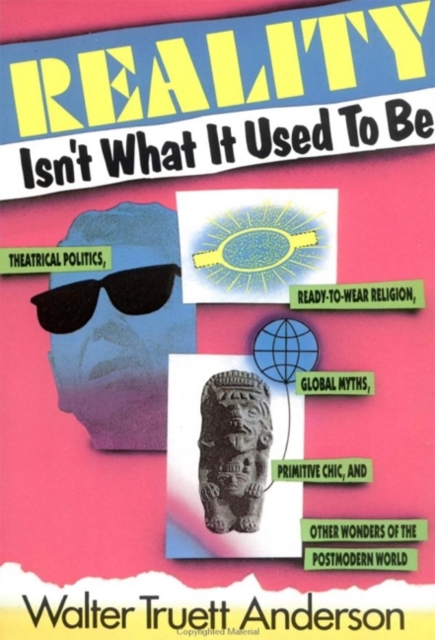
Anderson reveals the reality of postmodernism in politics, popular culture, religion, literary criticism, art, and philosophy -- making sense of everything from deconstructionism to punk.