While the issues of substance use and abuse have been addressed from a variety of perspectives and approaches, the fundamental social issues have not been covered in any systematic way.
Thinking and doing through a diverse set of theories, methodologies and writing registers, this edited collection explores the potential of creative disruption as psychosocial praxis.
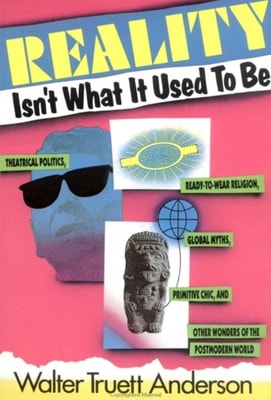
Anderson reveals the reality of postmodernism in politics, popular culture, religion, literary criticism, art, and philosophy -- making sense of everything from deconstructionism to punk.
Human behavior is a subject so vast that it would seem to defy one's ability to comfortably and confidently grasp its varieties, nuances, shapes, and dynamics.
This book explores how the youth experience, viscerally felt and deeply ingrained at a time of substantial physical, psychological and emotional changes, serves to authenticate that youth experience to the exclusion of that of ensuing youth generations.
Change and Disruption: Sociology of the Future draws on classical and modern sociological theory to identify recent and emerging trends in the global system.
Using Symbolic Interactionist theories and descriptions of the everyday life of self-defined 'shy' people, the book explores the social processes of becoming a 'shy person' and performing the shy self in public places.
This book looks at how sociological concepts that were first 'invented' and applied to describe social inequality in Europe were also used to understand and explain inequality in the United States.
Marxism After Modernity is concerned with the ways in which Marxist theory has responded to the major social, economic and technological transformations of capitalism which have occurred in the late twentieth and early twenty-first centuries.
This accessible text provides a comprehensive overview of globalization and its consequences from the perspective of social and political critical theory.
Drawing on critical social and political thought, the book explores the implications, arguing that late modern wars wars, often referred to as 'liberal', may be interpreted as perpetuating forms of exclusion and domination that render war a tool of control now articulated in global terms.
In a systematic and comprehensive analysis of the relationship between sociology and cultural studies, Gregor McLennan lucidly guides us from central philosophical questions in the social sciences to new interpretations of such urgent contemporary questions as Eurocentrism, multiculturalism, and reflexivity.
Clumsy Solutions for a Complex World is a powerful and original statement on why well-intended attempts to alleviate pressing social ills too often derail, and how effective, efficient and broadly acceptable solutions to social problems can be found.
This book is about the harnessing of social capital, formalized as village or community organizations, to guide and facilitate collective action for attaining poverty alleviation in particular and enhancing community well-being in general.
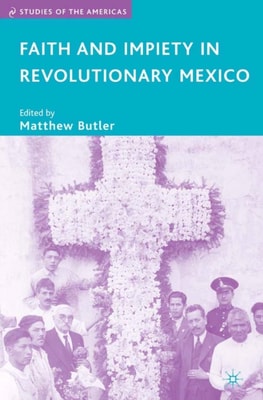
While Mexico's spiritual history after the 1910 Revolution is often essentialized as a church-state power struggle, this book reveals the complexity of interactions between revolution and religion.
Drawing on the non-individualistic perspective of social representations theory, this book presents an alternative view of social identity by articulating the inseparable dynamic relationships that exist between content, process and power relations when social identity is embedded in social knowledge.
The axis of this book is the articulation between the concept of collective subjectivity with the themes of social evolution and social creativity on the one hand, plus contemporary modernity and social change on the other.
Arguing against a common sense view of bilingualism as the co-existence of two linguistic systems, this volume develops a critical perspective which approaches bilingualism as a wide variety of sets of sociolinguistic practices connected to the construction of social difference and of social inequality under specific historical conditions.
In Cultural Goods and the Limits of the Market , Russell Keat presents a theoretical challenge to recent extensions of the market domain and the introduction of commercially modelled forms of organization in areas such as broadcasting, the arts and academic research.
Foucault continues on the theme of his 1978 course by focusing on the study of liberal and neo-liberal forms of government and concentrating in particular on two forms of neo-liberalism: German post-war liberalism and the liberalism of the Chicago School.
Ethno-national and religious identity and violence dominate modern politics, from Northern Ireland to terrorism in Sri Lanka, the former Yugoslavia or Afghanistan and Iraq.
Written in the temporal and political context of the British New Labour Government's ongoing reliance on the word community, academics and activists critically engage here with the range of ways in which contemporary ideas of community are being used and contested.
Drawing on the work of Raymond Williams, Valentin Volosinov and Mikhail Bakhtin, the book examines key issues for working-class studies including: the idea of the 'death' of class; the importance of working-class writing; the significance of place and space for understanding working-class identity; and the centrality of work in working-class lives.
Transformative learning is a process in which we question all the assumptions about the world and ourselves that make up our worldview, visualize alternative assumptions, and then test them in practice.
The book focuses on the design of rigorous trials rather than their statistical underpinnings, with chapters on: pragmatic designs; placebo designs; preference approaches; unequal allocation; economics; analytical approaches; randomization methods.
In this new collection of essays, a range of established and emerging cultural critics re-evaluate Richard Hoggart's contribution to the history of ideas and to the discipline of Cultural Studies.
Internationally renowned media and literature scholars, social scientists, game designers and artists explore the cultural potential of computer games in this rich anthology, which introduces the latest approaches in the central fields of game studies and provides an extensive survey of contemporary game culture.
This volume brings together original work from internationally recognized scholars that critically engages with the full range of Jameson's work, including: Sartre, Lukacs, 'Third World' literature, architecture, postmodernity, globalization, film, dialectics and Brecht.