The UN has adopted a "e;responsibility to protect"e; mandate for humanitarian intervention in civil wars - but there is no institutional basis for carrying out that mandate.
Marchak departs significantly from mainstream explanations of genocide, rejecting racism as a fundamental cause and disputing a wide range of other explanations that cite racist and religious ideologies, perception of threat, authoritarianism, and unique historical circumstances as primary causes.
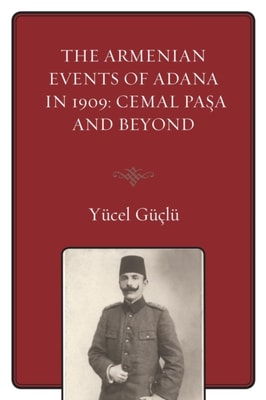
The purpose of the book is twofold: first, to give an accurate and reasonably complete narrative account of the Armenian events of 1909 and their aftermath in the province of Adana and the developments leading up to and following them; and equally importantly, to provide an interpretive framework that makes some sense out of this episode in Ottoman history.
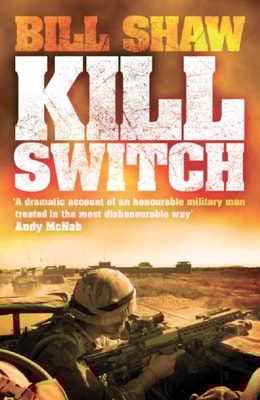
From surviving a horrific terrorist attack in Northern Ireland, to the violence of the Gulf War and an assault course of harrowing experiences in Iraq, Bosnia and Columbia, Major Bill Shaw had seen it all.
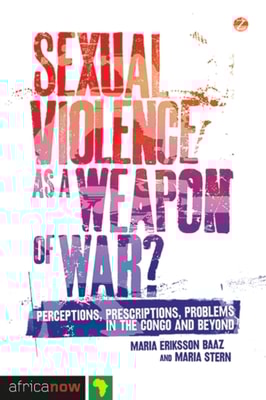
Every year, hundreds of thousands of women become victims of sexual violence in conflict zones around the world; in the Democratic Republic of Congo alone, approximately 1,100 rapes are reported each month.
In recent years there has been a tendency to intervene in the military, political and economic affairs of failed and failing states and those emerging from violent conflict.
From events at Nuremberg and Tokyo after World War II, to the recent trials of Slobodan Milo evi and Saddam Hussein, war crimes trials are an increasingly pervasive feature of the aftermath of conflict.
The ignorant bystander: Britain and the Rwandan genocide uses a case study of Britain's response to the genocide to explore what factors motivate humanitarian intervention in overseas crises.
The ignorant bystander: Britain and the Rwandan genocide uses a case study of Britain's response to the genocide to explore what factors motivate humanitarian intervention in overseas crises.
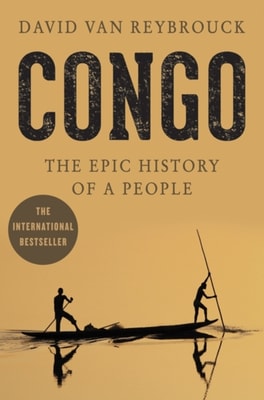
Why violence in the Congo has continued despite decades of international intervention Well into its third decade, the military conflict in the Democratic Republic of the Congo has been dubbed a "e;forever war"e;-a perpetual cycle of war, civil unrest, and local feuds over power and identity.
An incisive look at the causes and consequences of the Rwandan genocide"e;When we captured Kigali, we thought we would face criminals in the state; instead, we faced a criminal population.
The first comprehensive examination of the Catholic Churchs role in the genocide against the Tutsi and its attempts at reconciliationFrom April to July 1994, more than a million people were killed during the genocide against the Tutsi in Rwanda.
Overshadowed for many years by the Nuremberg trials, the Tokyo Trial--one of the major events in the aftermath of World War II--has elicited renewed interest since the 50th anniversary of the war's end.
Pioneering study of the role of the Christian churches in the Rwandan genocide of the Tutsi; a key work for historians, memory studies scholars, religion scholars and Africanists.
New perspectives on the relationship - or the perceived relationship - between the German language and the causes, nature, and legacy of National Socialism and the Shoah.
A major film, co-written and directed by Angelina Jolie Until the age of five, Loung Ung lived in Phnom Penh, one of seven children of a high-ranking government official.
All too often in conflict situations, rape is referred to as a 'weapon of war', a term presented as self-explanatory through its implied storyline of gender and warring.
All too often in conflict situations, rape is referred to as a 'weapon of war', a term presented as self-explanatory through its implied storyline of gender and warring.
An investigation into the nature of violence, terror, and trauma through conversations with a notorious war criminal by Jessica Stern, one of the world's foremost experts on terrorism.
Winner of the National Book Critics Circle Award for NonfictionWinner of the Guardian First Book award'I know few books, fiction or non-fiction, as compelling as Philip Gourevitch's account of the Rwandan genocide' - Sebastian Junger, author of The Perfect Storm'Should be compulsory reading' - The GuardianIn 1994, the Rwandan government orchestrated a campaign of extermination, in which everyone in the Hutu majority was called upon to murder everyone in the Tutsi minority.
The first English-language biography of the de facto ruler of the late Ottoman Empire and architect of the Armenian GenocideTalaat Pasha (1874-1921) led the triumvirate that ruled the late Ottoman Empire during World War I and is arguably the father of modern Turkey.
The Killing Season explores one of the largest and swiftest, yet least examined, instances of mass killing and incarceration in the twentieth century-the shocking antileftist purge that gripped Indonesia in 1965-66, leaving some five hundred thousand people dead and more than a million others in detention.
How Jewish responses during the Holocaust shed new light on the dynamics of genocide and political violenceFocusing on the choices and actions of Jews during the Holocaust, Ordinary Jews examines the different patterns of behavior of civilians targeted by mass violence.