From the critically acclaimed author of D nkirchen 1940, this is a groundbreaking history of the epic three-day battle for Hill 107 that changed the course of the war in the Mediterranean.
The first complete account of the fiercely guarded secrets of London's clandestine interrogation center, operated by the British Secret Service from 1940 to 1948 Behind the locked doors of three mansions in London's exclusive Kensington Palace Gardens neighborhood, the British Secret Service established a highly secret prison in 1940: the London Cage.
Sir James Somerville (1882-1949) was one of the great influences on the 20th-century navy, both as a commander of fleets and a pioneer of radio and radar.
Starting with the background of Japan’s rise to military prominence and the Asian country’s aggressive behavior against its neighbors, this graphic history covers all the significant events leading up to that fateful aerial attack on December 7, 1941.
Frank Dell’s experience as a Second World War pilot with the Royal Air Force’s Light Night Striking Force takes an even more dramatic turn when his Mosquito is shot down over Germany on the night of 14/15 October 1944.
70 years ago, on 7 June 1944, the British 7th Armored Division landed in Normandy, halfway through a wartime journey that had started in north Africa.
The years 1909-1918 can be regarded as formative for MI5, an era in which it developed from a small counterespionage bureau into an established security intelligence agency.
Royal Air Force veteran Wing Commander Richard Pinkham DFC presents the extraordinary and graphic account of his experiences flying 62 World War Two bombing operations.
In 1962 Michael Cumming's account of the extraordinary story of one of the RAF's most notable Second World War bomber pilots, Alec Cranswick DSO, DFC, came to the attention of the public with the release of Pathfinder Cranswick.
In the final, desperate months of World War Two, at a time when the German war machine was considered by the Allies to be an almost spent force, Adolf Hitler unleashed a new weapon against England and western Europe that fell from the silence of the Earth’s upper atmosphere and the edge of space.
In the late 1930s the Soviet Union experienced a brutal Ezhovshchina – or Purge – which swept through all levels of its society with millions arrested and tens of thousands shot for reasons lacking any form of ethics or justification.
Adolf Hitler, writing in Mein Kampf, was scathing in his condemnation of German propaganda in World War I, declaring that Germany failed to recognise that the mobilization of public opinion was a weapon of the first order.
Soon after the guns in Belgium and France had signalled the commencement of what would become the world's single most destructive conflict to date, the British, Ottoman, German, Russian, Austro-Hungarian, French and Belgian Empires were at war.
Operation Barbarossa, Hitler's invasion of the Soviet Union in 1941, led to one of the most brutal campaigns of World War II: of the estimated 70 million people who died in World War II, over 30 million died on the Eastern Front.
The Boer War of 1899-1902 was an epic of heroism and bungling, cunning and barbarism, with an extraordinary cast of characters - including Churchill, Rhodes, Conan Doyle, Smuts, Kipling, Gandhi, Kruger and Kitchener.
Soon after the guns in Belgium and France had signalled the commencement of what would become the world's single most destructive conflict to date, the British, Ottoman, German, Russian, Austro-Hungarian, French and Belgian Empires were at war.
Adolf Hitler, writing in Mein Kampf, was scathing in his condemnation of German propaganda in World War I, declaring that Germany failed to recognise that the mobilization of public opinion was a weapon of the first order.
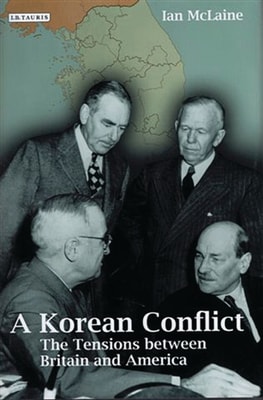
In 1950, just five years after the end of World War II, Britain and America again went to war--this time to try and combat the spread of communism in East Asia following the invasion of South Korea by communist forces from the North.
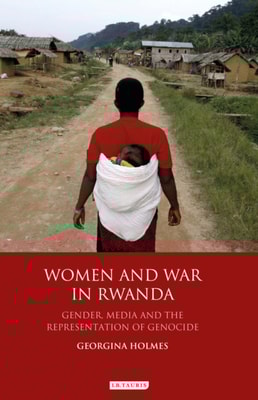
Focusing on television media reporting of the 1994 genocide in Rwanda and its aftermath, this book explores how African states directly involved in conflict, western states with geopolitical interests in Africa's Great Lakes region, militia groups, human rights activists and NGOs use gendered media narratives strategically, often engaging in politics of revisionism and denial, to change the behaviour of other actors in the international system.