This book examines changes in the Persian Gulf security complex following the United States (US) invasion of Iraq in 2003, focusing on threats to the collective identities of two religious sects - Shia and Sunni.
This book examines NATO's transition from a Cold War mutual defence organization into a global alliance, and puts the recent crisis over the Afghanistan mission in the context of long-standing debates over out-of-area interventions.
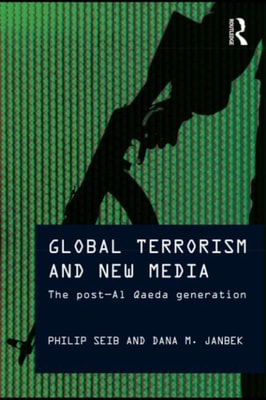
Global Terrorism and New Media carefully examines the content of terrorist websites and extremist television programming to provide a comprehensive look at how terrorist groups use new media today.
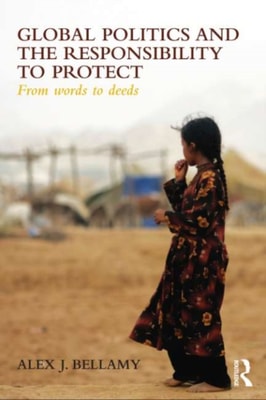
This book provides an in-depth introduction to, and analysis of, the issues relating to the implementation of the recent Responsibility to Protect principle in international relationsThe Responsibility to Protect (RtoP) has come a long way in a short space of time.
This book examines the justifications for, and practice of, war by the US since 1990, and examines four case studies: the Gulf War, Kosovo, Afghanistan and Iraq.
This new Handbook gathers together state-of-the-art theoretical reflection and empirical research by a group of leading international scholars in the subdiscipline of Critical Security Studies.
Social power, defined as "e;the ability to set standards, create norms and values that are deemed legitimate and desirable, without resorting to coercion or payment"e;, is a central part of contemporary international politics.
This book provides a critical assessment of the impact of UN Resolution 1325 by examining the effect of peacebuilding missions on increasing gender equality within conflict-affected countries.
This book explores this inherent contradiction present in most facets of Singaporean media, cultural and political discourses, and identifies the key regulatory strategies and technologies that the ruling People Action Party (PAP) employs to regulate Singapore media and culture, and thus govern the thoughts and conduct of Singaporeans.
This book examines global governance through Foucaultian notions of governmentality and security, as well as the complex intersections between the two.
Despite for many years receiving the highest per capita aid worldwide, the economies of the West Bank and Gaza Strip have failed to achieve any lasting developmental outcomes and suffer from major weaknesses which undermine their very survival.
AFQT Prep from the Name You TrustThe AFQT covers the most important sections of the ASVAB, which you must pass in order to enlist in the military and to qualify for many military jobs.
This first truly international history of the Korean War argues that by its timing, its course, and its outcome it functioned as a substitute for World War III.
The most authoritative and feature-rich edition of On War in EnglishCarl von Clausewitz's On War is the most significant attempt in Western history to understand war, both in its internal dynamics and as an instrument of policy.
Security, Religion, and the Rule of Law argues that true, substantive, and sustainable national security is only possible through respect for the rule of law, human rights, and religious freedom.
The fourth industrial revolution is underway, and technological changes will disrupt economic systems, displace workers, concentrate power and wealth, and erode trust in public institutions and the democratic political process.
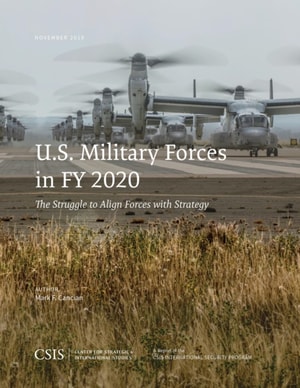
The Department of Defense (DOD) faces a strategic choice: whether to focus on modernization for high-tech conflicts with China and Russia or expand forces and improve readiness to meet a superpower's commitments for ongoing conflicts and crisis response.
A definitive history of the 20th century's first major genocide on its 100th anniversaryStarting in early 1915, the Ottoman Turks began deporting and killing hundreds of thousands of Armenians in the first major genocide of the twentieth century.
New perspectives on the history of famine-and the possibility of a famine-free worldFamines are becoming smaller and rarer, but optimism about the possibility of a famine-free future must be tempered by the threat of global warming.
Ongoing geopolitical shifts are placing increased pressure on the rules-based international order that has facilitated decades of growth and development across the Indo-Pacific.
Partly Cloudy: Ethics in War, Espionage, Covert Action, and Interrogation explores a number of wrenching ethical issues and challenges faced by military and intelligence personnel.
With the range of security challenges confronting the United States in the 21st century, characterized by competition by both state and nonstate actors, the importance of working with allies and partners to address common challenges is paramount.
Operations in littoral waters present numerous challenges for modern navies, challenges that are especially acute in the waters of the Baltic Sea and around Northern Europe.
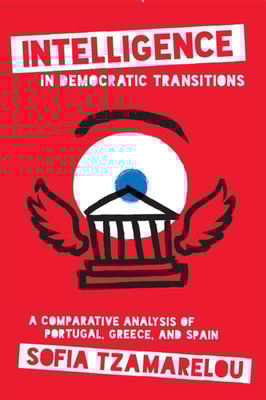
A groundbreaking comparative analysis of three understudied cases of intelligence democratization revealing new insights into main barriers to reform when states transition from authoritarianismReforming the intelligence services is essential when a state transitions from authoritarianism to democracy.
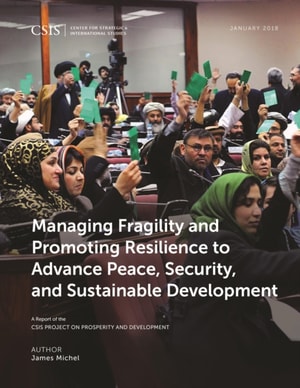
"e;Fragility"e;-the combination of poor governance, limited institutional capability, low social cohesion, and weak legitimacy-leads to erosion of the social contract and diminished resilience, with significant implications for peace, security, and sustainable development.
As the United States and China mark their 40th anniversary of formal diplomatic relations in 2019, the world's most important bilateral relationship is increasingly defined by mistrust, competition, and uncertainty.
Introduction to Emergency Management, Eighth Edition sets the standard for excellence in the field and has educated a generation of emergency management professionals.
This paper garners information crucial to understanding business growth for new entrants and small businesses who contract with the federal government by utilizing publicly available contracting data from the Federal Procurement Data System (FPDS) to track new entrants from 2001-2016.
Geopolitical competition is increasingly playing out in the space beyond diplomacy and short of conventional war, sometimes referred to as the gray zone, which is forcing the United States to confront the liabilities of its strengths.
Surprise has always been an element of warfare, but the return of great power competitionand the high-level threat that it posesgives urgency to thinking about surprise now.
This report assesses domestic political support for internationalist foreign policy by analyzing the motivations of members of Congress on key foreign policy issues.
India's growing strategic importance, coupled with the gaps in its homeland security enterprise, provides an opportunity to extend its partnership with the United States and become a key partner in ensuring stability and security in Asia.
In The Kremlin Playbook 2: The Enablers, the CSIS Europe Program and the Center for the Study of Democracy explored whether some of these jurisdictions and companies could be enabling forces that amplify Russian malign economic influence in some countries in Europe.
The face of global development is changing rapidly, and the CSIS Global Development Monitor seeks to address the complex issues highlighted by the recently adopted Sustainable Development Goals.