It was not Robert Oppenheimer who built the bomb--it was engineers, chemists and young physicists in their twenties, many not yet having earned a degree.
Originally designed as a cargo and paratroop transport during World War II, the Fairchild C-82 Packet is today mainly remembered for its starring role in the Hollywood film The Flight of the Phoenix (1965).
This first ever biography of Antarctic explorer Sir Raymond Priestley (1886-1974) covers his full (at times life-threatening) involvement with Sir Ernest Shackleton's 1907-1909 Nimrod Expedition and Robert Scott's 1910-1913 Terra Nova Expedition.
Military historian Victor Brooks argues that the year 1943 marked a significant shift in the World War II balance of power from the Axis to Allied forces.
In The Greatest Special Ops Stories Ever Told, editor Tom McCarthy has pulled together some of the finest writings about Special Operations that capture readers imaginations, meticulously culled from books, magazines, movies, and elsewhere.
By the time the war clouds of Europe and Asia spilled onto the shores of the United States, the allied military found itself outmanned, outgunned and out flown.
In The Greatest Stories Never Told: Special Ops, attorney and author Larry Yadon has written some of the greatest tales about special forces and operations not twice- or thrice-told tales, but the ones you haven't heard before.
In The Greatest Sniper Stories Ever Told, editor Tom McCarthy has pulled together some of the finest writings about snipers that capture readers imaginations, meticulously culled from books, magazines, movies, and elsewhere.
Never to Return is the harrowing tale of the torpedoing and sinking of a Coast Guard ship and the loss of 171 Coast Guardsmen off the coast of Iceland during WWII.
From an historian and columnist in Leatherneck and Armor magazines, this is the exciting, personal account of a Marine fighter squadron in the South Pacific during the critical days of 1943 when the tide turned against the Japanese.
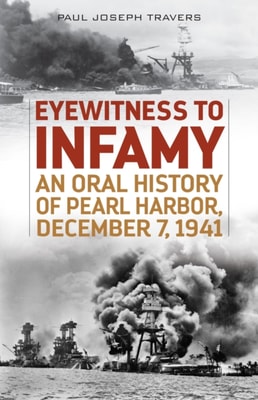
The Japanese attack on Pearl Harbor changed the lives of almost every American, and began the process of putting 17 million of them in uniform to fight in World War II.
By the mid-1980s, public opinion in the USSR had begun to turn against Soviet involvement in Afghanistan: the Soviet-Afghan War (1979-1989) had become a long, painful, and unwinnable conflict, one that Mikhail Gorbachev referred to as a "e;bleeding wound"e; in a 1986 speech.
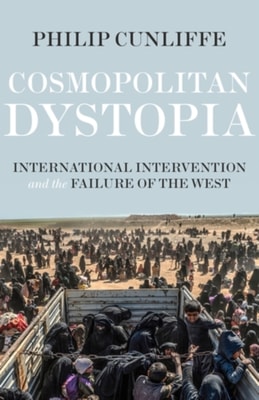
Cosmopolitan Dystopia shows that rather than populists or authoritarian great powers it is cosmopolitan liberals who have done the most to subvert the liberal international order.
This edited collection surveys how non-Western states have responded to the threats of domestic and international terrorism in ways consistent with and reflective of their broad historical, political, cultural and religious traditions.
Trust, but Verify uses trust-with its emotional and predictive aspects-to explore international relations in the second half of the Cold War, beginning with the late 1960s.
Canada is a key member of the world's most important international intelligence-sharing partnership, the Five Eyes, along with the US, the UK, New Zealand, and Australia.
As innovations in military technologies race toward ever-greater levels of automation and autonomy, debates over the ethics of violent technologies tread water.
The true story that inspired the feature film Bridge of Spies In this new edition of his classic 1970 memoir about the notorious U-2 incident, pilot Francis Gary Powers reveals the full story of what actually happened in the most sensational espionage case in Cold War history.
Men in reserve focuses on working class civilian men who, as a result of working in reserved occupations, were exempt from enlistment in the armed forces.
Cosmopolitan Dystopia shows that rather than populists or authoritarian great powers it is cosmopolitan liberals who have done the most to subvert the liberal international order.
Enacting the Security Community illuminates the central role of discourse in the making of security communities through a case study of the Association of Southeast Asian Nations (ASEAN).
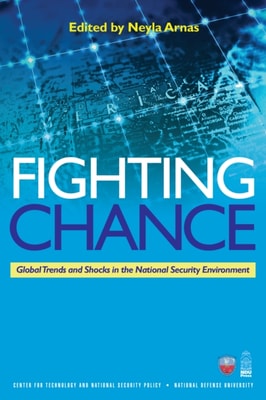
Compiled to meet the challenges of a rapidly changing security environment, this important collection grew out of an innovative Department of Defense (DOD) workshop.
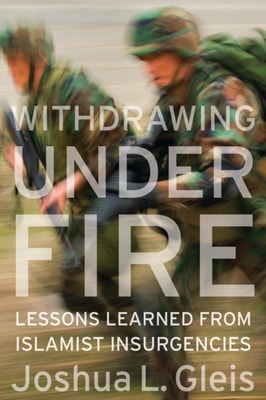
The post-9/11 world has witnessed a rebirth of irregular and asymmetrical warfare, which, in turn, has led to an increase in conflicts between conventional armies and non-state armed groups.