Helicopter Boys is the latest addition to Grub Street’s Boys series from acclaimed author Richard Pike exploring the role of helicopters in military and civilian situations.
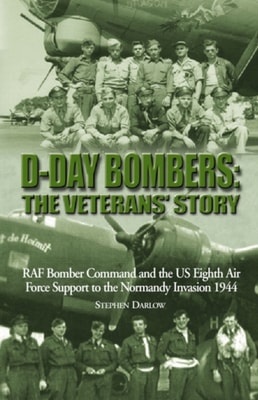
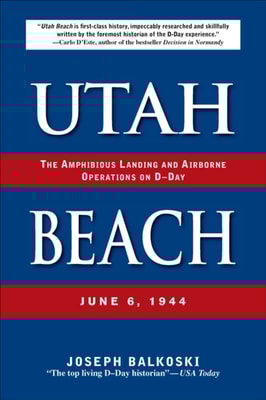
This book is largely an eye-witness account of the heavy bomber contribution to the success of the D-Day landings and therefore to the winning of the war in Europe.
This book outlines the relationship between social identity theory and military to civilian transition, examining the mass movement of soldiers back into the civilian occupational world by considering literature specifically on role exit and in relation to the process of full-time military exit.
This book will make a first contribution to identify the gaps in current practices and provide alternative mechanisms to conceptualize professionalism that is reflective of changing requirements, culture, and demographics of the contemporary military force.
This edited volume discusses current Euro-Atlantic security issues, examining a wide range of areas including cyber threats, arms control, relations between key countries, existing conflicts and potential future flash points.
The book assembles case studies on the human dimension of the Holocaust as illuminated in the academic work of preeminent Holocaust scholar Deborah Dwork, the founding director of the Strassler Center for Holocaust and Genocide Studies, home of the first doctoral program focusing solely on the Holocaust and other genocides.
This book provides numerous examples that apply the modern theory of bureaucracy developed in Breton and Wintrobe (1982 and 1986) to the Nazi Holocaust.
This book is the first to bring together analyses of the full range of post-war testimony given by survivors of the Sonderkommando of Auschwitz-Birkenau.
In foreign policy, the Trump administration has appeared to depart from long-standing norms of international behavior that have underwritten American primacy for decades in a more interdependent and prosperous world.
This book explores the motivations behind American military interventions in the Post-World War II era that purported to replace autocratic regimes with democratic ones.
This book strives to take stock of current achievements and existing challenges in nuclear verification, identify the available information and gaps that can act as drivers for exploring new approaches to verification strategies and technologies.
This book provides a new approach to explaining prolonged rebellions and insurgent wars, as well as a more nuanced and multi-faceted account of the entire lifespans of rebel and insurgent groups.
From pirates to smugglers, migrants to hackers, from stolen fish to smuggled drugs, the sea is becoming a place of increasing importance on the global agenda as criminals use it as a theatre to conduct their crimes unfettered.
This book examines the decisions by Tony Blair and John Howard to take their nations into the 2003 Iraq War, and the questions these decisions raise about democratic governance.
In response to pirate attacks in the Western Indian Ocean, countries worldwide have increasingly authorized the deployment of armed guards from private military and security companies (PMSCs) on merchant ships.
This book conceptualizes Responsibility to Protect doctrine (R2P) as part of a global cosmopolitan agenda, drawing on the work of Jurgen Habermas, and argues that R2P is reflective of a shift towards a more cosmopolitan approach to human protection.
In this thoroughly revised edition of his bestselling 1999 volume Why Peacekeeping Fails, Dennis Jett explains why peacekeepers today are dying in record numbers while engaged in operations that either are bound to fail or make little contribution to peace.
This book examines how historical military influences can become embedded and used by the state to control citizens' behaviour, termed the militarisation of behaviours.
This book offers the first in-depth account of the United Kingdom's contribution to the rapprochement between East and West that culminated in the successful negotiation of the Helsinki Final Act of 1975.
Survival, the bi-monthly publication from The International Institute for Strategic Studies, is a leading forum for analysis and debate of international and strategic affairs.
Drawing from military geography's spatial roots, its embrace of dynamic systems, and integration of human and biophysical environments, this book helps in understanding the value of analyzing patterns, processes and systems, and cross-scale and multi-disciplinary ways of acting in a complex world, while making the case for a resurgence of strategic and military geography in Australia.
This edited volume examines the use of militarised responses to different forms of criminal activity, discussing the outcomes and unintended consequences.
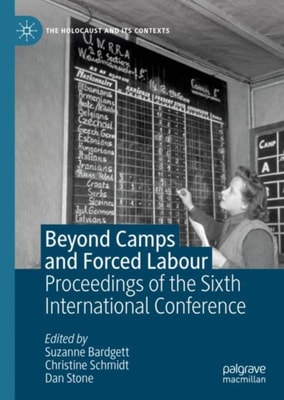
This book presents a selection of the newest research on themes amplified by the sixth annual Beyond Camps and Forced Labour conference on the post-Holocaust period, including 'displaced persons', reception and resettlement, exiles and refugees, trials and justice, reparation and restitution, and memory and testimony.
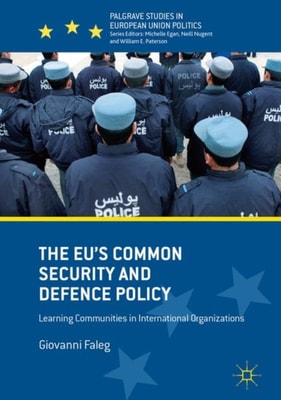
This book accounts for transformations in the EU's Common Security and Defence Policy (CSDP)during fifteen years of operations (2001-2016), and argues that the EU evolved into a softer and more civilian security provider, rather than a military one.
The intense debate over US targeted drone strikes outside war zones has been limited by the failure to review and assess a considerable body of quantitative research and qualitative material on the impacts of such strikes on terrorist groups and civilians.