During the last decade, sub-Saharan Africa enjoyed unprecedented rates of economic growth, with new technologies, better governance, and increasing investment flows creating new opportunities for innovation and economic and human development.
The report from the CSIS Project on Prosperity and Development outlines a new tool for policymakers to encourage private-sector development in developing nations.
In this timely work, James Giermanski describes the advent and development of security operations in the global supply chain, outlining the respective contributions of governmental and nongovernmental stakeholders to this worldwide concern.
How the Grand Alliance of World War II succeeded-and then collapsed-because of personal politicsIn the spring of 1945, as the Allied victory in Europe was approaching, the shape of the postwar world hinged on the personal politics and flawed personalities of Roosevelt, Churchill, and Stalin.
How a new understanding of warfare can help the military fight today's conflicts more effectivelyThe way wars are fought has changed starkly over the past sixty years.
The Habsburg Empire's grand strategy for outmaneuvering and outlasting stronger rivals in a complicated geopolitical worldThe Empire of Habsburg Austria faced more enemies than any other European great power.
Safeguarding Democratic Capitalism gathers together decades of writing by Melvyn Leffler, one of the most respected historians of American foreign policy, to address important questions about U.
How honeybees make collective decisions-and what we can learn from this amazing democratic processHoneybees make decisions collectively-and democratically.
This book highlights the repeated refusal of post-genocide Rwandan refugees to return 'home' and why even high-profile government officials continue to flee to this day.
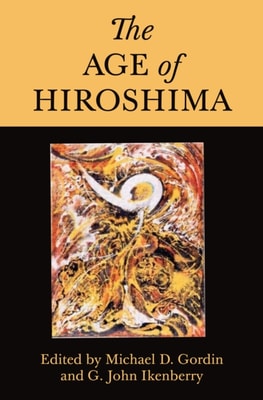
A multifaceted portrait of the Hiroshima bombing and its many legaciesOn August 6, 1945, in the waning days of World War II, the United States dropped an atomic bomb on the Japanese city of Hiroshima.
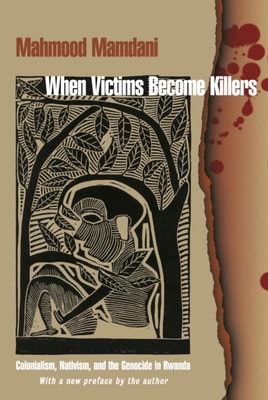
An incisive look at the causes and consequences of the Rwandan genocide"e;When we captured Kigali, we thought we would face criminals in the state; instead, we faced a criminal population.
A new translation that captures the gripping power of one of the greatest war stories ever told-Julius Caesar's pitiless account of his brutal campaign to conquer GaulImagine a book about an unnecessary war written by the ruthless general of an occupying army-a vivid and dramatic propaganda piece that forces the reader to identify with the conquerors and that is designed, like the war itself, to fuel the limitless political ambitions of the author.
From an exam insider, a vital guide to the ASVAB subtests essential to a successful start of your military careerOf the eight ASVAB subtests, four--word knowledge, paragraph comprehension, arithmetic reasoning, and mathematics knowledge--comprise what is called the Armed Forces Qualifying Test (AFQT).
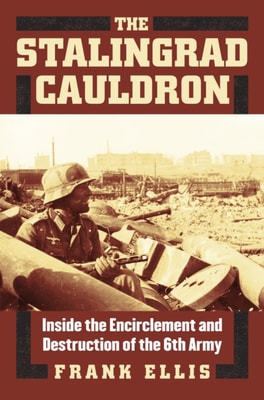
The encirclement of the German 6th Army at Stalingrad in mid-November 1942 and its final collapse in February 1943 was a signature defeat for Hitler, as more than 100,000 of his soldiers were marched off into captivity.
The second volume of this "e;excellent"e; overview of Germany's World War II fighter pilots, filled with photos, maps, and aircraft profiles (Air Power History).
This, the fourth volume in Andrew Field's highly praised study of the Waterloo campaign from the French perspective, depicts in vivid detail the often neglected final phase the rout and retreat of Napoleon's army.
The acclaimed World War II historian delivers "e;a panoramic and compelling boots-on-the-ground illumination of one of the Bulge's most epic battles"e; (Patrick K.
This book analyses the categories of thought underpinning Russia's strategic decision-making and military operations, unpacking their nature, development, and interaction.
A work of radical care and love, a study guide for the urgency of the moment Dian Million, author of Therapeutic NationsGuides us through confrontation with counterinsurgency in empires proxy wars, colonies, prisons and schools Frances Madeson, author of Cooperative VillageAn incendiary political and philosophical reflection Ken Fero, radical filmmaker and convenor of The Peoples Tribunal on Police KillingsAs we step into an era of rising fascism and normalized genocide, Confronting Counterinsurgency is an invaluable contribution to the fightback.
A rare account of a non-German, Erik Wallin, who fought in the Nazi Party's Waffen-SS during World War II-a no-holds-barred narrative of the Eastern Front.
Sonsteby tells his courageous story of espionage and sabotage against the Naziz and of eluding capture through daring, intuition, and a constant slew of changing identities.
The battles for the Germans' last line of defense in World War II, including Arnhem, Aachen, the Huertgen Forest, and MetzHow German commanders made decisions under fireBuilt as a series of forts, bunkers, and tank traps, the West Wall--known as the Siegfried Line to the Allies--stretched along Germany's western border.
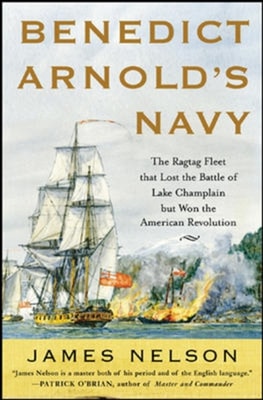
An epic story of one man's devotion to the American causeIn October 1776, four years before Benedict Arnold s treasonous attempt to hand control of the Hudson River to the British, his patch-work fleet on Lake Champlain was all that stood between British forces and a swift end to the American rebellion.
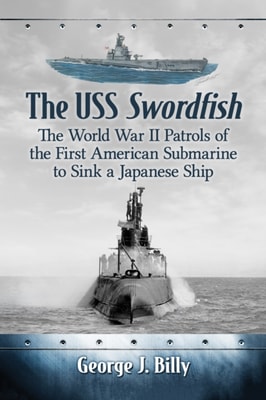
Among the more than 260 American submarines that patrolled the Pacific during World War II, the USS Swordfish in 1941 was the first to sink a Japanese armed merchant ship, marking the beginning of the submarine's colorful history.
Originally constructed in the 18th century as a military barracks by Austrian Emperor Joseph II, Theresienstadt (now Terezin) was used as a ghetto and concentration camp by the Nazis early in World War II in their ruse of peaceful resettlement of the Jews of Europe.