How and why China has pursued information-age weapons to gain leverage against its adversariesHow can states use military force to achieve their political aims without triggering a catastrophic nuclear war?
The first book dedicated to the sociology of privatized security, this collection studies the important global trend of shifting security from public to private hands and the associated rise of Private Military and Security Companies (PMSCs) and their contractors.
This book tells the story of the United States' relationship with the Taliban from the start of the Taliban movement until its retreat from Kabul in the face of the US invasion of Afghanistan in 2001.
This new work examines how the European states, the United Kingdom and the United States will approach the defence and Security of Europe in the medium and long-term.
This book provides a narrative history of the BBC Radio Variety Department exploring, along chronological lines, the workings of, tensions within and the impact of BBC policies on the programme-making department which generated the organisation's largest audiences.
This book presents TDF (Tactics Development Framework), a practical methodology for eliciting and engineering models of expert decision-making in dynamic domains.
This book develops a framework for analysis, and a set of research strategies, to better understand the conditions and mechanisms involved in the considerable use of caveats by states contributing militarily to coalition operations.
This book identifies contemporary military coalition defections, builds a theoretical framework for understanding why coalition defection occurs and assesses its utility for both the scholarly and policy practitioner communities.
This book examines the evolution of the Euro-Atlantic security system, from cooperation to rivalry and crisis, since the beginning of the 21st century.
This book addresses the under-researched discourse of the evolution of Chinese nuclear posture, and in particular, explains the absence from this evolution of a coherent and well-defined operational doctrine.
This book provides fundamental concepts in human thermal physiology and their applications in general public, occupational, military, and athletics settings from the biometeorological perspective.
This book seeks to answer the "e;why"e; and "e;how"e; questions about the insurgency of the PKK, a militant left-wing group of Turkey's Kurds, in Turkey.
This book describes the ontology structure, types of actors, their potential actions, and ways that actions can affect the things that are part of the conflict.
Drawing from military geography's spatial roots, its embrace of dynamic systems, and integration of human and biophysical environments, this book helps in understanding the value of analyzing patterns, processes and systems, and cross-scale and multi-disciplinary ways of acting in a complex world, while making the case for a resurgence of strategic and military geography in Australia.
This edited volume provides a fresh analysis for researcher and practitioners regarding United Nations Security Council resolution 1540, the status of its implementation, and its future by providing an original evaluation of progress in implementation and challenges faced during the resolution's first decade.
This book describes the problems of intelligence sharing among peacekeeping partners, mainly due to security concerns and a lack of policies and resources.
Following up on Donna Starr-Deelen's previous book Presidential Policies on Terrorism: From Ronald Reagan to Barack Obama (Palgrave, 2014), this book compares and contrasts the approach of the Obama administration with the Trump administration regarding national security and counter-terrorism.
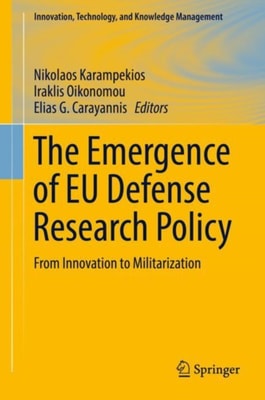
This book explores European security and defense R&D policy, unveiling the strategic, industrial, institutional and ideational sources of the European Commission's military research initiative.
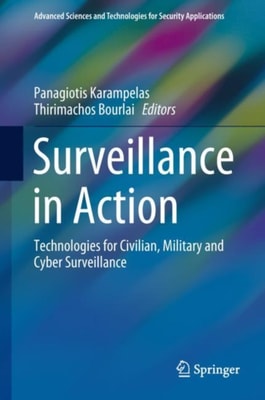
This book addresses surveillance in action-related applications, and presents novel research on military, civil and cyber surveillance from an international team of experts.
This book explores the human rights consequences of the new mercenarism, as channeled through so-called private military and security companies (PMSCs), and offers an overview of the evolution and status quo of both non-legal (soft law and self-regulation) and legal initiatives seeking to limit them.
This book widens the current debate on security privatization by examining how and why an increasing number of private actors beyond private military and security companies (PMSCs) have come to perform various security related functions.
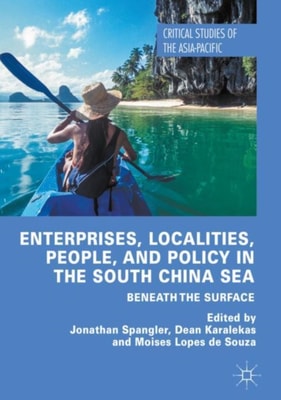
This volume takes readers beneath the surface of the South China Sea by exploring critical but under-researched issues related to the maritime territorial disputes.
This volume is a collection of contributions by world-leading experts in the nuclear field who participated in the educational activities of the International School on Disarmament and Research on Conflicts (ISODARCO).