This volume presents a selection of papers from the 13th International Conference on Military Geosciences (ICMG), held 24-28 June 2019 in Padua, Italy.
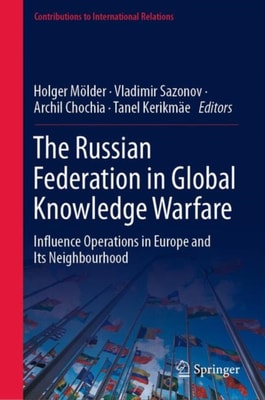
This book examines Russian influence operations globally, in Europe, and in Russia's neighboring countries, and provides a comprehensive overview of the latest technologies and forms of strategic communication employed in hybrid warfare.
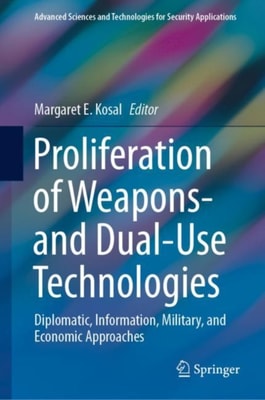
This book explores and analyzes the rapid pace of technological evolution in diplomatic, information, military, and economic sectors, which has contributed to a dynamic international policy environment.
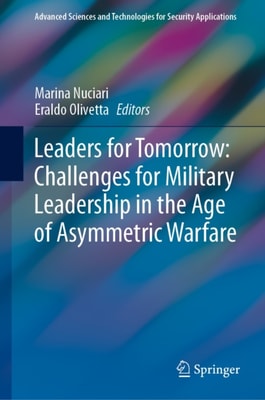
Since the end of bipolarism, the concept of asymmetric warfare, and of asymmetric conflict in general, has been increasingly applied with regard to armed forces activities and tasks.
This book investigates the UK's nuclear weapon policy, focusing in particular on how consecutive governments have managed to maintain the Trident weapon system.
This handbook provides critical analyses of the theory and practices of small arms proliferation and its impact on conflicts and organized violence in Africa.
This book develops the discourse on the experiences of ex-combatants and their transition from war to peace, from the perspective of scholars across disciplines.
This book breaks down the outcomes of stabilization operations including those related to establishing or enhancing safety and security, institutions of governance, rule of law, social well-being, economic development, access to education and health care, infrastructure development, reducing corruption and all the associated elements for shoring up fragile communities.
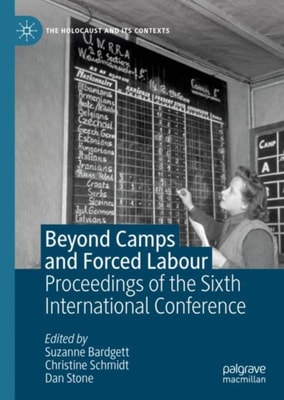
This book presents a selection of the newest research on themes amplified by the sixth annual Beyond Camps and Forced Labour conference on the post-Holocaust period, including 'displaced persons', reception and resettlement, exiles and refugees, trials and justice, reparation and restitution, and memory and testimony.
In this book, the author deals with the mathematical modelling, nonlinear control and performance evaluation of a conceptual anti-aircraft gun based mobile air defence system engaging an attacking three-dimensional aerial target.
This book analyzes the small Baltic States and their integration into the Euro-Atlantic structures from the perspective of the foreign policies of major powers - the United States, Russia, and major European powers and institutions - towards the region, or each of the Baltic States.
This book documents the political ecosystem that legitimized violent military action against military-age males in US military operations after September 11, 2001.
This book argues that the US Army has made four significant shifts in the content of its capstone operations doctrine along a spectrum of war since the end of WWII: 1) in 1954 it made a shift from a doctrine focused almost exclusively on mid-intensity conventional warfare to a doctrine that added significant emphasis to high-intensity nuclear warfare; 2) in 1962 it made an even greater shift in the opposite direction toward low-intensity unconventional warfare doctrine; 3) in 1976 it shifted back to an almost exclusive focus on mid-intensity conventional warfare content; 4) and this is where Army doctrine remained for 32 years until 2008, when it made a doctrinal shift back toward low-intensity unconventional warfare - five and seven years into the wars in Iraq and Afghanistan respectively.
This book examines the security, defence and foreign policy choices and challenges of small states in NATO and its small partner states in the new security environment.
Our understanding of hazards and disasters is rapidly changing, and it is unclear as to whether our existing management systems are adequate to adapt to current and future disasters.
In response to pirate attacks in the Western Indian Ocean, countries worldwide have increasingly authorized the deployment of armed guards from private military and security companies (PMSCs) on merchant ships.
This book examines the decisions by Tony Blair and John Howard to take their nations into the 2003 Iraq War, and the questions these decisions raise about democratic governance.
This comprehensively updated second edition provides an introduction to the political, normative, technological and strategic aspects of nuclear weaponry.
This book will make a first contribution to identify the gaps in current practices and provide alternative mechanisms to conceptualize professionalism that is reflective of changing requirements, culture, and demographics of the contemporary military force.
This book studies force, the coercive application of power against resistance, building from Thomas Hobbes' observation that all self-contained political orders have some ultimate authority that uses force to both dispense justice and to defend the polity against its enemies.
This edited volume critically investigates women's knowledge about war and explores the epistemic agency of women in a range of contemporary settings across the globe.
This book describes the evolving CBRN risk landscape and highlights advances in the "e;core"e; CBRN technologies, including when combined with (improvised) explosive devices (CBRNe threats).
The book assembles case studies on the human dimension of the Holocaust as illuminated in the academic work of preeminent Holocaust scholar Deborah Dwork, the founding director of the Strassler Center for Holocaust and Genocide Studies, home of the first doctoral program focusing solely on the Holocaust and other genocides.
This book offers a unique approach to memory studies by focusing on local memory work conducted across the divide of the fall of Communism, whereas other histories have consistently used 1989 as a watershed moment.
This book provides a new approach to explaining prolonged rebellions and insurgent wars, as well as a more nuanced and multi-faceted account of the entire lifespans of rebel and insurgent groups.
As the past two decades of war in Afghanistan, Syria, Iraq, Darfur and the Congo have revealed, war in the twenty-first century looks nothing like the traditional state-to-state conflicts of World Wars I and II which defined the previous century.
From pirates to smugglers, migrants to hackers, from stolen fish to smuggled drugs, the sea is becoming a place of increasing importance on the global agenda as criminals use it as a theatre to conduct their crimes unfettered.