Warrior is the powerful true story of a British soldier's heroism during the Iraq War that reveals how he was ruthlessly sacrificed by the Establishment.
The Islamic world drew upon a myriad of pre-existing styles of fortification, taking Romano-Byzantine, Indian and Chinese ideas to create a highly effective and sophisticated hybrid fortification that was both new and distinctive.
An in-depth guide to getting the best results on your models, with ten step-by-step, illustrated studies ranging from weathered military aircraft to pristine, high gloss motor vehicles, science fiction models, fantasy figures, groundwork and buildings.
Steven J Zaloga offers a fascinating comparison between the two most important tanks involved in the crucial fighting of 1944, the American Sherman and the German Panther.
Basing his extensive research into hitherto unexploited archival documentation on both sides of the Rhine, Allan Mitchell has uncovered the inner workings of the German military regime from the Wehrmacht s triumphal entry into Paris in June 1940 to its ignominious withdrawal in August 1944.
In this first interdisciplinary study of this contentious subject, leading experts in politics, history, and philosophy examine the complex aspects of the terror bombing of German cities during World War II.
The early twentieth-century advent of aerial bombing made successful evacuations essential to any war effort, but ordinary people resented them deeply.
The exodus of refugees from Nazi Germany in the 1930s has received far more attention from historians, social scientists, and demographers than many other migrations and persecutions in Europe.
In 1945, Europeans confronted a legacy of mass destruction and death: millions of families had lost their homes and livelihoods; millions of men in uniform had lost their lives; and millions more had been displaced by the war s destruction, and the genocidal policies of the Nazi regime.
Modern military history, inspired by social and cultural historical approaches, increasingly puts the national histories of the Second World War to the test.
In this remarkable book, now reissued in paperback, Brian Lavery examines every aspect of the Royal Navy, both ashore and at sea, during the Second World War, and casts a lucid eye over the strengths and weaknesses of an organisation that was put under acute strain during the period, yet rose to the challenge with initiative and determination.
In this remarkable book, now reissued in paperback, Brian Lavery examines every aspect of the Royal Navy, both ashore and at sea, during the Second World War, and casts a lucid eye over the strengths and weaknesses of an organisation that was put under acute strain during the period, yet rose to the challenge with initiative and determination.
Responding to Titanic's distress calls in the early hours of 15 April 1912, Captain Arthur Rostron raced the Cunard liner Carpathia to the scene of the sinking, rescued the seven hundred survivors of the world's most famous shipwreck and then carried them to safety at New York.
Responding to Titanic's distress calls in the early hours of 15 April 1912, Captain Arthur Rostron raced the Cunard liner Carpathia to the scene of the sinking, rescued the seven hundred survivors of the world's most famous shipwreck and then carried them to safety at New York.
Working with prestigious archives of contemporary photographs, the authors chart the history of Britain's fishing heritage with 120 rarely seen photographs.
On 2 August 1708 Captain Woodes Rogers set sail from Bristol with two ships, the Duke and Duchess, on an epic voyage of circumnavigation that was to make him famous.
Whether you are interested in the career of an individual service woman or just want to know more about the part played by service women in a particular war or campaign, this is the book for you.
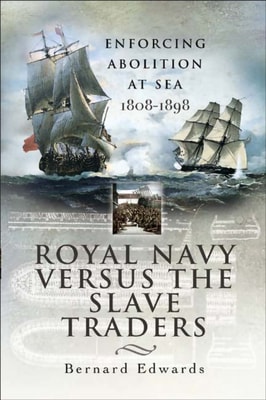
The acclaimed naval historian sheds significant light on the Royal Navy's role in fighting the African slave trade through years of bitter battle at sea.
Adrian Greaves uses his exceptional knowledge of the Anglo-Zulu War to look beyond the two best known battles of Isandlwana and the iconic action at Rorkes Drift to other fiercely fought battles.
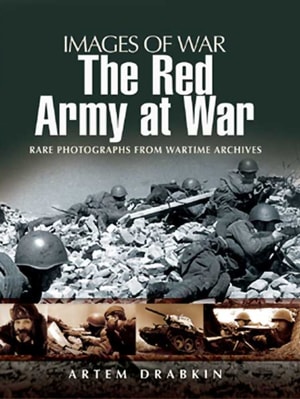
What was life in the Red Army like for the ordinary soldier during the Great Patriotic War, the fight between the Soviet Union and Germany on the Eastern Front?