Alfred Burrages War is War is his sincere and successful attempt to record his experiences as a private soldier in France during the First World War, his reactions to abnormal conditions and his observations.
The blow to British pride and confidence caused by the crushing defeat of their army in Afghanistan during the winter of 1841/2 compares in its impact to the disaster in New York on 11 September 2001.
Romania, Bulgaria, Hungary and Slovakia were all German allies in the Second World War, unlike the other countries of Europe which had either been forcibly occupied by the Nazis or remained neutral.
The riveting firsthand account of an RAF pilot's adventures in World War II-from life-and-death situations to unusual posts that test his usual good humor.
This book covers the inception, growth and employment of Britains airborne forces (parachute and glider-borne formations) between June 1940 and March 1945.
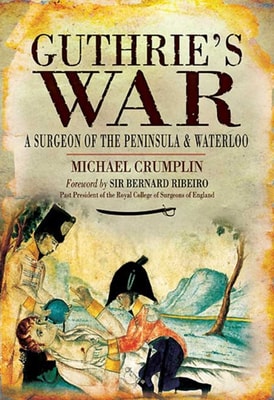
The precepts laid down are the result of the experience acquired in the war in the Peninsula, from the first battle of Rolia in 1808, to the last in Belgium, of Waterloo in 1815They have been the means of saving the lives, and of relieving, if not even of preventing, the miseries of thousands of our fellow-creatures throughout the civilized world.
Gunther Plschow of the German Imperial Navy holds a unique place in history-during the First World War he was the only German prisoner of war ever to escape from the British mainland and make it all the way back to the Fatherland.
The first French invasion of Portugal in 1807 - which was commanded by Junot, one of Napoleon's most experienced generals - was a key event in the long, brutal Peninsular War.
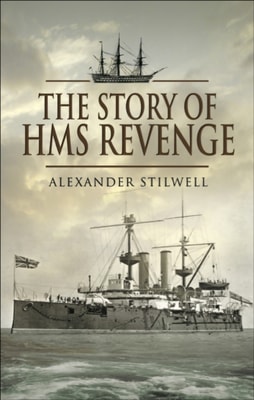
This sweeping naval history chronicles the many British vessels to bare the name Revenge, from the sixteenth-century galleon to the twentieth-century submarine.
Born the son of George Byng, a favorite of the king and himself an admiral and member of the admiralty board (and later First Lord of the Admiralty), John Byng seemed destined for a shining career in the Royal Navy.
he Kaisers determination to starve Britain into surrender and the development of his Navy and the U-boats in particular meant that Britains merchant navy was in the front line throughout the Great War.
This book examines the period between the unconditional surrender of Japan on 14 August 1945, and the arrival of Allied liberation forces in Japanese-occupied territories after 2 September 1945.
Simon Joness graphic history of underground warfare during the Great War uses personal reminiscences to convey the danger and suspense of this unconventional form of conflict.
In Part One Powdrill describes his experiences in France during 'the Phoney War and then their baptism by fire in May 1940, culminating in the evacuation from Dunkirk having left their disabled guns behind.
Scottish Lion on Patrol was first published in 1950, the record of the 15th Scottish Reconnaissance Regiments formation, training and service in the campaign that took them from Normandy to the Baltic.
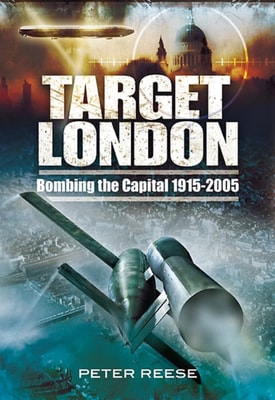
London was a target for Zeppelins and bombers during the First World War, for bombers, V1s and rockets in the Second, and for Cold War missiles and for terrorists in more recent times, yet rarely has the history of twentieth-century attacks on the capital been studied as a whole.
When the top secret code breaking activities at Bletchley Park were revealed in the 1970s, much of the history of the Second World War had to be rewritten.
Aviation historian Guy Warner's First in the Field is an essential history of the Royal Air Force's Air Observation Post Squadron formed in World War II.
In March 1944, some 2,200 battle trained men of 111 Brigade flew from India into northern Burma to land on improvised airstrips cleared from the jungle, They were part of General Orde Wingates Chindit force sent to fight the Japanese deep behind their lines.
Intelligence about the enemy is a fundamental part of any war or battle; knowledge of the enemys strength, dispositions and intentions are essential for success.
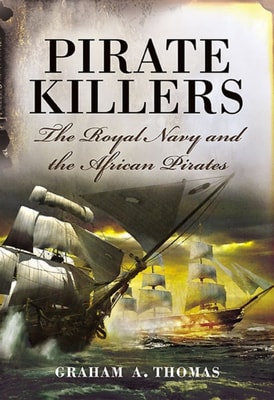
One hundred and fifty years ago the Royal Navy fought a daring campaign against ruthless pirates and won, killing The King of the Pirates, Bartholomew Roberts off the coast of Africa and capturing his fleet.
The heroic life of the pilot who became an ace with one of the most successful fighter squadrons in the RAF and a captive in a notorious Nazi POW camp.
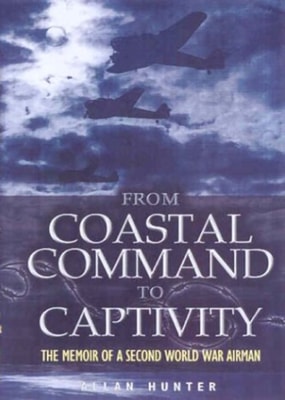
Thanks to the perseverance and editorial effort of his son Allan, Jim Hunter's splendid war memoirs of flying and captivity can now be enjoyed by a wider audience.