Discusses New Advancements to Improve Existing Simulations of Plant NitrogenWritten by research pioneers and leading scientists in the area of agricultural systems, Quantifying and Understanding Plant Nitrogen Uptake for Systems Modeling comprehensively covers plant N uptake in agricultural system models, especially for building soil-plant system m
Better Manage Soil C for Improved Soil Quality In the United States, soil has fueled the availability of abundant, safe food, thus underpinning economic growth and development.
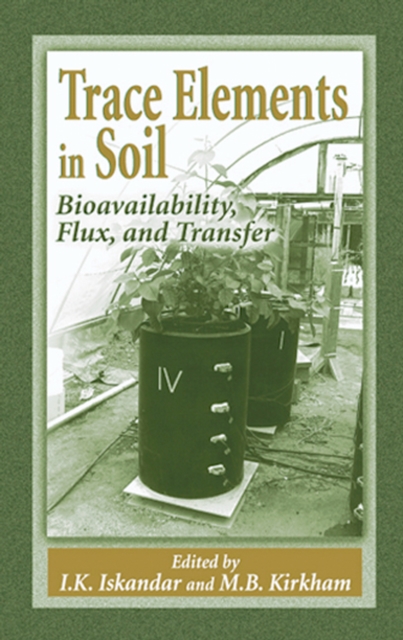
Understanding attenuation processes is important not only for predicting the behavior of contaminants in soil and formulating remediation strategies, but also for mitigating and enhancing the availability of micronutrients in soil for agricultural applications.
Historically, research on the methods and amounts of trace element application to agriculture soils for correcting plant deficiencies has received major attention.
The potential to mitigate greenhouse gas emissions and global climate change is one factor driving agricultural policy development of programs that might pay farmers for practices with a high potential to sequester carbon.
Much attention has been given to above ground biomass and its potential as a carbon sink, but in a mature forest ecosystem 40 to 60 percent of the stored carbon is below ground.
The new edition of a bestseller, Water Flow in Soils bridges the fields of soil physics-where descriptions of water flow tend to be microscopic- and hydrology - where they tend to be macroscopic.
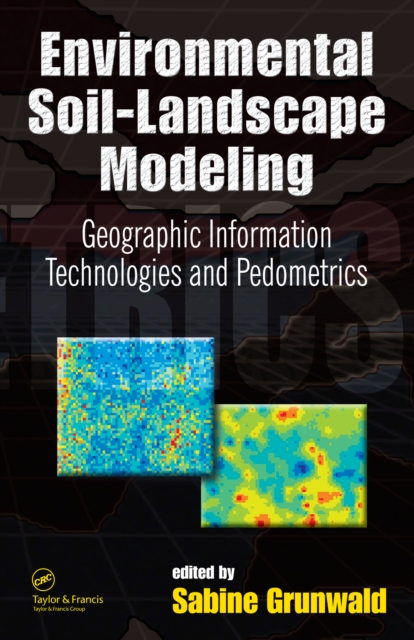
Environmental Soil-Landscape Modeling: Geographic Information Technologies and Pedometrics presents the latest methodological developments in soil-landscape modeling.
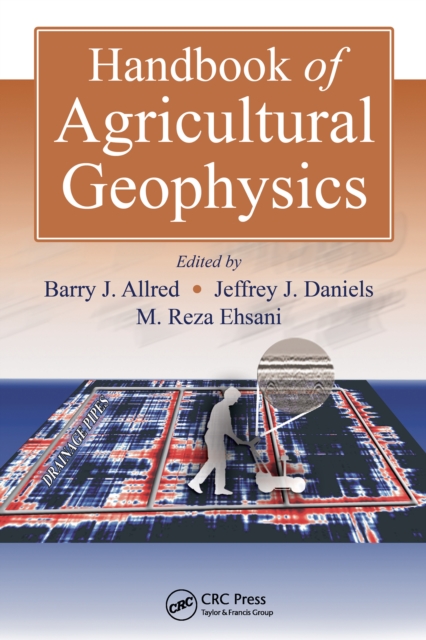
Precision farming, site infrastructure assessment, hydrologic monitoring, and environmental investigations- these are just a few current and potential uses of near-surface geophysical methods in agriculture.
With the help of this guide, you can use obtained test results to evaluate the fertility status of soils and the nutrient element status of plants for crop production purposes.
A part of the continuing effort to provide innovative in situ remediation techniques, Remediation of Firing-Range Impact Berms presents the results of a soil washing and leaching project.
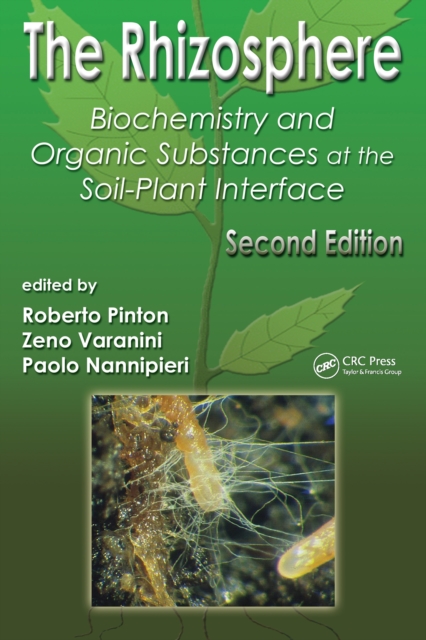
In the rhizosphere, exudates from plants and microorganisms as well as stable soil organic matter influence processes that can control plant growth, microbial infections, and nutrient uptake.
Drawing from a decade-long collaboration between Japan and Russia, this important volume presents the first major synthesis of current knowledge on the ecophysiology of the coniferous forests growing on permafrost at high latitudes.
Salinity and water stress limit crop productivity worldwide and generate substantial economic losses each year, yet innovative research on crop and natural resource management can reveal cost-effective ways in which farmers can increase both their productivity and their income.
Carbon and Nitrogen in the Terrestrial Environment is a comprehensive, interdisciplinary description of C and N fluxes between the atmosphere and the terrestrial biosphere; issues related to C and N management in different ecosystems and their implications for the environment and global climate change; and the approaches to mitigate emission of greenhouse gases.
The international advanced research workshop funded by NATO and entitled "e;impact of pollutions on animal and animal products"e; was organized at Almaty (Kazakhstan) on 27-30 September 2007.
The book contains the contributions at the NATO Advanced Research Workshop on Soil Chemical Pollution, Risk Assessment, Remediation and Security, which took place in Sofia, Bulgaria, May 23-26, 2007.
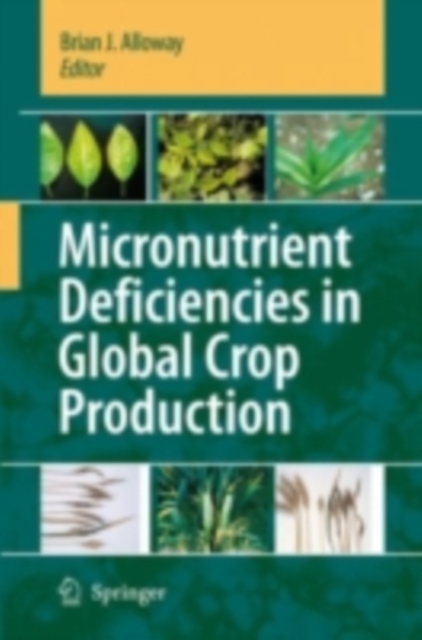
A deficiency of one or more of the eight plant micronutrients (boron, chlorine, copper, iron, manganese, molybdenum, nickel and zinc) will adversely affect both the yield and quality of crops.
Global warming has worsened the water resource crisis in many arid zones worldwide, from Africa to Asia, affecting millions of people and putting them at risk of hunger.
This book looks at the sources and composition of the atmosphere and rainfall, with particular attention on acidifying components and those that affect ecosystems.
Boron is one of the essential micronutrients for higher plants growth and development, and more and more studies have been conducted to establish boron as an essential element in animals and humans.
In an era where climate change, natural catastrophes and land degradation are major issues, the conservation of soil and vegetation in mountainous or sloping regions has become an international priority.
Although the end of the Cold War has paved the way to a substantial demilitarisation and conversion, the leftovers of this process - such as former military installations, military training areas, and huge quantities of unserviceable ammunition and equipment - still pose a severe threat to the environment of both NATO and Partner countries.
Phytoremediation, the use of plants to remediate environmental media, is being pursued as a new approach for the cleanup of contaminated soils and waters, including groundwater.
The author is to be congratulated on her efforts and perseverance in undertaking this research, and Springer for making the material available in this book format.
During the latter part of 2004, Helen Buitenkamp of Springer Publishing emailed me that the first edition of Handbook of Urban and Community Forestry in the Northeast is the best volume in its field and inquired whether we'd be interested in compiling a second edition; I replied that we certainly would, and started working on it imme- ately.
Soil-crop-atmosphere interactions play a central role in well with the interest of agro-meteorologists, who the multiple functions of rural landscapes.