This book provides a fine-grained ethnographic examination of the everyday negotiations and conflicts taking place in greenhouses and packinghouses in an agricultural district in south-eastern Italy (Sicily).
This book elaborates on the transformation of agricultural development in China into the construction of a "e;resource and ecologically sound society"e;, and the coordinated development of industrialization, urbanization, and agricultural modernization in China.
This book establishes the equations of limit analysis and provides a complete theoretical basis for foundation capacity, slope stability, and earth pressure.
This book explores the sustainability aspect of organic and conventional farming systems, which is commonly categorized into three sub-aspects: social, environmental and economic.
This book focuses on signaling molecules in plant defense, outlining some of the most important cellular and chemical plant defense strategies during periods of stress and growth.
This third volume on environmental nanotechnology includes chapters dealing with topics such nanoremediation, waste water purification, nanosensors, nanomedicine, and nanofiltration.
This book offers a state-of-the-art overview of on abiotic stresses in terms of the challenges; scope and opportunities; copping strategies for adaptation and mitigation using novel tools for building resilience in agricultural crops and livestock; as well as for policy implementation.
The emergence of nanotechnology and the development of new nanodevices and nanomaterials have opened up exciting opportunities for novel applications in agriculture and biotechnology.
This book provides a detailed review of the accumulated experience and lessons from China's agricultural reform and opening-up since the late 1970s, examining various aspects of this transition and providing a new perspective that can contribute to developing economic theories.
This book introduces readers to both seed treatment and seedling pretreatments, taking into account various factors such as plant age, growing conditions and climate.
This book addresses the threats that hamper the achievement of sustainable soil management: soil erosion by water and wind, soil organic carbon loss, nutrient imbalance, salinization, contamination, acidification, loss of soil biodiversity, surface sealing, compaction and water logging.
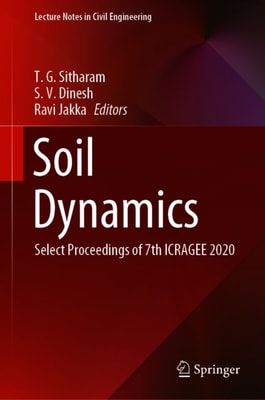
This volume presents select papers presented at the 7th International Conference on Recent Advances in Geotechnical Earthquake Engineering and Soil Dynamics.
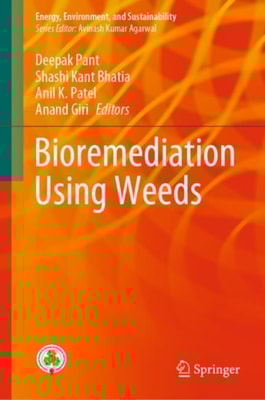
In this monograph, the core elements of multidisciplinary bioremediation practices are addressed and environmental pollutants which can be effectively remediated using weeds is focused upon.
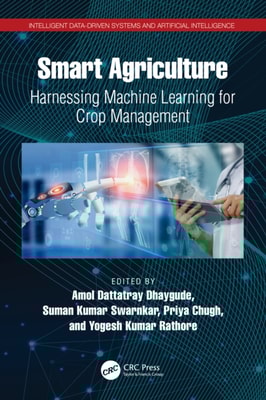
This book, Smart Agriculture: Harnessing Machine Learning for Crop Management, is a comprehensive guide designed to explore the various facets of integrating machine learning into agricultural practices.
This book introduces the highly topical issue from many different angles, sensitizing readers to the various challenges to human life posed by climate change, identifying possible intentional and inadvertent anthropogenic factors and consequences, and seeking socially and environmentally viable solutions.
Following the successful first edition, this revised and greatly expanded edition Tomato Diseases: Identification, Biology and Control is the definitive work on the diseases and disorders of the tomato.
Estimating evapotranspiration (ET) has been one of the most critical research areas in agriculture because of water scarcity, the growing population, and climate change.
This book informs about knowledge gain in soil and land degradation to reduce or prevent it for meeting the mission of the Sustainable Developments Goals of the United Nations.
This new edition is completely revamped and reorganized to reflect the change in standards and regulations and to include all new topics related to organizational sustainability and risk management.
This book presents deliberations on molecular and genomic mechanisms underlying the interactions of crop plants to the abiotic stresses caused by heat, cold, drought, flooding, submergence, salinity, acidity, etc.
This book investigates the role of climate-induced innovation and climate change mitigation technologies in reducing the negative impact of climate change.
This book examines different innovations in worldwide agricultural-systems including the applications of artificial intelligence (AI), internet of things (IoT) and features of machine learning (ML) for the benefits of the farm-community.
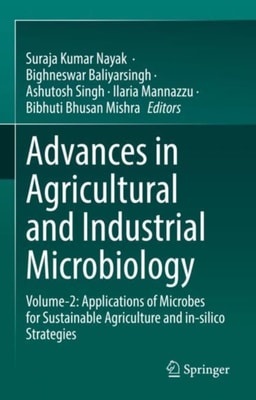
This book is developed in a lucid manner for readers to grasp information about the role and potential of microbes in sustainable agriculture & computational strategies associated with it.