This book provides exclusive information on how agribusinesses could act as the springboard for inclusive economic growth critical for socioeconomic transformation of Africa.
Heterosis and Hybrid Seed Production in Agronomic Crops discusses how heterosis or "e;hybrid vigor"e; has played a major role in improving crop productivity and quality in order to feed the ever-increasing human population, particularly in developing countries.
This book focuses on the role of hydrogen sulfide in the protection of plants against abiotic stresses and abiotic stress-induced complications by the way of converging advanced key methods of proteomics, genomics, and metabolomics.
This book includes papers presented at the 2017 Joint meeting of Fodder Crops and Amenity Grasses Section and Protein Crops Working Group of EUCARPIA-Oil and Protein Crops Section.
This book will collate, review and synthesize information on how Organic Agriculture (OA) practices affect and are affected by climate change, in comparison to the more widely used conventional agricultural practices.
Abiotic and biotic stress factors, including drought, salinity, waterlog, temperature extremes, mineral nutrients, heavy metals, plant diseases, nematodes, viruses, and diseases, adversely affect growth as well as yield of crop plants worldwide.
This book uniquely presents accurate and up-to-date information related to crops in small and fragmented agricultural lands with mixed cropping patterns.
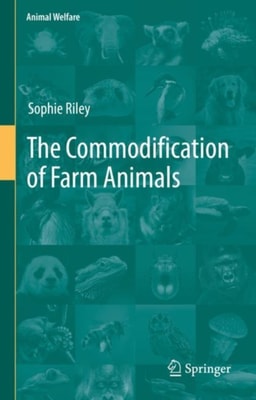
This book examines how the developments in veterinary science, philosophy, economics and law converged during the nineteenth and early twentieth centuries to entrench farm animals along a commodification pathway.
This book in the series "e;Sustainable Development and Biodiversity"e; contains peer-reviewed chapters from leading academicians and researchers around the world in the field of horticulture, plant taxonomy, plant biotechnology, genetics and related areas of biodiversity science centered on genetic diversity.
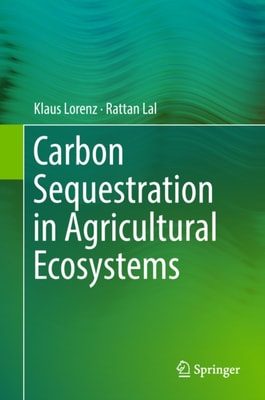
A comprehensive book on basic processes of soil C dynamics and the underlying factors and causes which determine the technical and economic potential of soil C sequestration.
This book examines supply and value chains in African agriculture, providing both a thorough analysis of existing practices and practical business models for future development.
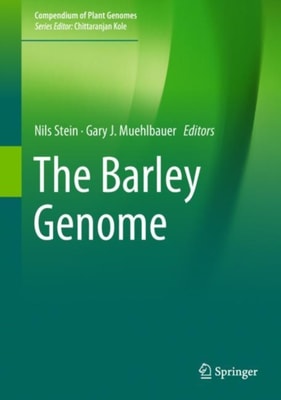
This book presents an overview of the state-of-the-art in barley genome analysis, covering all aspects of sequencing the genome and translating this important information into new knowledge in basic and applied crop plant biology and new tools for research and crop improvement.
This book describes specific, well-know controversies in the genetic modification debate and connects them to deeper philosophical issues in philosophy of technology.
This book maps extreme temperature increase under dangerous climate change scenarios in Brazil and their impacts on four key sectors: agriculture, health, biodiversity and energy.
This book addresses various aspects of the current castor bean research, including genetics, biotechnology, comparative genomics, and more specific topics such as oil metabolism and the ricin toxin.
This book highlights modern methods and strategies to improve cereal crops in the era of climate change, presenting the latest advances in plant molecular mapping and genome sequencing.
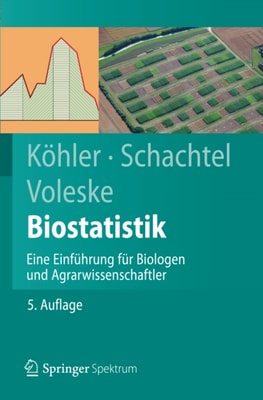
Rasch statistische Verfahren zur Auswertung experimenteller Ergebnisse lernen und handhaben – das ist mit dieser bewährten und sehr gut verständlichen Einführung in die Biometrie ganz einfach.
Natural Products in the Chemical Industry is not a conventional textbook, but rather an invitation to join an entertaining journey that takes you into the fascinating world of natural products.
This book presents new studies dealing with the attempts made by the scientists and practitioners to address contemporary issues in geotechnical engineering such as characterization of soil, geomaterials, soil stability and some other geomechanics issues that are becoming quite relevant in today's world.
The book discusses recent innovation and diversification paths in agri-food, specifically the linkages among food research and innovation, production, consumption, gastronomy, and place branding as well as technology.
This book argues that development strategies have thus far failed in Western Africa because the many challenges afflicting the area have yet to be explored and understood from the perspective of institutional resources.
This book presents advanced ecological techniques for crop cultivation and the chapters are arranged into four sections, namely general aspects, weeds, fungi, worms and microbes.
This book highlights modern strategies and methods to improve oilseed crops in the era of climate change, presenting the latest advances in plant molecular breeding and genomics-driven breeding.
This book is the first comprehensive compilation of deliberations on whole genome sequencing of sesame including genome assembly, annotation, structure and synteny analysis, and sequencing of its chloroplast genome and also its wild species.
This volume collects the best scientific contribution presented in the 3rd World Conference on Terraced Landscapes held in Italy from 6th to 15th October 2016, offering a deep and multifaceted insight into the remarkable heritage of terraced landscapes in Italy, in Europe and in the World (America, Asia, Australia).
The originality of this book is to review and characterize the current body of scientific publications that describe the complete causal sequence from reorganization of agricultural production to land use changes (LUC) and the resulting environmental impacts.
This book describes the concepts, strategies and techniques for pulse-crop improvement in the era of climate change, highlighting the latest advances in plant molecular mapping and genome sequencing.
This work brings together a wealth of data regarding the reference values and factors of variation in biochemical parameters used by camel veterinarians and scientists to determine these animals' nutritional and clinical status.
Nanobiotechnology in agriculture is a new knowledge area that offers novel possibilities to achieve high productivity levels at manageable costs during the production and merchandising of crops.
This book compiles examples of the most widely used tools in agricultural economics that have been developed and used to analyze the impact of global change in agricultural activity.
This book presents a detailed overview and critical evaluation of recent advances and remaining challenges in improving nutritional quality and/or avoiding the accumulation of undesirable substances in plants using a variety of strategies based on modern biological tools and techniques.
This book contributes to the on-going debates on climate change by focusing on the SDGs and exploring linkages between environmental change and food security as well as the relevance and need to consider the management of natural resources, especially water, soil and forest.
This book discusses the ability of nanomaterials to protect crop-plant and animal health, increase production, and enhance the quality of food and other agricultural products.
This handbook covers the most commonly used techniques for measuring plant response to biotic and abiotic stressing factors, including: in vitro and in vivo bioassays; the study of root morphology, photosynthesis (pigment content, net photosynthesis, respiration, fluorescence and thermoluminiscence) and water status; thermal imaging; the measurement of oxidative stress markers; flow cytometry for measuring cell cycle and other physiological parameters; the use of microscope techniques for studying plant microtubules; programmed-cell-death; last-generation techniques (metabolomics, proteomics, SAR/QSAR); hybridization methods; isotope techniques for plant and soil studies; and the measurement of detoxification pathways, volatiles, soil microorganisms, and computational biology.