This book presents a collection of ten empirical studies on Iran's sustainable agriculture and agribusiness, grouped into three domains: agricultural prices and commodity market analysis; risk management and climate change; and natural resources and environmental economics.
This book is unique and original, constituting a pioneering study in the use of spatial economics and related analytical approaches to Brazil's Cerrado agricultural development and the formation of agro-industrial value chains.
The entire range of the developmental process in plants is regulated by a shift in the hormonal concentration, tissue sensitivity and their interaction with the factors operating around the plants.
The current scenario of increasing sensitivity towards the sustainable agriculture has given a large space to extensively utilize natural resources that are environmental friendly and are a good replacement of chemicals in agriculture.
Recent changes in the pattern of agricultural practices from use of hazardous pesticides to natural (organic) cultivation has brought into focus the use of agriculturally important microorganisms for carrying out analogous functions.
Soil and water salinity is a major challenge for the agricultural community and policy makers in terms of meeting the burgeoning population's demand for food and other agricultural commodities.
This book provides fundamentals, highlights recent developments and offers new perspectives relating to the use of electrolyzed water (EW) as an emerging user- and environmental-friendly broad-spectrum sanitizer, with particular focus on the food industry.
This book is an important contribution to our understanding of food in China through an ethnographic case study of an alternative food movement in Shanghai and the surrounding countryside.
The conservation of crop genetic resources is one of the important elements in efforts to sustainably increase agricultural production in low-income countries, and to guarantee long-term food security, especially for the low-income population groups in these countries.
This book presents a comprehensive collection of various in situ and ex-situ soil remediation regimes that employ natural or genetically modified microbes, plants, and animals for the biodegradation of toxic compounds or hazardous waste into simpler non-toxic products.
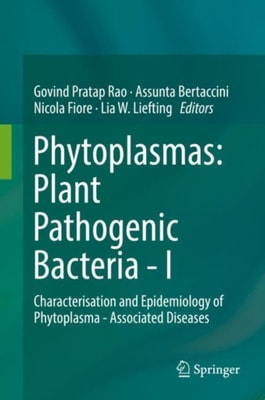
Phytoplasma-associated diseases are a major limiting factor in the context of the quality and productivity of many ornamental, horticultural and other economically important agricultural crops worldwide.
Since the publication of "e;The coconut palm - A monograph"e; in 1960, considerable information has been accrued on the crop through work at research institutes, international organisations and development agencies.
This book uses case studies to highlight the environmental water footprints in the agricultural and livestock farming sector, and those of consumer products.
This book presents a comprehensive collection of various in situ and ex-situ soil remediation regimes that employ natural or genetically modified microbes, plants, and animals for the biodegradation of toxic compounds or hazardous waste into simpler non-toxic products.
This book discusses the history of environmental science and climate change, and the initiation and development of different parameters determining climate changes.
Agriculture is currently facing multi-faceted threats in the form of unpredictable weather variability, frequent droughts and scarcity of irrigation water, together with the degradation of soil resources and declining environmental health.
This book enhances the discussion of anthropized soils with photographs of soil profiles and provides general information about soils in Japan, using data on their physical and chemical properties.
The books Molecular Diagnostics Part 1 and 2 provide a comprehensive and practical overview of the state-of-the-art molecular biological diagnostic strategies that are being used in a wide variety of disciplines.
This book systematically presents 40 pests, 7 natural pest enemies, and 20 diseases and weeds commonly encountered in sugarcane production, combining clear colour photos with detailed scientific descriptions.
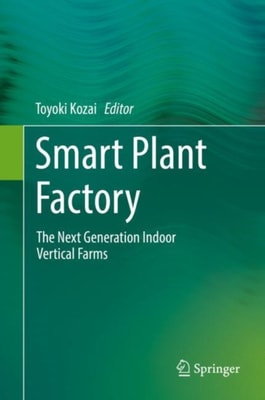
This book describes the concept, characteristics, methodology, design, management, business, recent advances and future technologies of plant factories with artificial lighting (PFAL) and indoor vertical farms.
Sugarcane enjoys a prominent position among agro-industrial crops and is commercially grown in 115 tropical and subtropical countries around the world.
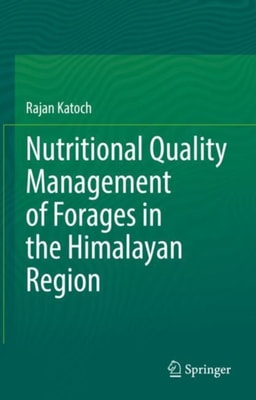
The book discusses up-to-date and detailed information about the nutritional quality of forage in the biodiversity-rich Himalayan region and their potential in livestock feeding.
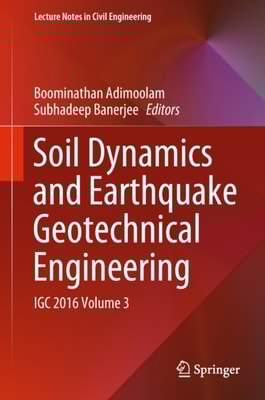
This book gathers selected proceedings of the annual conference of the Indian Geotechnical Society, and covers various aspects of soil dynamics and earthquake geotechnical engineering.
This book explores the role of in silico deployment in connection with modulation techniques for improving sustainability and competitiveness in the agri-food sector; pharmacokinetics and molecular docking studies of plant-derived natural compounds; and their potential anti-neurodegenerative activity.
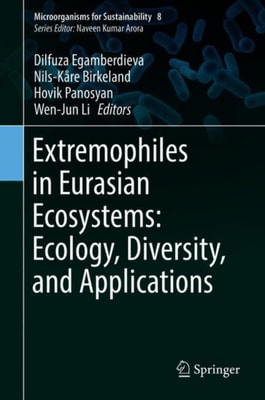
This book explores various aspects of thermophilic and halophilic microbes from Eurasian ecosystems, which have proved to offer a unique reservoir of genetic diversity and biological source of extremophiles.
This book demonstrates the benefits of using commercially available surfactants, or surface-active agents, for remediation of metal-contaminated soil and sediment.
Phytoplasma-associated diseases are a major limiting factor to quality and productivity of many ornamentals, horticultural and other economically important agriculture crops worldwide.
This book employs different parametric and non-parametric panel data models which have been used in history of developed panel data efficiency measurement literature.