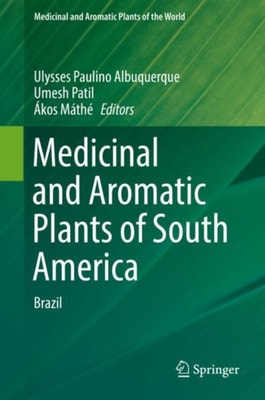
This volume in the series deals with the major Medicinal and Aromatic Plants (MAPs) of South America, providing information on major aspects of this specific group of plants on that continent (botany, traditional usage, chemistry, production/collection practices, trade and utilization).
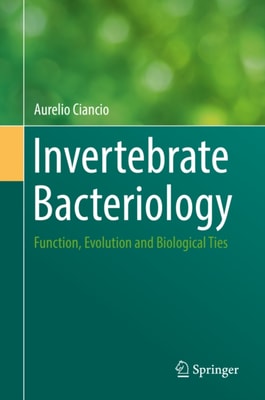
This compendium reviews different processes acting on bacterial groups that evolved one or more relationships with members of the most important invertebrate Phyla.
Recent progress in biotechnology and genomics has expanded the plant breeders' horizon providing a molecular platform on the traditional plant breeding, which is now known as 'plant molecular breeding'.
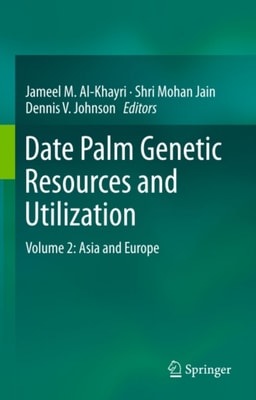
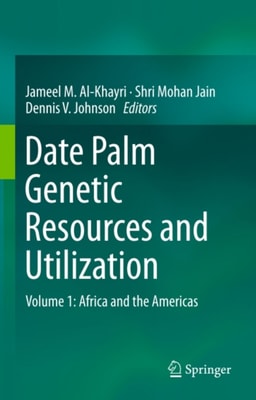
This important 2-volume reference book is the first comprehensive resource reflecting the current global status and prospects of date palm cultivation by country.
This important 2-volume reference book is the first comprehensive resource reflecting the current global status and prospects of date palm cultivation by country.
Volume 9 is part of a multicompendium Edible Medicinal and Non-Medicinal Plants, on plants with edible modified stems, roots and bulbs from Acanthaceae to Zygophyllaceae (tabular) and 32 selected species in Alismataceae, Amaryllidaceae, Apiaceae, Araceae, Araliaceae, Asparagaceae, Asteraceae, Basellaceae, Brassicaceae and Campanulaceae in detail.
This book provides a comprehensive review of all aspects of the molecular and cell biology of abscisic acid (ABA) metabolism, transport and signal transduction, covering our current understanding of ABA as well as research trends.
This volume continues the series of books on "e;Plant Pathology in the 21st Century"e;, and contains the papers given at the 10th International Congress of Plant Pathology (ICPP 2013) held in Beijing, August 25-30, 2013 concerning seed health.
The current volume, "e;Medicinal and Aromatic Plants of the Middle-East"e; brings together chapters on selected, unique medicinal plants of this region, known to man since biblical times.
In the first section dedicated to theoretical thoughts on comparative agriculture, Hubert Cochet introduces the notion of "e;agricultural development"e;, the very subject of comparative agriculture, with a restored endogenous dimension.
The book focuses on four broad topics related to trapping of agriculturally important tephritid fruit flies, namely i) lures and traps, ii) invasion biology and detection of infestations, iii) attract and kill systems, and iv) trade regulations and risk assessment.
This book evaluates the history, the present and the future of water markets on 5 continents, beginning with the institutional underpinnings of water markets and factors influencing transaction costs.
This book is part of the Plant Pathology in the 21st Century Series, started in the occasion of the IX International Congress of Plant Pathology, Torino, 2008.
Human activity is changing the global environment at an unprecedented rate while humanity faces a range of complex and interrelated challenges to local, regional and global development, human security and politics.
Due to the rapid increase in world population and improving living standards, the global agriculture sector is confronting with challenges for the sustainability of agricultural production and of the environment.
The Food and Agriculture Organization of the United Nations (FAO) produced a 2011 report on women in agriculture with a clear and urgent message: agriculture underperforms because half of all farmers-women-lack equal access to the resources and opportunities they need to be more productive.
This books gives a complete overview of the Soils of Slovenia, from soil research history, climate, geology, geomorphology, major soil types, soil maps, soil propoerties, classification, fertility, land use and vegetation, soil management, soils and humans, soils and industries and future soils issues.
If a global population of 9 billion by 2050 is to be fed adequately, more food must be produced and this in keeping with increasingly stringent standards of quality and with respect for the environment.
This book provides a succinct but comprehensive presentation of key geomorphological locations and topics including information about geomorphological heritage and maps to visit the most important sites.
In recent years, especially with the approach of the 21st Session of the Conference of the Parties to the United Nations Framework Convention on Climate Change in Paris in late 2015, the number of publications, conferences and meetings on climate change has been growing exponentially.
Urban agriculture has the potential to change our food systems, enhance habitat in our cities, and to morph urban areas into regions that maximize rather than disrupt ecosystem services.
While focusing on various interactions between trait genes/QTL and dynamic expressions of conditional QTL genes, this book also discusses aspects of molecular marker-assisted breeding, and applications of molecular markers associated with yield, quality, physiology and disease resistance in wheat.
The book mainly describes the QTL mappings and efficacy analyses that are associated with wheat productivity, quality, physiology and various stress resistances and provides summaries of results from studies conducted both at home and abroad.
The last 25 years have seen significant advances in our understanding of the mycorrhizal fungi that colonize most of the world's plants, and the mycorrhizal networks that form and extend into the soil beyond plant roots.
Dieser Buchtitel ist Teil des Digitalisierungsprojekts Springer Book Archives mit Publikationen, die seit den Anfängen des Verlags von 1842 erschienen sind.
Dieser Buchtitel ist Teil des Digitalisierungsprojekts Springer Book Archives mit Publikationen, die seit den Anfängen des Verlags von 1842 erschienen sind.