Von der Arbeits gruppe Systemforschung an der Universität Osnabrück wird im Auftrag der International Union of Biologica1 Sciences (IUBS) ein Projekt zur Erstellung von sogenannten Element-Konzentrations Katastern in Ökosystemen (ECCE) entwickelt, das alle großen Ökosysteme der Erde einschließen soll.
It is apparent that wilt diseases continue to be a major problem in crop production because of the number of crops affected, the number and genetic variability of pathogens involved, and their widespread occurrence throughout tropical and temperate regions under a variety of cropping systems.
In recent years, tropical forests have received more attention and have been the subject of greater environmental concern than any other kind of vegetation.
This monograph has been written in the hope that it will prove of value to medical students and clinicians, to Honours undergradu- ates in appropriate branches of the natural sciences, and to repro- ductive biologists in general.
th th On June 17 and 18 1987 the fourth workshop on "e;Azospi- rillum: Genetics, Physiology, Ecology"e; took place at the Uni ver- sity of Bayreuth, West Germany, organized by the Genetics depart- ment.
At last geochemists are offered one comprehensive reference book which gives the Eh-pH diagrams for 75 elements found in the earth's surface environment, including transuranic and other radioactive species.
Low temperature represents, together with drought and salt stress, one of the most important environmental constraints limiting the pro- ductivity and the distribution of plants on the Earth.
This volume comprises the lectures of the speakers at the NATO Advanced Research Workshop held at the Congress Centre The Flevohof at Biddinghuizen, The Netherlands, May 11-16, 1986.
"e;Instead of dirt and poison we have rather chosen to fill our hives with honey and wax; thus furnisning mankind with the two noblest of things, which are sweetness and light"e;.
As a result of the green revolution, the use of yield-increasing inputs such as fer- tilizer and pesticides became a matter of course in irrigated rice farming in Southeast Asia.
The Plant Root and the Rhizosphere was a major topical feature of the first International Symposium on Factors Determining the Behavior of Plant Pathogens in Soil held at the University of California, Berkeley in 1963.
Biotechnology has come to a stage where, by replacing some of the age- old practices of breeding, it can produce novel and improved plants and animals that can better serve human beings and their purposes.
These are the proceedings of an Advanced Research Workshop (ARW), sponsored by the NATO Science Panel, entitled "e;Pest Control: Operations and Systems Analysis in Fruit Fly Management"e;.
Compared with forces occurring in soil mechanics problems in civil engineering, the forces that are applied to soil in farming operations generally have a short duration, less than a few seconds, a small loaded area, no more than a few square decimeters, and small intensities, 10 bar being a high value.
In keeping with the spirit of an Advanced Series in the Agricultural Sciences, we have attempted to address herein most of the current research areas being used to characterize, describe and manage salt-affected soils.
The development of a crop, and therefore its health, is always the result of interplay between biological and environmental factors, as influenced by human agency.
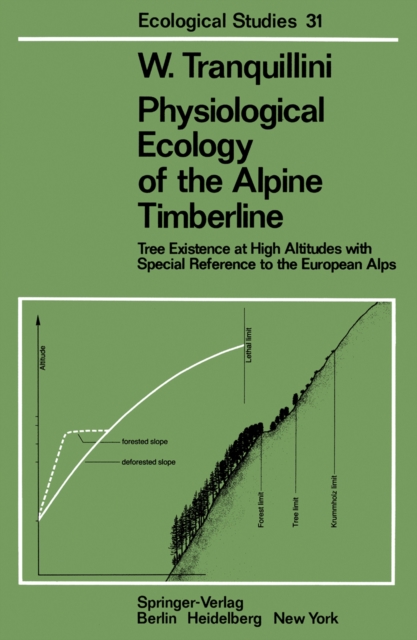
In the European Alps the importance of forests as protection against ava- lanches and soil erosion is becoming ever clearer with the continuing increase in population and development of tourism.
The Advanced Series in Agricultural Sciences is designed to ftll a long-felt need for advanced educational and technological books in the agricultural sciences.