Agroforestry is a land use system that allows for the concurrent production of trees and agricultural crops and/or animals from the same piece of land.
An authoritative update of forest tree biotechnology and genomics methodologies, this book covers procedures and accomplishments from basic biological science to applications.
In 1944 Lady Park Wood (45 hectares of woodland in Gloucestershire and Monmouthshire, UK) was set aside indefinitely by the Forestry Commission so that ecologists could study how woodland develops naturally.
In 1944 Lady Park Wood (45 hectares of woodland in Gloucestershire and Monmouthshire, UK) was set aside indefinitely by the Forestry Commission so that ecologists could study how woodland develops naturally.
The concept of natural resource sustainability has taken on new importance in todays world, and community participation in the conservation of forest resources is essential for generating innovative sustainability solutions.
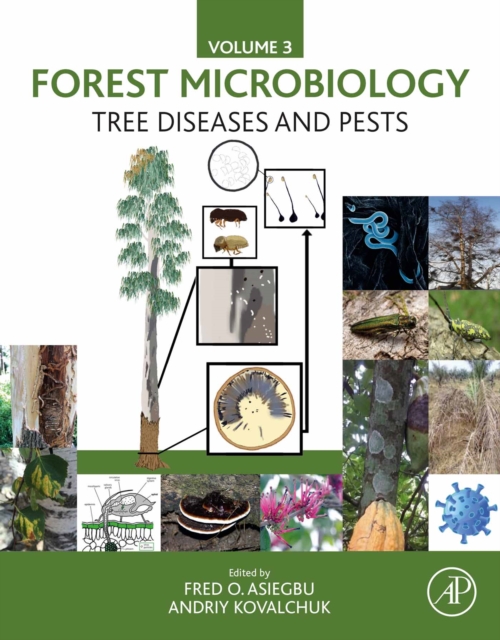
Forest Microbiology: Tree Diseases and Pests, Volume Three in the Forest Microbiology series, provides an overview of major disease agents of trees, including viruses, phytoplasma, bacteria, fungi, nematodes and major insect pests.
"e;This book makes a significant academic contribution because the study enriches the theories of social capital, governance and participatory forestry by making use of the evidence of empirical data collected in the field-work in Bangladesh.
The landscape is a mosaic of ecosystem elements, which changes in size, shape, spatial arrangement, and quality of the patches/elements due to complex, multi-scalar processes which influence the ecosystem's biotic components.
This textbook provides students and academics with a conceptual understanding of fire behavior and fire effects on people and ecosystems to support effective integrated fire management.
From a young age, author Janette Perrett showed an interest in the environment and animals; it was an interest that led her to milking cows as a career.
Biomass to Renewable Energy Processes, Second Edition, explains the theories of biological processes, biomass materials and logistics, and conversion technologies for bioenergy products such as biogas, ethanol, butanol, biodiesel, and synthetic gases.
Biomass to Renewable Energy Processes, Second Edition, explains the theories of biological processes, biomass materials and logistics, and conversion technologies for bioenergy products such as biogas, ethanol, butanol, biodiesel, and synthetic gases.
Ecological Restoration and Management of Longleaf Pine Forests is a timely synthesis of the current understanding of the natural dynamics and processes in longleaf pine ecosystems.
Adhesive bonding plays an increasing role in the forest product industry and is a key factor for efficiently utilizing timber and other lignocellulosic resources.
Biometry for Forestry and Environmental Data with Examples in R focuses on statistical methods that are widely applicable in forestry and environmental sciences, but it also includes material that is of wider interest.
This book provides a global perspective on the various issues that the industry has to face as well as to provide some key global strategies that can help coping with those global challenges, such as collaboration, strategic value chain planning, and interdependency analyses.
This book builds on existing work exploring succession, disturbance ecology, and the interface between geophysical and biological systems in the aftermath of the 1980 eruptions of Mount St.
Climate change, urban sprawl, abandonment of agriculture, intensification of forestry and agriculture, changes in energy generation and use, expansion of infrastructure networks, habitat destruction and degradation, and other drivers of change occur at increasing rates.
As forests decline in temperate and tropical climates, highly-developed countries and those striving for greater economic and social benefits are beginning to utilize marginal forests of high-latitude and mountainous regions for resources to satisfy human needs.
Thrips (fhysanoptera) are very small insects, widespread throughout the world with a preponderance of tropical species, many temperate ones, and even a few living in arctic regions.
This fifth volume in the series The Plant Viruses, dealing with viruses with bipartite genomes, completes the coverage of viruses with isometric parti- cles and genomes consisting of single-stranded, positive-sense RNA: viruses that have tripartite and monopartite genomes of this kind were dealt with in Volumes 1 and 3, respectively.