A year has passed since Eshel Bresler, my good friend and colleague, and a member of the editorial board of the Advanced Series in Agricultural Sciences, died suddenly while on a visit to the Chinese Academy of Sciences in Beijing.
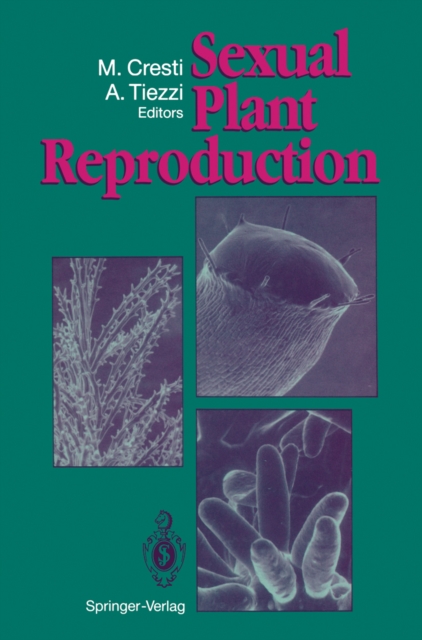
In recent years there has been a growing awareness of the importance of reproductive biology to crop production and there has been a tremendous increase in research on reproductive structures of higher plants.
This seris keeps scientists and advanced studentsspecialized on a particular subject informed of the latestdevelopments and results in all different areas of botany.
Presenting an analysis of the water relationships of the major groups of organisms: fungi, plants and animals, the text examines water stress at all levels of biological organization.
Starting with the description of meteorological variables in forest canopies and its parameter variations, a numerical three-dimentional model is developed.
Volume 5 presents a detailed survey of the synthesis of pyrethroids and of almost every of the respective patent applications for synthetic pyrethroid active ingredients.
In a very real sense, much of North American physiological plant ecol- ogy began in the Basin and Range and has been researched there over the last four decades.
Behavioural Mechanisms of Food Selection examines animals belonging to diverse trophic groups, from carnivores, herbivores, micro-algal grazers, to filter-feeders and detritus-feeders.
No matter what forests are used for, forest managers have to deal with interactions between individual trees and between trees and other forest organisms.
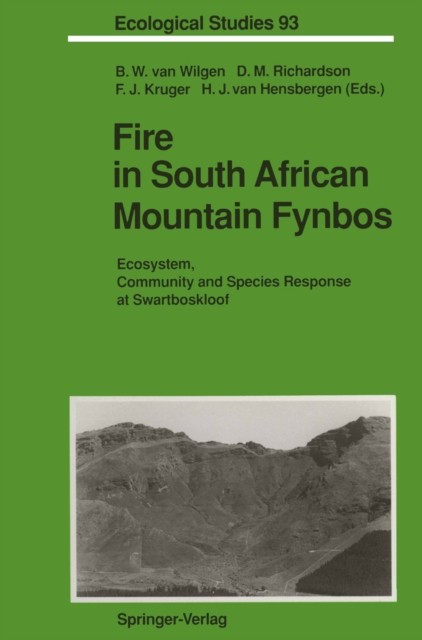
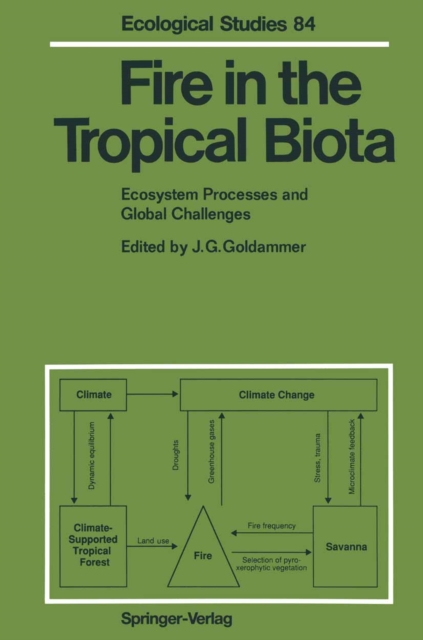
In 1977, the Volkswagen Foundation sponsored the first of a series of International Symposia on Fire Ecology at Freiburg University, Federal Republic of Germany.
Michael Evenari's biography unfolds his exciting, manifold life: his love for botany, the confrontation with political events as a youngster and his thrilling experience of helping in the development of Israel.
The understanding of pollutant transformations, sorption and transport in soils and uptake by plants is the key to controlling contaminant movement towards groundwater and accumulation in food-chains.
The floricultural industry has been undergoing an unprecedented revolu- tion in terms of the type of commodity produced and the production and marketing technology in both developed and developing countries.
The concept of controlled release has attracted increasing attention over the last two decades, with the applications of this technology proliferating in diverse fields in- cluding medicine, agriculture and biotechnology.