This book is the sixth and final volume in the Tasks for Vegetation Science book series, and it concludes the most comprehensive scientific documentation dealing with hypersaline ecosystems of the world.
Unarguably, preserving the ecosystem, securing sustainability and understanding the dynamics of agro-food chains have all become vital policy objectives with several interlinked dimensions.
This book provides a unique exploration of the inter-relationships between the science of plant environmental responses and the understanding and management of forest fires.
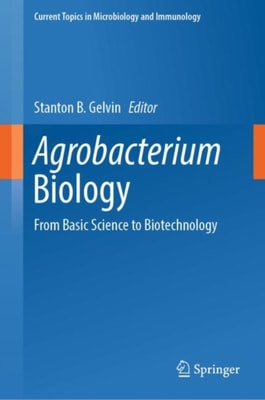
This volume reviews various facets of Agrobacterium biology, from modern aspects of taxonomy and bacterial ecology to pathogenesis, bacterial cell biology, plant and fungal transformation, natural transgenics, and biotechnology.
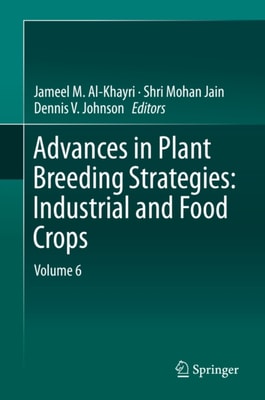
This book examines the development of innovative modern methodologies towards augmenting conventional plant breeding, in individual crops, for the production of new crop varieties under the increasingly limiting environmental and cultivation factors to achieve sustainable agricultural production, enhanced food security, in addition to providing raw materials for innovative industrial products and pharmaceuticals.
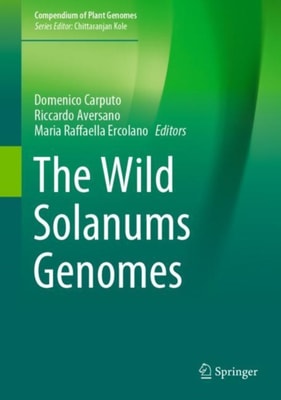
This book gathers the latest information on the organization of genomes in wild Solanum species and emphasizes how this information is yielding direct outcomes in the fields of molecular breeding, as well as a better understanding of both the patterns and processes of evolution.
This book presents comprehensive information on genetics, genomics and breeding in Brassica oleracea, an agriculturally important species that includes popular vegetable crops such as cabbage, cauliflower, broccoli, Brussels sprouts, kale, collard greens, savoy, kohlrabi, and gai lan.
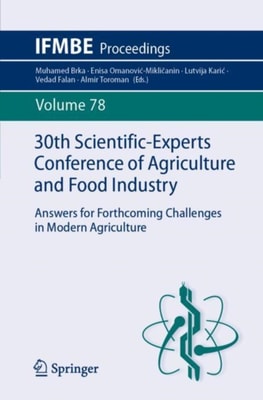
This book gathers the proceedings of the 30th Scientific-Experts Conference of Agriculture and Food Industry, held on September 26-27, 2019, in Sarajevo, Bosnia and Herzegovina.
About 15 years ago, we asked ourselves why the methods developed by the research institutions for the management of pests were almost not used by small landholder farmers.
This edited book's theme is organized as a part of the GeoMEast 2019 International Congress and Exhibition that was held in Cairo, Egypt, on November 10-14 2019.
Bioinformatics is an integrative field of computer science, genetics, genomics, proteomics, and statistics, which has undoubtedly revolutionized the study of biology and medicine in past decades.
Advances in molecular biology and genome research in the form of molecular breeding and genetic engineering put forward innovative prospects for improving productivity of many pulses crops.
This book examines the development of innovative modern methodologies towards augmenting conventional plant breeding, in individual crops, for the production of new crop varieties under the increasingly limiting environmental and cultivation factors to achieve sustainable agricultural production, enhanced food security, in addition to providing raw materials for innovative industrial products and pharmaceuticals.
Plant improvement has shifted its focus from yield, quality and disease resistance to factors that will enhance commercial export, such as early maturity, shelf life and better processing quality.
World health authorities recommend people maximize their protein intake through vegetable sources (such as pulses), and reduce protein intake from animal sources.
This book offers an extensive study of indigenous communities in the Andaman and Nicobar Islands, India, and their methods of forest conservation, along with an exploration of the impact of forestry operations in the islands and the wide scale damage they have incurred on both the land and the people.
This textbook presents the concepts and processes involved in the soil-plant-atmosphere system as well as its applications in the water cycle in agriculture.
The Thirteenth-Century Animal Turn: Medieval and Twenty-First-Century Perspectives examines a wide range of texts to argue in favour of a thirteenth-century animal turn which not only generated a heightened scholarly awareness of animals but also had major implications for society more generally.
This book introduces the reader to synthetic or artificial seeds, which refer to alginate encapsulated somatic embryos, vegetative buds or any other micropropagules that can be used as seeds and converted into plantlets after propagating under in vitro or in vivo conditions.
This book provides comparative data on fish ecology and small-scale fisheries between Tapajos (clear water) and Negro (black water) rivers, in the Brazilian Amazon.
By providing multiple economic goods and ecosystem services, Latin American forests play a key role in the environmental, social and economic welfare of the region's countries.
This Palgrave Pivot employs the concept of open source agriculture as a new social movement, which not only advocates a specific agenda but also creates technological products under a unique technology development model.
This single-volume thoroughly summarizes advances in the past several decades and emerging challenges in fundamental research in geotechnical engineering.
Mediterranean irrigation is diverse due to, among other factors, the relative importance of water in the economy of each country, varied levels of aridity, heterogeneous levels economic, social and technological levels of development, and differences in political and social organization.
This book discusses the role of energy in agriculture which reaches 30%, and the role of agriculture in energy where the water shred by 17% in total electricity generation in addition to the role of bioenergy as a source of liquid energy.
This book offers a transdisciplinary perspective on the concept of "e;smart villages"e; Written by an authoritative group of scholars, it discusses various aspects that are essential to fostering the development of successful smart villages.