This book focuses on the contested nature and competing narratives of food system transformations, despite it being widely acknowledged that changes are essential for the safeguarding of human and planetary health and well-being.
This book critically examines the driving forces, discourses, and conflicts surrounding Chinese investments in overseas farmland, with a specific focus on Australia.
This book specifically focuses on state-of-the-art advanced sensing and robotic techniques in smart agriculture and comprehensively describes the new knowledge.
Bioremediation of Emerging Contaminants from Soils: Soil Health Conservation Along with Food Security deals with current challenges of sustainable soil health using eco-friendly approaches.
This study focuses on impacts of the environmental and socio-economic transformation on the indigenous people's livelihoods in Vietnam's Central Highlands recent decades since the country's reunification in 1975.
This book employs different parametric and non-parametric panel data models which have been used in history of developed panel data efficiency measurement literature.
This book analyses the multidimensional condition of the Romanian industrial landscape, which played host to a multitude of demo-economic, financial, trade, and trans- and inter-sectoral development practices before the intense period of European deindustrialisation.
This book aims at providing students, experts and practitioners with a detailed overview of agricultural and food security issues in China, analyzed through the lenses of a multidisciplinary approach that enables to fully grasp the current socio-political challenges and lock-ins of agricultural transformation towards more sustainable practices.
This book offers comprehensive coverage of all manifestations of resistance in combating infectious diseases and explores advances in antimicrobials in agriculture and their applications in the fight against microbes.
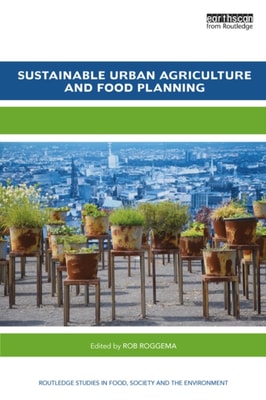
This highly original work examines the rise of the urban food planning movement in the Global North and provides insights into the new relationship between cities and food which has started developing over the past decade.
As urban populations rise rapidly and concerns about food security increase, interest in urban agriculture has been renewed in both developed and developing countries.
There is enormous current interest in urban food systems, with a wide array of policies and initiatives intended to increase food security, decrease ecological impacts and improve public health.
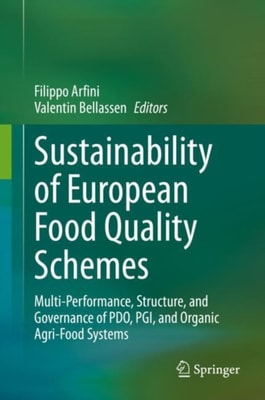
This edited volume evaluates recent EU quality policy, focusing on the structure, governance, technical specifications and performances - economic, environmental and social - of Food Quality Schemes (FQS) in the European Union and South East Asia.
This book performs a SWOT (strengths, weaknesses, opportunities and threats) analysis to examine the current food crisis and how it relates to the use of crops for energy.
This book presents the current state of the art in peanut genomics, focusing particularly on the latest genomic findings, tools and strategies employed in genome sequencing, transcriptomes and analysis, availability of public and private genomic resources, and ways to maximize the use of this information in peanut breeding programs.
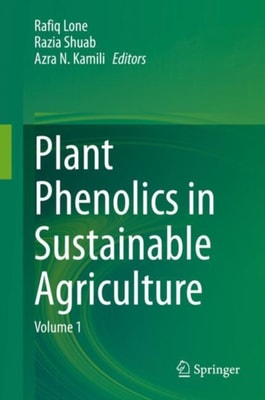
This book presents the latest research on plant phenolics, offering readers a detailed, yet comprehensive account of their role in sustainable agriculture.
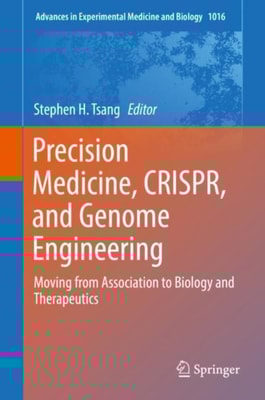
This book presents descriptive overviews of gene editing strategies across multiple species while also offering in-depth insight on complex cases of application in the field of tissue engineering and regenerative medicine.
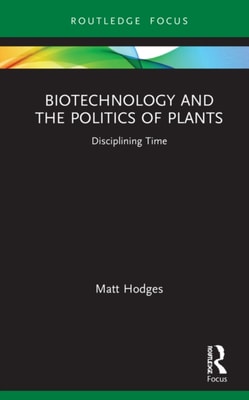
Biotechnology and the Politics of Plants explores the mysterious phenomenon of 'apomixis', the ability of certain plants to 'self-clone', and its potential as a revolutionary tool for agriculture and enhancing food security, that may soon be a reality.
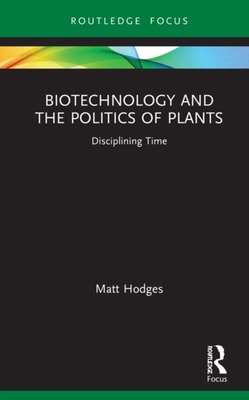
Biotechnology and the Politics of Plants explores the mysterious phenomenon of 'apomixis', the ability of certain plants to 'self-clone', and its potential as a revolutionary tool for agriculture and enhancing food security, that may soon be a reality.
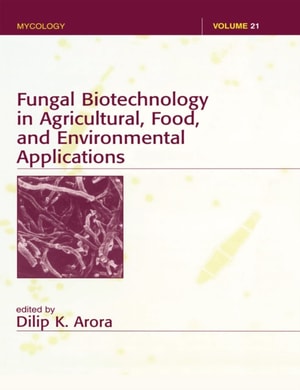
Contributions from 80 world-renowned authorities representing a broad international background lend Fungal Biotechnology in Agricultural, Food, and Environmental Applicationsfirst-class information on the biotechnological potential of entomopathogenic fungi and ergot alkaloids, applications of Trichoderma in disease control, and the d
Model-driven individual-based forest ecology and individual-based methods in forest management are of increasing importance in many parts of the world.
This book explores how we can solve the urgent problem of optimizing the use of variable, uncertain but finite fisheries resources while maintaining sustainability from a marine-ecosystem conservation perspective.
This edited book provides knowledge about hemicelluloses biorefinery approaching production life cycle, circular economy, and valorization by obtaining value-added bioproducts and bioenergy.
This book provides insights into various aspects of medicinal plant-associated microbes, known to be a unique source of biological active compounds, including their biotechnological uses and their potential in pharmaceutical, agricultural and industrial applications.
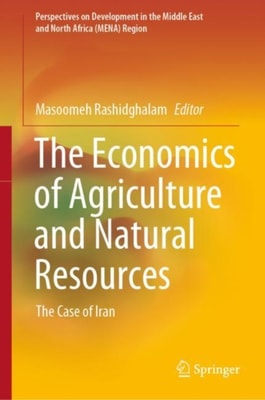
This book presents a collection of ten empirical studies on Iran's sustainable agriculture and agribusiness, grouped into three domains: agricultural prices and commodity market analysis; risk management and climate change; and natural resources and environmental economics.
A food system comprises the entire range of actors and interlinked activities related to food production, processing, distribution, marketing and trade, preparation, consumption, and disposal.
The entire range of the developmental process in plants is regulated by a shift in the hormonal concentration, tissue sensitivity and their interaction with the factors operating around the plants.
This book summarizes studies on climate and ecosystem change adaptation and resilience in Africa (CECAR-Africa), a collaboration with the goal of creating an integrated resilience enhancement strategy as a potential model for semi-arid regions across Sub-Saharan Africa by combining climate change and ecosystem change research.
The current scenario of increasing sensitivity towards the sustainable agriculture has given a large space to extensively utilize natural resources that are environmental friendly and are a good replacement of chemicals in agriculture.