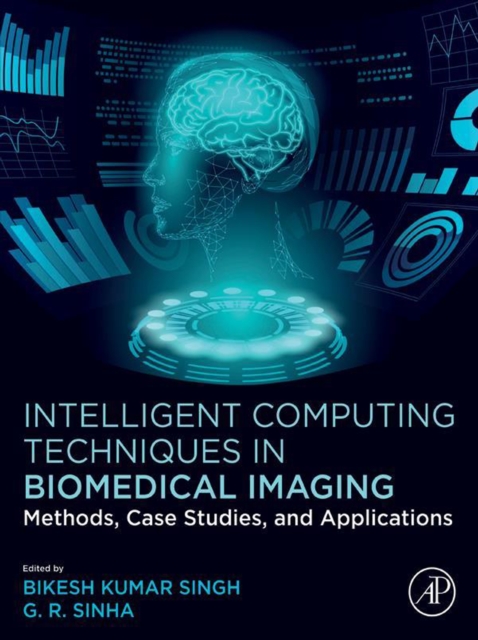
Intelligent Computing Techniques in Biomedical Imaging provides comprehensive and state-of-the-art applications of Computational Intelligence techniques used in biomedical image analysis for disease detection and diagnosis.
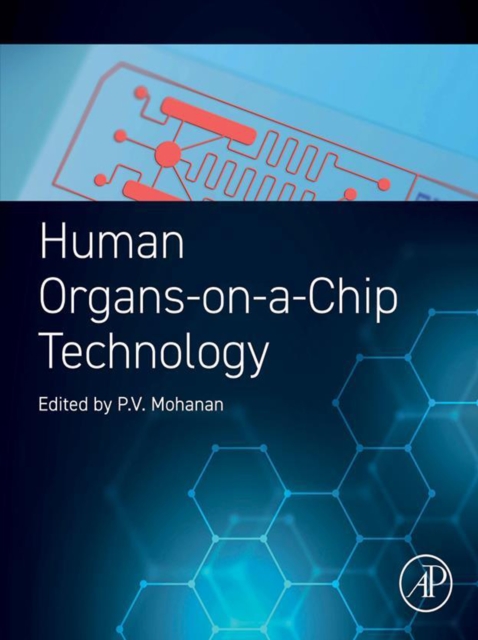
Human Organs-on-a-Chip Technology focuses on the technology advancement from "e;organ-on-a-chip to "e;multi organs-on-a-chip to the newest stage of "e;human organs-on-a-chip.
Human Organs-on-a-Chip Technology focuses on the technology advancement from "e;organ-on-a-chip to "e;multi organs-on-a-chip to the newest stage of "e;human organs-on-a-chip.
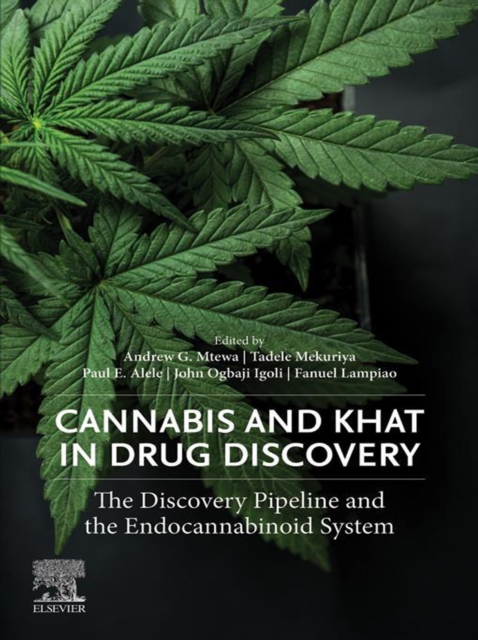
Cannabis and Khat in Drug Discovery: The Discovery Pipeline and the Endocannabinoid System provides comprehensive coverage of two important psychoactive plants: Khat and Cannabis.
Advances in Applied Microbiology, Volume 127 continues the comprehensive reach of this widely read and authoritative review source in microbiology where users will find invaluable references and information on a variety of areas relating to the topics of microbiology.
Advances in Applied Microbiology, Volume 127 continues the comprehensive reach of this widely read and authoritative review source in microbiology where users will find invaluable references and information on a variety of areas relating to the topics of microbiology.
Federated Learning for Medical Imaging: Principles, Algorithms, and Applications gives a deep understanding of the technology of federated learning (FL), the architecture of a federated system, and the algorithms for FL.
This book covers fundamental aspects in the preparation of polymeric in-situ, stimuli-responsive hydrogels; the properties, characterization, chemistry, and fabrication of these hydrogels is detailed, helping the reader to select the most appropriate material and design for the desired application.
Advances in Applied Microbiology, Volume 126 continues the comprehensive reach of this widely read and authoritative review source in microbiology where users will find invaluable references and information on a variety of areas relating to the topics of microbiology.
This book provides recent developments and future perspectives of pulp and paper processing based on biotechnology to replace conventional environmental unfriendly chemical processes.
The depletion of fossil resources and an ever-growing human population create an increasing demand for the development of sustainable processes for the utilization of renewable resources.
Multifunctional Nanostructured Coatings: Biomedical, Environmental, and Energy Applications offers core and advanced information about various nanomaterials and their synthetic approaches to nanostructured coatings.
Artificial Intelligence and Machine Learning for Women's Health Issues: Challenges, Impact, and Solutions discusses the applications, challenges, and solutions that machine learning can bring to women's health challenges.
Algae are sunlight-driven cell factories, and can efficiently absorb CO2 and convert light energy to chemical energy such as lipid, starch and other carbohydrates and release O2.
Advances in Applied Microbiology, Volume 126 continues the comprehensive reach of this widely read and authoritative review source in microbiology where users will find invaluable references and information on a variety of areas relating to the topics of microbiology.
Provides a tutorial on the computational tools that use mathematical optimization concepts and representations for the curation, analysis and redesign of metabolic networks Organizes, for the first time, the fundamentals of mathematical optimization in the context of metabolic network analysis Reviews the fundamentals of different classes of optimization problems including LP, MILP, MLP and MINLP Explains the most efficient ways of formulating a biological problem using mathematical optimization Reviews a variety of relevant problems in metabolic network curation, analysis and redesign with an emphasis on details of optimization formulations Provides a detailed treatment of bilevel optimization techniques for computational strain design and other relevant problems
The depletion of fossil resources and an ever-growing human population create an increasing demand for the development of sustainable processes for the utilization of renewable resources.
This updated edition presents topical knowledge and technologies for the thermal, chemo- and enzymatic-catalytic conversion of biomass into chemicals, materials and fuels.
The current book gives an excellent insight into downstream processing technology and explains how to establish a successful strategy for an efficient recovery, isolation and purification of biosynthetic products.
The interface between biological and non-biological worlds becomes increasingly blurred due to significant advances in our understanding of biological phenomena and the development of sophisticated means to manipulate molecular systems for varied applications.
The agricultural food system needs to provide access to enough healthy and affordable food for the growing population and mitigate its impact on the planet for future generations.
The book provides an excellent introduction to industrial biotechnology, addressing the applications of biomolecules and living systems in industrial manufacturing of various products.
The book provides an excellent introduction to industrial biotechnology, addressing the applications of biomolecules and living systems in industrial manufacturing of various products.
Industrial Biotechnology summarizes different aspects of plant biotechnology such as using plants as sustainable resources, phytomedical applications, phytoremedation and genetic engineering of plant systems.
The current book gives an excellent insight into downstream processing technology and explains how to establish a successful strategy for an efficient recovery, isolation and purification of biosynthetic products.
This updated edition presents topical knowledge and technologies for the thermal, chemo- and enzymatic-catalytic conversion of biomass into chemicals, materials and fuels.
The electrophoresis techniques are used in medicine, biochemistry, analytical chemistry, and biology to separate soluble and insoluble proteins, nucleic acids, chromosomes, viruses, as well as lysosomes, mitochondria, ribosomes and other cell organelles, red cells, tissue cells, and parasites.
Chapters collected from "e;The Virtual Conference on Chemistry and its Applications (VCCA-2021) - Research and Innovations in Chemical Sciences: Paving the Way Forward"e;.
Deep Learning Applications in Translational Bioinformatics, a new volume in the Advances in Ubiquitous Sensing Application for Healthcare series, offers a detailed overview of basic bioinformatics, deep learning, various applications of deep learning in translational bioinformatics including deep learning ensembles, deep learning in protein classification, detection of various diseases, prediction of antiviral peptides, identification of antibiotic resistance, computer aided drug design and drug formulation.
Deep Learning Applications in Translational Bioinformatics, a new volume in the Advances in Ubiquitous Sensing Application for Healthcare series, offers a detailed overview of basic bioinformatics, deep learning, various applications of deep learning in translational bioinformatics including deep learning ensembles, deep learning in protein classification, detection of various diseases, prediction of antiviral peptides, identification of antibiotic resistance, computer aided drug design and drug formulation.