This new book shows the work done by researchers dedicated to the study of different mycorrhizas types, the fungal species associated and their distribution influenced by geographical and environmental factors among the different South American biogeographic regions.
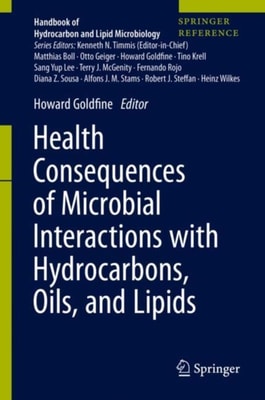
This book is a compilation of the most relevant molecular mechanisms and cellular processes that are involved in the infection processes in relation to lipid metabolism.
This book focusing on the bitter gourd genome is the first comprehensive compilation of knowledge on the botany, cytogenetical analysis, genetic resources and diversity, traditional breeding, tissue culture and genetic transformation, whole genome sequencing and comparative genomics in the Cucurbitaceae family.
This book is devoted to CO2 capture and utilization (CCU) from a green, biotechnological and economic perspective, and presents the potential of, and the bottlenecks and breakthroughs in converting a stable molecule such as CO2 into specialty chemicals and materials or energy-rich compounds.
This book explores the significance of soil microbial diversity to understand its utility in soil functions, ecosystem services, environmental sustainability, and achieving the sustainable development goals.
This book reviews how the release of the citrus genome facilitates the investigation of ancestral species, the study of their complex biological features, and the genetic basis of agronomic traits of paramount importance for their sustainable cultivation.
Advances in Hinfinity Control Theory is concerned with state-of-the-art developments in three areas:the extended treatment of mostly deterministic switched systems with dwell-time;the control of retarded stochastic state-multiplicative noisy systems; anda new approach to the control of biochemical systems, exemplified by the threonine synthesis and glycolytic pathways.
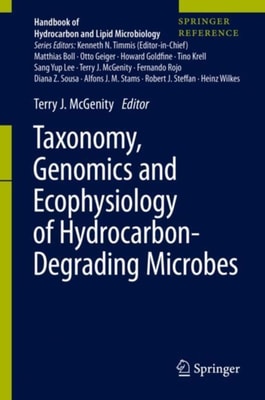
This book provides comprehensive, authoritative descriptions of the microbes involved in cleaning up oil spills and degrading climate-altering hydrocarbons such as methane, and has detailed discussions about the taxonomy, ecology, genomics, physiology and global significance of these hydrocarbon-degrading microbes.
This book reviews the chemical, regulatory, and physiological mechanisms of protein arginine and lysine methyltransferases, as well as nucleic acid methylations and methylating enzymes.
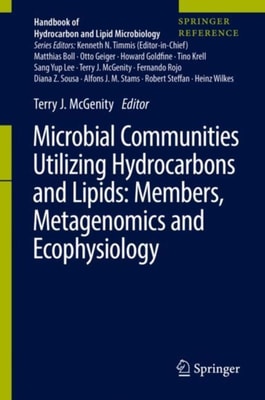
This book provides comprehensive, authoritative discussions about microbial communities in environments that are rich in hydrocarbons, crude oil or lipids.
Given the profound moral-ethical controversies regarding the use of new biotechnologies in medical research and treatment, such as embryonic research and cloning, this book sheds new light on the role of religious organizations and actors in influencing the bio-political debates and decision-making processes.
This book presents a comprehensive discussion on the heterogeneity existing between different types of stem cells within the same tissue, for several types of cancers, e.
This book addresses all aspects of neuromodulation therapy in the management of headache and facial pain disorders, paying particular attention to the application of this rapidly growing and fascinating therapy to different forms of headache and facial pain conditions.
This two-volume work presents comprehensive, accurate information on the present status and contemporary development in phycoremediation of various types of domestic and industrial wastewaters.
This two-volume work presents comprehensive, accurate information on the present status and contemporary development in phycoremediation of various types of domestic and industrial wastewaters.
This book provides an overview of biomedical applications in sports, including reviews of the current state-of-the art methodologies and research areas.
Nanobiotechnology Applications in Plant Protection: Volume 2 continues the important and timely discussion of nanotechnology applications in plant protection and pathology, filling a gap in the literature for nano applications in crop protection.
This book discusses genome-based strategies to provide a holistic understanding of yeasts in Human Health and as model organisms in basic research or industrial production.
An improved understanding of the interactions between nanoparticles and plant retorts, including their uptake, localization, and activity, could revolutionize crop production through increased disease resistance, nutrient utilization, and crop yield.
Nanosized particles explored for therapeutics and diagnosis-related research areas need the latest updated information for budding researchers as well as academicians.
This book offers a comprehensive treatment of nonlocal elasticity theory as applied to the prediction of the mechanical characteristics of various types of biological and non-biological nanoscopic structures with different morphologies and functional behaviour.
Rhodococcus are metabolically versatile actinobacteria frequently found in the environment with potential applications in bioremediation, biotransformations and biocatalysis, among other biotechnological processes.
This book provides a comprehensive overview of the incredible advances achieved in the study of in vitro neuronal networks for use in basic and applied research.
This book presents a comprehensive discussion on the novel concepts in stem cell heterogeneity, from pluripotent stem cells to human mesenchymal stem cells, adult and cancer stem cells of the thyroid, sarcoma, and more.
The present book is an attempt to describe the most recent developments in the area of pericyte biology which is one of the emergent hot topics in the field of molecular and cellular biology today.
Addressing the pear genome, this book covers the current state of knowledge regarding genetic and genomic resources, breeding approaches and strategies, as well as cutting-edge content on how these tools and resources are being / soon will be utilized to pursue genetic improvement efforts that will combine fruit quality, high productivity, precocious fruit bearing, and long postharvest storage life, along with elevated levels of resistance to various major diseases and insect pests.
This book focuses on the importance and roles of seed microbiomes in sustainable agriculture by exploring the diversity of microbes vectored on and within seeds of both cultivated and non-cultivated plants.
White biotechnology, or industrial biotechnology as it is also known, refers to the use of living cells and/or their enzymes to create industrial products that are more easily degradable, require less energy, create less waste during production and sometimes perform better than products created using traditional chemical processes.