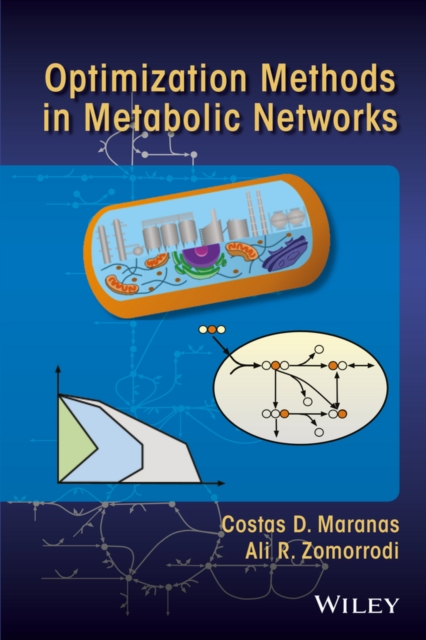
Provides a tutorial on the computational tools that use mathematical optimization concepts and representations for the curation, analysis and redesign of metabolic networks Organizes, for the first time, the fundamentals of mathematical optimization in the context of metabolic network analysis Reviews the fundamentals of different classes of optimization problems including LP, MILP, MLP and MINLP Explains the most efficient ways of formulating a biological problem using mathematical optimization Reviews a variety of relevant problems in metabolic network curation, analysis and redesign with an emphasis on details of optimization formulations Provides a detailed treatment of bilevel optimization techniques for computational strain design and other relevant problems
Jeder neue Durchbruch, den die Genetik erzielt, bedeutet Verheißung und Dilemma zugleich: Einerseits werden wir künftig in der Lage sein, tödliche Krankheiten wirksam zu bekämpfen und zu verhindern.
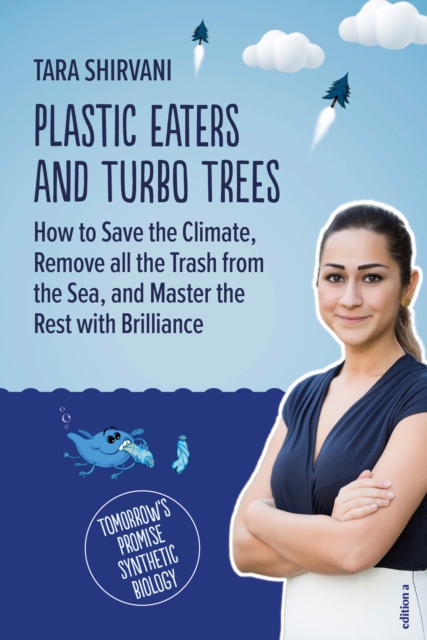
Trees that bind ten times more CO2 than those previously known or bacteria that simply eat up the plastic floating in the sea: Synthetic biology is one of the great opportunities to save the world.
This first book on this fascinating topic is edited by one of today's most famous and internationally respected organic chemists, renowned for his pioneering synthesis of the cyclopropenyl cation.
Bio-Based Polymers and Composites is the first book systematically describing the green engineering, chemistry and manufacture of biobased polymers and composites derived from plants.
In an age where anthrax can be produced in a garage and multilateral agreements among nations seem ever harder to reach, the threat of biowarfare could rapidly spiral out of control.
With increasing government regulation of pollution, as well as willingness to levy punitive fines for transgressions, treatment of industrial waste is a important subject.
Environmental Biotechnology: A Biosystems Approach introduces a systems approach to environmental biotechnology and its applications to a range of environmental problems.
Now available with the most current and relevant journal articles from Cell Press, Biotechnology Academic Cell Update Edition approaches modern biotechnology from a molecular basis, which grew out of the increasing biochemical understanding of physiology.
This text provides information on advances in microbiology, covering such topics as: the role of norsolorinic acid in aflatoxin research; flavour compounds in cheese; the role of micro-organisms in soy sauce production; and gene transfer among bacteria in natural environments.
Using chips composed of thousands of spots, each with the capability of holding DNA molecules corresponding to a given gene, DNA microarray technology has enabled researchers to measure simultaneously gene expression across the genome.
Particles at Interfaces presents recent developments in this growing field and is devoted entirely to the subject of particle transport, deposition and structuring on boundary surfaces.
The purpose of the book is to bring together in one place the different facets of regenerative biology and medicine while providing the reader with an overview of the basic and clinically-oriented research that is being done.
Extensive application of bioprocesses has generated an expansion in biotechnological knowledge, generated by the application of biochemical engineering to biotechnology.
Advances in Heat Transfer fills the information gap between regularly scheduled journals and university level textbooks by providing in-depth review articles over a broader scope than in journals or texts.
Established in 1960, Advances in Heterocyclic Chemistry is the definitive serial in the area--one of great importance to organic chemists, polymer chemists, and many biological scientists.
Global concern for energy security and environmental protection has put great emphasis on the search for alternative energy sources, particularly for the transport sector.
Optical Biosensors, Second Edition describes the principles of successful systems, examples of applications, and evaluates the advantages and deficiencies of each.