This volume presents the proceedings of the 3rd International Conference on Nanotechnologies and Biomedical Engineering which was held on September 23-26, 2015 in Chisinau, Republic of Moldova.
This edited book discusses how effective soil carbon management plans and policies will ultimately make agriculture more secure against climate change and soil degradation.
This edited book provides the readers with the concepts and in-depth knowledge of plant disease assessment and conventional and modern technologies that aid in precise and accurate phytomathometery.
This book highlights the role of point-of-care (POC) testing in the effective management of the coronavirus disease 2019 (COVID-19) pandemic with an in-depth focus on the recent developments in the field, existing gaps, and future directions.
This book covers broader application of biotechnology for the protection of environment through different bioremediation and biodegradation techniques developed for removal of environmental contaminants including the recently discovered contaminants.
This book reports the latest research and successful industrial case studies on sustainable technologies in the oil palm industry, ranging from plantation, processing to waste handling.
This book explores the ways in which individuals construct and integrate self-positions in a transcultural context, by adopting a pluralist theoretical and methodological approach that includes both Western post-modern viewpoints and ancient Chinese philosophical ideas.
This book highlights current efforts and research in Malaysia on conversion of bio-resources to renewable energy of biofuel as an alternative way of producing energy from fossil-based fuels.
This thesis presents a simple, yet highly effective surface engineering solution that uses non-covalent binding peptides to control the autophagy-inducing activity of nanomaterials and nanodevices.
This book explains the fundamental characteristics and biofunctionality of graphene-based nanomaterials and provides up-to-date information on the full range of their biomedical applications.
This book series consists of 3 volumes covering the basic science (Volume 1), clinical science (Volume 2) and the technology and methodology (Volume 3) of autophagy.
This book addresses the manufacturing methods, characteristic tubular morphologies, diverse functions, and potent applications of organic tubular architectures prepared or self-assembled from rationally designed molecular building blocks.
This book summarizes state-of-the-art antiviral drug design and discovery approaches starting from natural products to de novo design, and provides a timely update on recently approved antiviral drugs and compounds in advanced clinical development.
This book provides a comprehensive overview of carotenoid biosynthesis by different organisms, including bacteria, archaea, fungi, arthropods, and plants.
This book explores computational fluid dynamics in the context of the human nose, allowing readers to gain a better understanding of its anatomy and physiology and integrates recent advances in clinical rhinology, otolaryngology and respiratory physiology research.
This book addresses the growing interest in the field of two-dimensional liquid chromatography (2DLC), a powerful approach to increasing resolution, available peak capacity, and selectivity in analytical chromatography.
This book addresses cutting-edge topics in robotics and related technologies for rehabilitation, covering basic concepts and providing the reader with the information they need to solve various practical problems.
This book offers a comprehensive overview of drug and chemical cellular toxicity, especially concerning the effects of anticancer drugs (cyclophosphamide, methotrexate and phosphamidon) on chromosomes and proteins.
This book presents three types of synthetically cooperative DNA recognizing assemblies, in order to advance the development of programmable DNA-binding pyrrole-imidazole polyamides (PIPs).
This book is the second of two volumes that together offer a comprehensive account of cutting-edge advances in the development of biomaterials for use within tissue engineering and regenerative medicine.
This book is the first of two volumes that together offer a comprehensive account of cutting-edge advances in the development of biomaterials for use within tissue engineering and regenerative medicine.
This book presents a new diagnostic approach that utilizes complex statistical, correlation, fractal, and singular analysis of spatial distribution of the Stokes vector of scattered polarized light in different diffraction zones.
This book describes the structural and functional asymmetries in human body movement by providing cases and examples using illustrations and easy-to-understand scenarios.
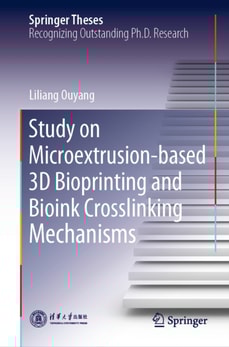
This book presents a comprehensive study on microextrusion-based 3D bioprinting technologies for bioinks with various crosslinking mechanisms, chiefly focusing on the bioprinting process and bioink properties to provide readers with a better understanding of this state-of-the-art technology.
This book focuses on all-pairwise multiple comparisons of means in multi-sample models, introducing closed testing procedures based on maximum absolute values of some two-sample t-test statistics and on F-test statistics in homoscedastic multi-sample models.
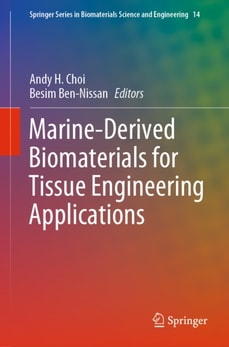
This book presents the latest advances in marine structures and related biomaterials for applications in both soft- and hard-tissue engineering, as well as controlled drug delivery.
This book summarizes state-of-the-art antiviral drug design and discovery approaches starting from natural products to de novo design, and provides a timely update on recently approved antiviral drugs and compounds in advanced clinical development.
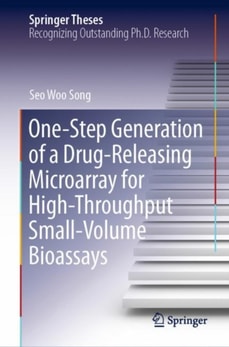
This thesis demonstrates a technology that enables pipetting-free high-throughput screening (HTS) on a miniaturized platform, eliminating the need for thousands of one-by-one pipetting and conventional liquid handling systems.