Plants produce a vast number of bioactive compounds with different chemical scaffolds, which modulate a diverse range of molecular targets and are used as drugs for treating numerous diseases.
This book focuses on the conventional breeding approach, and on the latest high-throughput genomics tools and genetic engineering / biotechnological interventions used to improve rice quality.
Systems and Synthetic Immunology focuses on the similarities between biology and engineering at the systems level, which are important for applying engineering theories to biology problems.
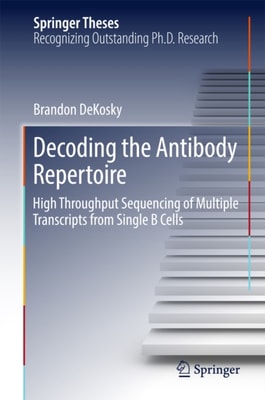
This thesis outlines the development of the very first technology for high-throughput analysis of paired heavy and light-chain antibody sequences, opening an entirely new window for antibody discovery and the investigation of adaptive immune responses to vaccines and diseases.
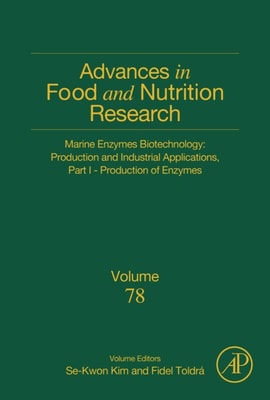
Marine Enzymes Biotechnology: Production and Industrial Applications, Part I, Production of Enzymes provides a huge treasure trove of information on marine organisms.
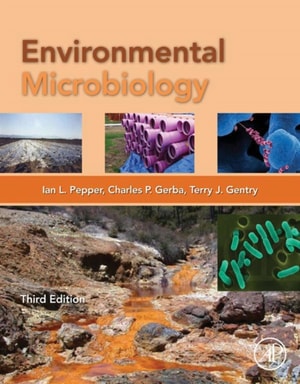
Designed for advanced undergraduate students, graduate students, and environmental professionals, this book builds upon the tremendous success of the previous editions with a comprehensive and up-to-date discussion of environmental microbiology as a discipline that has greatly expanded in scope and interest over the past several decades.
Environmental Biotechnology: A Biosystems Approach, Second Edition presents valuable information on how biotechnology has acted as a vital buffer among people, pollution, and the environment.
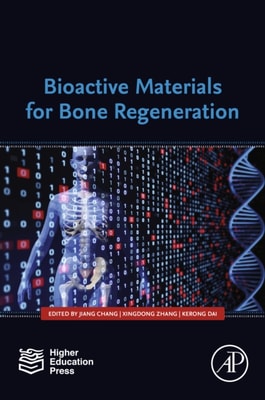
Bioactive Materials for Bone Regeneration summarizes research advances on the topic, including sections on the characteristics of biomaterial-induced microenvironments, interactions of bioactive materials with stem cells and tissues, and the immunomodulatory microenvironment induced by biomaterials and its effects on osteogenesis.
Biosensors and Bioelectronics presents the rapidly evolving methodologies that are relevant to biosensors and bioelectronics fabrication and characterization.
Accurate Results in the Clinical Laboratory: A Guide to Error Detection and Correction, Second Edition, provides a comprehensive review of the factors leading to errors in all areas of clinical laboratory testing.
Graphene Bioelectronics covers the expending field of graphene biomaterials, a wide span of biotechnological breakthroughs, opportunities, possibilities and challenges.
Cancer and Noncoding RNAs offers an in-depth exploration of noncoding RNAs and their role in epigenetic regulation of complex human disease, most notably cancer.
Coronary Artery Disease: From Biology to Clinical Practice links the most important basic concepts of atherosclerosis pathophysiology to treatment management of coronary artery disease.
Numerical Methods and Advanced Simulation in Biomechanics and Biological Processes covers new and exciting modeling methods to help bioengineers tackle problems for which the Finite Element Method is not appropriate.
EEG-Based Brain-Computer Interface: Cognitive Analysis and Control Applications provides a technical approach to using brain signals for control applications, along with the EEG-related advances in BCI.
Applied Human Factors in Medical Device Design describes the contents of a human factors toolbox with in-depth descriptions of both empirical and analytical methodologies.
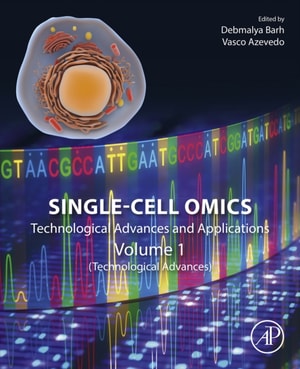
Single-Cell Omics: Volume 1: Technological Advances and Applications provides the latest technological developments and applications of single-cell technologies in the field of biomedicine.
Advanced Nanomaterials for Membrane Synthesis and Its Applications provides the academic and industrial communities the most up-to-date information on the latest trends in membrane nanomaterials and membrane nanotechnology used in wastewater treatment, environmental technology and energy.
An Introduction to Healthcare Informatics: Building Data-Driven Tools bridges the gap between the current healthcare IT landscape and cutting edge technologies in data science, cloud infrastructure, application development and even artificial intelligence.
Handbook of Vascular Motion provides a comprehensive review of the strategies and methods to quantify vascular motion and deformations relevant for cardiovascular device design and mechanical durability evaluation.
Biofluid Mechanics: An Introduction to Fluid Mechanics, Macrocirculation, and Microcirculation, Third Edition shows how fluid mechanics principles can be applied not only to blood circulation, but also to air flow through the lungs, joint lubrication, intraocular fluid movement, renal transport, and other specialty circulations.
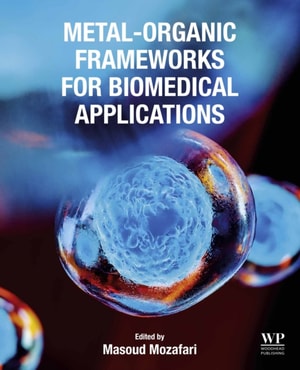
Metal-Organic Frameworks for Biomedical Applications is a comprehensive, authoritative reference that offers a substantial and complete treatment of published results that have yet to be critically reviewed.
Evolution's Clinical Guidebook: Translating Ancient Genes into Precision Medicine demonstrates, through well-documented examples, how an understanding of the phylogenetic ancestry of humans allows us to make sense out of the flood of genetic data streaming from modern laboratories and how it can lead us to new ways to prevent, diagnose and treat diseases.
Automated Drug Delivery in Anesthesia provides a full review of available tools and methods on the drug delivery of anesthesia, bridging the gap between academic development, research and clinical practice.
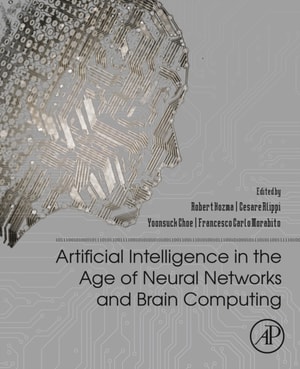
Artificial Intelligence in the Age of Neural Networks and Brain Computing demonstrates that existing disruptive implications and applications of AI is a development of the unique attributes of neural networks, mainly machine learning, distributed architectures, massive parallel processing, black-box inference, intrinsic nonlinearity and smart autonomous search engines.
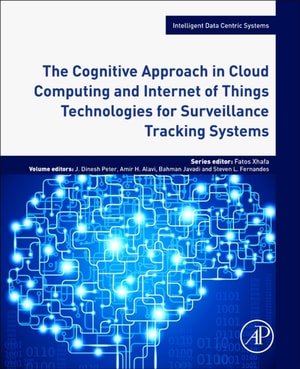
The Cognitive Approach in Cloud Computing and Internet of Things Technologies for Surveillance Tracking Systems discusses the recent, rapid development of Internet of things (IoT) and its focus on research in smart cities, especially on surveillance tracking systems in which computing devices are widely distributed and huge amounts of dynamic real-time data are collected and processed.
Internet of Things (IoT) is a new platform of various physical objects or "e;things equipped with sensors, electronics, smart devices, software, and network connections.
Mathematical and numerical modelling of engineering problems in medicine is aimed at unveiling and understanding multidisciplinary interactions and processes and providing insights useful to clinical care and technology advances for better medical equipment and systems.
Big Data Analytics for Intelligent Healthcare Management covers both the theory and application of hardware platforms and architectures, the development of software methods, techniques and tools, applications and governance, and adoption strategies for the use of big data in healthcare and clinical research.
Sustainable Nanoscale Engineering: From Materials Design to Chemical Processing presents the latest on the design of nanoscale materials and their applications in sustainable chemical production processes.
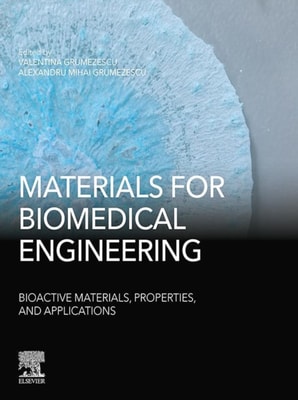
Materials for Biomedical Engineering: Bioactive Materials, Properties, and Applications introduces the reader to a broad range of the different types of bioactive materials used in biomedical engineering.
This textbook covers the fundamentals of physical chemistry, explaining the concepts in an accessible way and guiding the readers in a step-by-step manner.
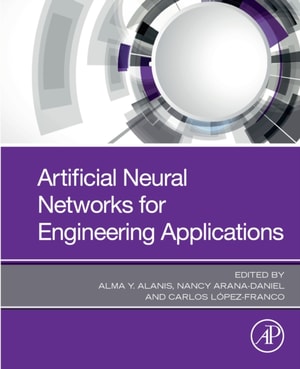
Artificial Neural Networks for Engineering Applications presents current trends for the solution of complex engineering problems that cannot be solved through conventional methods.