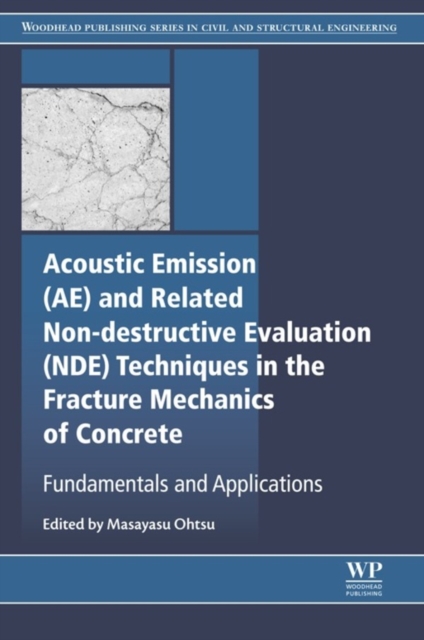
The development of NDT (non-destructive testing) techniques used for the inspection of concrete structures is currently in high demand, because many existing structures have become aged and deteriorated in service.
Corrosion of Steel in Concrete: Understanding, Investigation and Repair is a guide for designing, constructing and maintaining reinforced concrete structures, such as buildings and bridges which are subject to reinforcement corrosion.
Corrosion of Steel in Concrete: Understanding, Investigation and Repair is a guide for designing, constructing and maintaining reinforced concrete structures, such as buildings and bridges which are subject to reinforcement corrosion.
PRACTICAL, PORTABLE, AND PACKED WITH UP-TO-DATE STRUCTURAL ENGINEERING FORMULASThoroughly revised with more than 300 new formulas, this compact yet comprehensive compilation puts essential data related to the design and analysis of engineering structures at your fingertips.
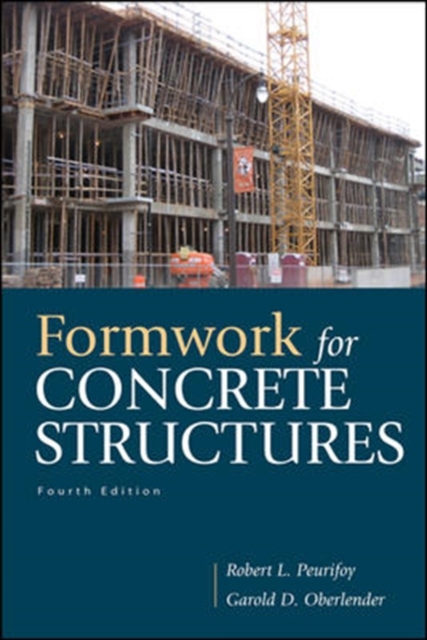
The definitive guide to formwork design, materials, and methods--fully updatedFormwork for Concrete Structures, Fourth Edition, provides current information on designing and building formwork and temporary structures during the construction process.
This book investigates the evolution process of rockburst based on the energy dissipation theory and proposes appropriate active prevention and control technologies.
Structural Health Monitoring (SHM) in Aerospace Structures provides readers with the spectacular progress that has taken place over the last twenty years with respect to the area of Structural Health Monitoring (SHM).
El presente documento describe paso a paso como se realiza el dibujo y diseno de un proyecto vial, principalmente una carretera, y es base para los estudiantes de los cursos de Diseno y Localizacion de Vias.
First Published in 1999: The Bridge Engineering Handbook is a unique, comprehensive, and state-of-the-art reference work and resource book covering the major areas of bridge engineering with the theme "e;bridge to the 21st century.
First Published in 1999: The Bridge Engineering Handbook is a unique, comprehensive, and state-of-the-art reference work and resource book covering the major areas of bridge engineering with the theme "e;bridge to the 21st century.
To promote smoother flows of goods across borders while reducing trade costs, this report explores an integrated approach to facilitating trade and transport across Asia and the Pacific, for better engagement in value chains.
This book is a thoroughly revised and enlarged version of "e;Shock-capturing methods for free-surface shallow flows"e;, first published by Wiley and Sons, 2001.
First Published in 1999: The Bridge Engineering Handbook is a unique, comprehensive, and state-of-the-art reference work and resource book covering the major areas of bridge engineering with the theme "e;bridge to the 21st century.
Esta área comienza con el análisis de estructuras isostáticas básicas en la asignatura de Estática, donde se abordan temáticas relacionadas con las cerchas, las vigas y las estructuras con elementos sometidos a condiciones combinadas de fuerzas que actúan en las dos primeras.
This book is a collection of invited lectures including the 5th Nicholas Ambraseys distinguished lecture, four keynote lectures and twenty-two thematic lectures presented at the 16th European Conference on Earthquake Engineering, held in Thessaloniki, Greece, in June 2018.
This volume is a compilation on issues related to sustainable practices in geo-environmental engineering, particularly as applying to developing nations such as India.
This book reviews the hydrogeology of karst systems, starting with the classifications from the applied point of view, and then the hydraulic parameters (porosity, permeability, and transmissivity).
Construction Materials is a comprehensive textbook covering all raw materials and products related to the construction processes, and not only those applied to building structures.
This book addresses the most important and current issues of waste valorization, geotechnical stabilization of different waste types, alternative binders to Portland cement, and metal encapsulation of residues as important strategies for sustainable engineering practice.
Herramientas de modelación de ingeniería de tránsito es una respuesta de la academia y la investigación de la temática de tránsito, que reúne los comandos básicos para la modelación y el análisis de intersecciones aisladas y redes viales en los principales softwares utilizados en el mercado y que en este momento se desarrollan en la asignatura de Ingeniería de Tránsito I y II, de la Universidad Distrital Francisco José de Caldas.