This book covers the basic scientific background of solar cells, their principles, working, growth, operating parameters, commercialization status, manufacturing challenges, and future scope of solar cells.
Particles, Fields, Space-Time: From Thomson's Electron to Higgs' Boson explores the concepts, ideas, and experimental results that brought us from the discovery of the first elementary particle in the end of the 19th century to the completion of the Standard Model of particle physics in the early 21st century.
Functionalized Magnetic Nanohybrids: Synthetic Approaches, Biomedical and Environmental Applications provides a comprehensive overview of the basic principles, fabrication, self-assembling strategies, and potential applications of magnetic nanohybrids in the fields of biomedicine, sensors, and environmental remediation.
Technological evolution and revolution are both driven by the discovery of new functionalities, new materials and the design of yet smaller, faster, and more energy-efficient components.
This book provides the reader with a detailed theoretical treatment of the key mechanisms of superconductivity, up to the current state of the art (phonons, magnons, plasmons).
This book is aimed at graduate students, post docs and senior researchers with preliminary expertise in materials physics or chemistry, and with an interest in the physical and chemical properties of 4d- and 5d transition metal oxides, especially ruthenates and iridates.
This book sets out the fundamental quantum processes that are important in the physics and technology of semiconductors in a relatively informal style that graduate students will find very attractive.
Polymer electronics is the science behind many important new developments in technology, such as the flexible electronic display (e-ink) and many new developments in transistor technology.
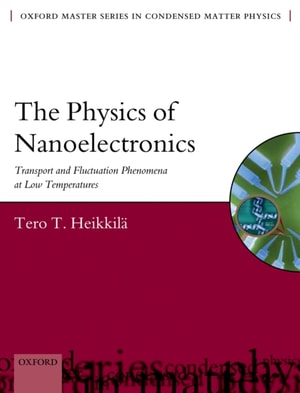
Advances in nanotechnology have allowed physicists and engineers to miniaturize electronic structures to the limit where finite-size related phenomena start to impact their properties.
Rapid development of microfabrication and assembly of nanostructures has opened up many opportunities to miniaturize structures that confine light, producing unusual and extremely interesting optical properties.
Rapid development of microfabrication and assembly of nanostructures has opened up many opportunities to miniaturize structures that confine light, producing unusual and extremely interesting optical properties.
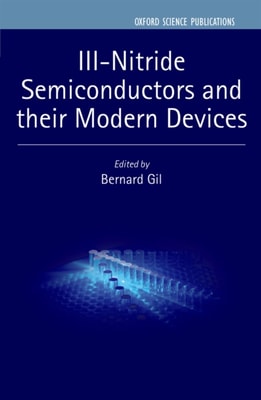
This book is dedicated to GaN and its alloys AlGaInN (III-V nitrides), semiconductors with intrinsic properties well suited for visible and UV light emission and electronic devices working at high temperature, high frequency, and harsh environments.
The purpose of this book is to provide a theoretical foundation and an understanding of atomistic spin-dynamics (ASD), and to give examples of where the atomistic Landau-Lifshitz-Gilbert equation can and should be used.
The book provides a technical account of the basic physics of nanostructures, which are the foundation of the hardware found in all manner of computers.
Since the discovery of the giant magnetoresistance (GMR) effect in magnetic multilayers in 1988, a new branch of physics and technology, called spin-electronics or spintronics, has emerged, where the flow of electrical charge as well as the flow of electron spin, the so-called "e;spin current"e;, are manipulated and controlled together.
Nanometre sized structures made of semiconductors, insulators, and metals and grown by modern growth technologies or by chemical synthesis exhibit novel electronic and optical phenomena due to the confinement of electrons and photons.
Bring a new degree of interconnectivity to your world by building your own intelligent robotsKey FeaturesLeverage fundamentals of AI and roboticsWork through use cases to implement various machine learning algorithmsExplore Natural Language Processing (NLP) concepts for efficient decision making in robotsBook DescriptionArtificial Intelligence for Robotics starts with an introduction to Robot Operating Systems (ROS), Python, robotic fundamentals, and the software and tools that are required to start out with robotics.
This book bridges a gap between two major communities of Condensed Matter Physics, Semiconductors and Superconductors, that have thrived independently.
Students and researchers looking for a comprehensive textbook on magnetism, magnetic materials and related applications will find in this book an excellent explanation of the field.
The semiconductor laser, invented over 50 years ago, has had an enormous impact on the digital technologies that now dominate so many applications in business, commerce and the home.
The book is a history of Molecular Beam Epitaxy (MBE) as applied to the growth of semiconductor thin films (note that it does not cover the subject of metal thin films).
This comprehensive text covers the basic physics of the solid state starting at an elementary level suitable for undergraduates but then advancing, in stages, to a graduate and advanced graduate level.
This handbook is about a remarkable set of materials that are technically referred to as "e;mesoscopic superconductors"e;, which for all practical purposes are tiny or small in their dimensions, ranging from a few micrometers down to a nanometer.
Metal-semiconductor nanostructures represent an important new class of materials employed in designing advanced optoelectronic and nanophotonic devices, such as plasmonic nanolasers, plasmon-enhanced light-emitting diodes and solar cells, plasmonic emitters of single photons, and quantum devices operating in infrared and terahertz domains.
Volume 2 of Novel Superfluids continues the presentation of recent results on superfluids, including novel metallic systems, superfluid liquids, and atomic/molecular gases of bosons and fermions, particularly when trapped in optical lattices.
Nanoscience and nanotechnology concern themselves with the research and application of extremely small things and can be used across all scientific fields such as physics, chemistry, biology, material science and engineering.
The ultimate resource for making embedded systems reliable, safe, and secureEmbedded Systems Security provides:- A broad understanding of security principles, concerns, and technologies- Proven techniques for the efficient development of safe and secure embedded software- A study of the system architectures, operating systems and hypervisors, networking, storage, and cryptographic issues that must be considered when designing secure embedded systems- Nuggets of practical advice and numerous case studies throughoutWritten by leading authorities in the field with 65 years of embedded security experience: one of the original developers of the world's only Common Criteria EAL 6+ security certified software product and a lead designer of NSA certified cryptographic systems.