State-of-the-art introduction to high-density interconnect technology The first-ever book on this hot topic, Microvias: Low Cost, High Density Interconnects gives you a thorough look at the technology that s changing the nature of printed circuit boards--and driving the mobile electronic revolution.
The arrival of the 21st century has completed an authentic technological revolution of the information and knowledge systems where education plays an essential role.
Analog Design and Simulation using OrCAD Capture and PSpice provides step-by-step instructions on how to use the Cadence/OrCAD family of Electronic Design Automation software for analog design and simulation.
Flexible Robotics in Medicine: A Design Journey of Motion Generation Mechanisms and Biorobotic System Development provides a resource of knowledge and successful prototypes regarding flexible robots in medicine.
Diffuse Algorithms for Neural and Neuro-Fuzzy Networks: With Applications in Control Engineering and Signal Processing presents new approaches to training neural and neuro-fuzzy networks.
A comprehensive exploration of the control schemes of human-robot interactions In Human-Robot Interaction Control Using Reinforcement Learning, an expert team of authors delivers a concise overview of human-robot interaction control schemes and insightful presentations of novel, model-free and reinforcement learning controllers.
A comprehensive exploration of the control schemes of human-robot interactions In Human-Robot Interaction Control Using Reinforcement Learning, an expert team of authors delivers a concise overview of human-robot interaction control schemes and insightful presentations of novel, model-free and reinforcement learning controllers.
CREATE FIENDISHLY FUN tinyAVR MICROCONTROLLER PROJECTSThis wickedly inventive guide shows you how to conceptualize, build, and program 34 tinyAVR microcontroller devices that you can use for either entertainment or practical purposes.
A WALL STREET JOURNAL, WASHINGTON POST, AND FINANCIAL TIMES BEST BOOK OF THE YEAR*Now with a new foreword on ChatGPT*_____________How will artificial intelligence change our world within twenty years?
RF and mm-Wave Power Generation in Silicon presents the challenges and solutions of designing power amplifiers at RF and mm-Wave frequencies in a silicon-based process technology.
Urban expert John Rossant and business journalist Stephen Baker look beyond the false promises of the past to examine the real future of transportation and the repercussions for the world's cities, the global economy, the environment, and our individual lives.
Computer Vision for Assistive Healthcare describes how advanced computer vision techniques provide tools to support common human needs, such as mental functioning, personal mobility, sensory functions, daily living activities, image processing, pattern recognition, machine learning and how language processing and computer graphics cooperate with robotics to provide such tools.
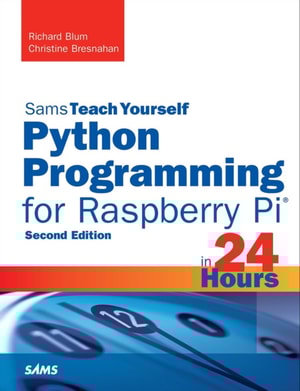
Python Programming for Raspberry Pi(R) In just 24 sessions of one hour or less, Sams Teach Yourself Python Programming for Raspberry Pi in 24 Hours teaches you Python programming on Raspberry Pi, so you can start creating awesome projects for home automation, home theater, gaming, and more.
Python Programming for Raspberry Pi(R) In just 24 sessions of one hour or less, Sams Teach Yourself Python Programming for Raspberry Pi in 24 Hours teaches you Python programming on Raspberry Pi, so you can start creating awesome projects for home automation, home theater, gaming, and more.
Networks-on-Chip: From Implementations to Programming Paradigms provides a thorough and bottom-up exploration of the whole NoC design space in a coherent and uniform fashion, from low-level router, buffer and topology implementations, to routing and flow control schemes, to co-optimizations of NoC and high-level programming paradigms.
Multimodal Behavioral Analysis in the Wild: Advances and Challenges presents the state-of- the-art in behavioral signal processing using different data modalities, with a special focus on identifying the strengths and limitations of current technologies.
Three-Dimensional Integrated Circuit Design, Second Eition, expands the original with more than twice as much new content, adding the latest developments in circuit models, temperature considerations, power management, memory issues, and heterogeneous integration.
This book focuses on computational methods to determine the dynamics of large-scale electromagnetic, acoustic, and mechanical systems, including those with many substructures and characterized by an extended range of scales.
SystemC has received a wide acceptance by users and tool vendors as the next generation system description language in order to deal with higher levels of abstraction for complex SoC designs.
This book presents the perspective of the SYDIC-Telecom project on system design and reuse as perceived in the course of the research during 1999 - 2003.
LOW power design is playing an important role in today ultra-large scale integration (ULSI) design, particularly as we continue to double the number of transistors on a die every two years and increase the frequency of operation at fairly the same rate.
Oversampled Delta-Sigma Modulators: Analysis, Applications, and Novel Topologies presents theorems and their mathematical proofs for the exact analysis of the quantization noise in delta-sigma modulators.
Jump Time-Delay Systems (JTDS) represent a new class of piece-wise deterministic systems, in which the underlying dynamics is governed by delay-differential equations and it possesses multiple modes of operation depending on the value of an associated Markov random process.
Low-Voltage CMOS Log Companding Analog Design presents in detail state-of-the-art analog circuit techniques for the very low-voltage and low-power design of systems-on-chip in CMOS technologies.
Intellectual Property Protection in VLSI Designs: Theory and Practice provides an overview of the security problems in modern VLSI design with a detailed treatment of our newly developed constraint-based protection paradigm for the protection of VLSI design IPs from FPGA design to standard-cell placement, from high-level synthesis solutions to gate-level netlist place-and-rout, and from advanced CAD tools to physical design algorithms.