The book collects the lectures and the status reports delivered during the "e;Eighth International Conference on Photochemical Conversion and Storage of Solar Energy"e;, IPS-8, held in Palermo (Italy) from 15th to 20th of July 1990.
This is the second volume of BUILDING 2000, a pilot project of the Commission's R&D- programme 'Solar Energy Applications to Buildings' with the purpose of encouraging the adoption of solar architecture in large buildings.
Since the mid-seventies, electric utilities were faced with escalating construction costs, growing environmental plus siting constraints and increasing uncertainty in demand forecasting.
In the near future the world will need to convert to a suitable, clean energy supply: one that will meet the demands of an increasing population while giving few environmental problems.
The primary objective of this NATO Advanced Study Institute (ASI) was to present an up-to-date overview of various current areas of interest in the field of photovoltaic and related photoactive materials.
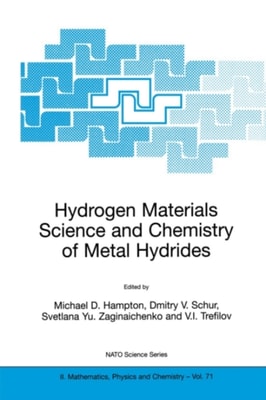
In September, 1999, with the generous support of NATO, scientists from 18 different nations gathered in Katsiveli, Yalta, Ukraine at the NATO Advanced Research Workshop on Hydrogen Materials Science and Chemistry of Metal Hydrides to present their research and to discuss world energy problems and possible solutions, interactions of hydrogen with materials, the role of hydrogen in materials science, and the chemistry of metal hydrides.
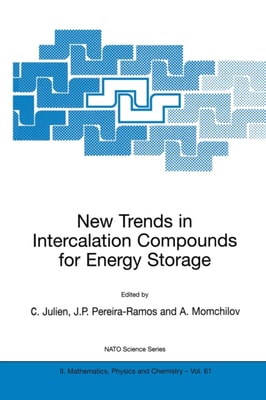
Recent advances in electrochemistry and materials science have opened the way to the evolution of entirely new types of energy storage systems: rechargeable lithium-ion batteries, electrochroms, hydrogen containers, etc.
The first crisis in energy prices was undoubtedly a strong stimulus for the involvement of the Commission of the European Communities in research and development on alternative energy sources.
The objectives of the Modelling Sub-Group are to unify European research in the field of computer models, to provide the best simplified models in the Passive Solar Working Group's extensive European Passive Solar Handbook and to ensure that these simple models are easy to use for design purposes.
This paper is written in the belief that people are important and that equipment is to serve the needs of the people and therefore should be designed to meet their specific needs and environment.
The increasing scale and intensity of modern blast-furnace operation, combined with a simultaneous reduction in coke rate, have led to more stringent coke quality requirements with a greater emphasis on the coke's (1 2) role as a burden spacer ' * Accordingly, coke quality data limited to chemical composition, initial size grading and ambient size stability are insufficient to predict the coke's behaviour in use.
This book gives a comprehensive overview of activities currently under way to produce, collect and compile radiation data as needed for the various types of solar energy applications in Europe.
The Seminar on Improved Techniques for the Extraction of Primary Forms of Energy was organized by the United Nations Economic Commission for Europe (ECE) and held at Vienna from 10 to 14 November 1980 at the invitation of the Austrian Government.
Contributors to this Conference have shown the wide range of active and passive solar heating systems which have been researched, installed and monitored in recent years throughout western Europe and elsewhere.
The Commission of the European Community has, by means of the Directorate General for Energy, been involved in energy research aimed at improving the energy supply situation of the Community.
In 1977, at the Xth World Energy Conference in Istanbul, the Conservation Commission presented an initial global study of future trends in energy supply and demand up to 2020.
In this book, the Commission of the European Communities presents the proceedings of the Workshop on Solar Central Receiver Projects, held in Varese, I taly , in June 1984.
In order to alleviate their problems many less developed countries (LDCs) are endeavoring to develop to the full their energy resources and in particular their hydrocarbon resources.
The purpose of writing this three volume 'Advances in Solar Energy Technology' is to provide all the relevant latest information available in the field of Solar Energy (Applied as well as Theoretical) to serve as the best source material at one place.
During the oil crisis of 1973, we suddenly became aware that fossil fuel resources are limited and will be exhausted soon if new alternatives are not put into use immediately.
This volume contains the lectures presented at the Advanced Study Institute on "e;New Trends in Coal Science"e; which was held at Datca, HUgla, Turkey during August 23 - September 4, 1987.
Amorphous silicon PV panel mass production will require to mas- ter plasma chemical deposition in terms of large sizes, cost, maintenance and all other problems related to industrialization.
This volume provides a valuable overview of the Commission's current activities in research on solar radiation data and in the development of solar energy applications in buildings.