This book presents the latest progress in enhanced oil recovery technology and introduces the application of various enhanced oil recovery methods in oilfield development.
Polymer Composite Systems for Pipeline Repair: Design, Manufacture, Application, and Environmental Impacts delivers the latest developments in nanomaterials, specifically polymers and composites that can support pipeline repair in an effective and more environmentally-sound way.
Gasification involves the conversion of carbon sources without combustion to syngas, which can be used as a fuel itself or further processed to synthetic fuels.
This book contains the papers of the Internal Combustion Engines: Performance fuel economy and emissions conference, in the IMechE bi-annual series, held on the 29th and 30th November 2011.
When classifying fracturing fluids and their additives, it is important that production, operation, and completion engineers understand which chemical should be utilized in different well environments.
Plant Design and Operations, Second Edition, explores design and operational considerations for oil and gas facilities, covering all stages of the plant cycle, with an emphasis on safety and risk.
This hand guide in the Gulf Drilling Guides series offers practical techniques that are valuable to petrophysicists and engineers in their day-to-day jobs.
This important resource explores recent theoretical advances and modelling on fluids transport in fractal porous systems and presents a systematic understanding of the characterization of complex microstructure and transport mechanism in fractal porous media.
Petroleum engineers search through endless sources to understand oil and gas chemicals, identify root cause of theproblems, and discover solutions while operations are becoming more unconventional and driving toward more sustainablepractice.
Written by one of the world's foremost authorities on pumps, this first volume in Gulf Publishing Company's Gulf Pump Guides series covers the design, application and troubleshooting for progressing cavity pumps, downhole pumps and mudmotors.
Effective methods for recovering gas energy using expandersExpanders for Oil and Gas Operations offers in-depth details on different types of expanders, addressing the background, mechanical design features, design and operating requirements, operational processes, and potential problems for each class of expander.
Introduction to Enhanced Recovery Methods for Heavy Oil and Tar Sands, Second Edition, explores the importance of enhanced oil recovery (EOR) and how it has grown in recent years thanks to the increased need to locate unconventional resources such as heavy oil and shale.
Practical Reservoir Characterization expertly explains key technologies, concepts, methods, and terminology in a way that allows readers in varying roles to appreciate the resulting interpretations and contribute to building reservoir characterization models that improve resource definition and recovery even in the most complex depositional environments.
Hydrocarbon Fluid Inclusions in Petroliferous Basins trains readers to detect Hydrocarbon Fluid Inclusions (HCFIs) in sedimentary rocks, particularly the wafer preparation techniques to visualize HCFIs, its distinction from aqueous inclusions, petrographic approaches to HCFIs, microthermometric observations on HCFIs, fluorescence emission spectra and Raman spectra of HCFIs, and their interpretations for the petroleum industry.
This is the first book in the petroleum sector that sheds light on the real obstacles to sustainable development and provides solutions to each problem encountered.
Coal-Fired Electricity and Emissions Control: Efficiency and Effectiveness discusses the relationship between efficiency and emissions management, providing methods for reducing emissions in newer and older plants as coal-fired powered plants are facing increasing new emission control standards.
Combustion of Pulverised Coal in a Mixture of Oxygen and Recycled Flue Gas focuses on a niche technology, combustion of coal in an oxygen rich environment, which is one approach to obtaining 'clean coal,' by making it easier to capture carbon that is released in the combustion process.
Contamination Control in the Natural Gas Industry delivers the separation fundamentals and technology applications utilized by natural gas producers and processors.
Carbon Capture and Storage, Second Edition, provides a thorough, non-specialist introduction to technologies aimed at reducing greenhouse gas emissions from burning fossil fuels during power generation and other energy-intensive industrial processes, such as steelmaking.
With production from unconventional rigs continuing to escalate and refineries grappling with the challenges of shale and heavier oil feedstocks, petroleum engineers and refinery managers must ensure that equipment used with today's crude oil is protected from fouling deposits Crude Oil Fouling addresses this overarching challenge for the petroleum community with clear explanations on what causes fouling, current models and new approaches to evaluate and study the formation of deposits, and how today's models could be applied from lab experiment to onsite field usability for not just the refinery, but for the rig, platform, or pipeline.
Rocks mechanics legend Erle Donaldson, along with colleagues Waqi Alam and Nasrin Begum from the oil and gas consultant company Tetrahedron, have authored this handbook on updated fundamentals and more recent technology used during a common hydraulic fracturing procedure.
A variable game changer for those companies operating in hostile, corrosive marine environments, Corrosion Control for Offshore Structures provides critical corrosion control tips and techniques that will prolong structural life while saving millions in cost.
The latest volume in the Developments in Structural Geology and Tectonics series from Elsevier, Tectonic and Structural Framework of the Zagros Fold-Thrust Belt is a collection of the most up-to date research and developments in the unique tectonic and structural geology of the Zagros.
Fire Pump Arrangements at Industrial Facilities, Third Edition delivers a practical reference from an author with a successful professional career in fire protection and loss prevention engineering in the oil and gas industry.
Sustainable Management of Coal Preparation explains both the upstream and downstream of coal preparation, stressing clean coal technologies for coal utilization.
Written by an author with over 38 years of experience in the chemical and petrochemical process industry, this handbook will present an analysis of the process steps used to produce industrial hydrocarbons from various raw materials.
This thoroughly updated edition of Fluid Catalytic Cracking Handbook provides practical information on the design, operation, troubleshooting, and optimization of fluid catalytic cracking (FCC) facilities.
Oil Recovery in Shale and Tight Reservoirs delivers a current, state-of-the-art resource for engineers trying to manage unconventional hydrocarbon resources.
Hydraulic Fracturing in Unconventional Reservoirs: Theories, Operations, and Economic Analysis, Second Edition, presents the latest operations and applications in all facets of fracturing.
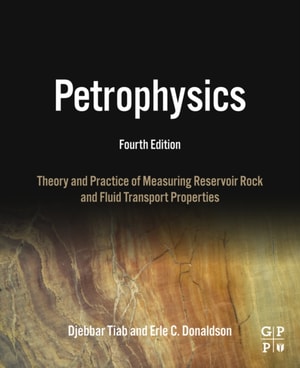
Petrophysics: Theory and Practice of Measuring Reservoir Rock and Fluid Transport Properties, Fourth Edition provides users with tactics that will help them understand rock-fluid interaction, a fundamental step that is necessary for all reservoir engineers to grasp in order to achieve the highest reservoir performance.
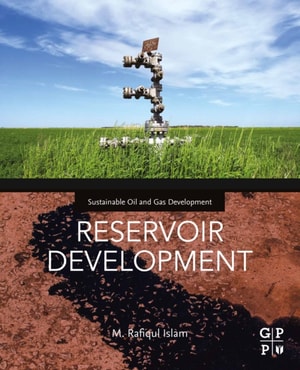
Sustainable Oil and Gas Development Series: Reservoir Development delivers research materials and emerging technologies that conform sustainability in today's reservoirs.
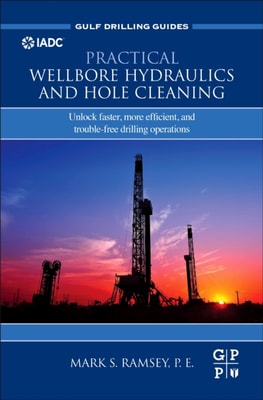
Practical Wellbore Hydraulics and Hole Cleaning presents a single resource with explanations, equations and descriptions that are important for wellbore hydraulics, including hole cleaning.