Separation technologies are of crucial importance to the goal of significantly reducing the volume of high-level nuclear waste, thereby reducing the long-term health risks to mankind.
The use of tritium as a basic fuel material in a thermonuclear fusion reactor raises particular safety issues due to the combined effects of its physico- chemical properties and radioactive nature.
The Russian NATO Advanced Research Workshop on "e;Scientific Problems and Unresolved Issues Remaining in the Decommissioning of Nuclear Powered Vessels and in the Environmental Remediation ofTheir Supporting Infrastructure,"e; was held in Moscow, Russia at the Presidium of the Russian Academy of Sciences on April 22-24, 2002.
This book is intended as an introduction to radioactivity and aerosols for the scientifically literate reader who has had no previous exposure to either of these subjects.
This volume entitled "e;Radionuclides and Heavy Metals in Environment"e; contains the Proceedings of the NATO Advanced Research Workshop (ARW) "e;Monitoring of Natural and Man-Made Radionuclides and Heavy Metal Waste in Environment"e; that was held at the Joint Institute for Nuclear Research (JlNR), Dubna, Russia from 3 October to 6 October, 2000.
The European Community's Indirect Action Research Programme on the Safety of Thermal Water Reactors had as main obj ectives to execute useful fundamental research, complementary and confirmatory to on-going work in national programmes, and to improve collaboration and exchange of inform- ation between laboratories in the Member States.
The Advanced Research Workshop on "e;Nuclear Submarine Decommissioning and Related Problems"e; was held at the Russian Academy of Sciences in Moscow, Russia on June 19-22, 1995.
This book addresses current activities in strong-motion networks around the globe, covering issues related to designing, maintaining and disseminating information from these arrays.
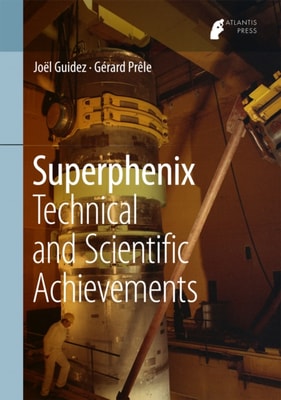
For the first time a book has been written on the technological and scientific knowledge, acquired during, buiding , operation and even dismantling of the Superphenix plant.
Housing finance markets in Central and Eastern European countries are typically small in scale and under-developed, though it is generally recognised that fostering housing finance markets contributes to economic development and brings social benefits to the public.
In this well documented global wake-up call, nuclear physicist Jeff Eerkens explores remedies for the impending energy crisis, when oil and natural gas are depleted.
In order to avoid the potentially catastrophic impacts of global warming, the current 3% CO2 global emission growth rate must be transformed to a 1 to 3% declining rate, as soon as possible.
Radioactive particles have been released to the environment from a number of sources, including nuclear weapon tests, nuclear accidents and discharges from nuclear installations.
On September 27 - October 3, 2008 the NATO Advanced Research Workshop (ARW) on progress in high-energy physics and nuclear safety was held in Yalta, Crimea (see: http://crimea.
This book explains how society will face an energy crisis in the coming decades owing to increasing scarcity of fossil fuels and climate change impacts.
Handbook on Thermal Hydraulics of Water-Cooled Nuclear Reactors, Volume 2, Modelling includes all new chapters which delve deeper into the topic, adding context and practical examples to help readers apply learnings to their own setting.
This book advocates pursuing a regional approach to nuclear risk framework, which it argues is more promising in the current scenario than the non-achievable global regime.
This book features comprehensive explanations from the classical theory of high-energy particle interactions with matter to their use for a novel nanofabrication technique for various organic soft materials.
The Magnitude 9 Great East Japan Earthquake on March 11, 2011, followed by a massive tsunami struck TEPCO's Fukushima Daiichi Nuclear Power Station and triggered an unprecedented core melt/severe accident in Units 1 - 3.
This book focuses on the latest reactor concepts, single pass core and experimental findings in thermal hydraulics, materials, corrosion, and water chemistry.
This book introduces advanced methods of computational and information systems allowing readers to better understand the state-of-the-art design and implementation technology needed to maintain and enhance the safe operation of nuclear power plants.
The Tohoku earthquake on March 11, 2011, officially designated the "e;Off the Pacific Coast of Tohoku, Japan Earthquake"e; by the Japan Meteorological Agency caused an unprecedentedly severe disaster in the northeastern part (Tohoku) of the Japanese island of Honshu.
Understanding time-dependent behaviors of nuclear reactors and the methods of their control is essential to the operation and safety of nuclear power plants.
Handbook on Thermal Hydraulics of Water-Cooled Nuclear Reactors, Volume 3, Procedures and Applications includes all new chapters which delve deeper into the topic, adding context and practical examples to help readers apply learnings to their own setting.
Since the low energy efficiency and rise in emissions by using fossil fuels, the hydrogen economy has been considered as a unique approach to resolve these problems, making hydrogen an attractive fuel.
Over the last decade, astrophysical observations of neutron stars - both as isolated and binary sources - have paved the way for a deeper understanding of the structure and dynamics of matter beyond nuclear saturation density.
■ Atomare Sprengstoffe■ Atomenergie als Zeitproblem■ Offenheit und Aufgeschlossenheit■ Die Physik in unserer Zeit■ Der Triumph der Naturwissenschaft■ Der Wissenschaftler und die Gesellschaft■ Kunst und Wissenschaft: Ein Ausblick■ Enzyklopädisches Stichwort: Neue Physik und Verantwortung■ Literaturhinweise■ Personen- und Sachregister