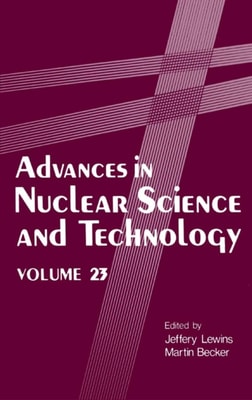
The present review volume not only covers a wide range of topics pertinent to nuclear science and technology, but has attracted a distinguished international authorship, for which the editors are grateful.
Since its initiation in 1962, this series has presented authoritative reviews of the most important developments in nuclear science and engineering, from both theoretical and applied perspectives.
Explores the history and challenges of nuclear energy development in China, across five main areas: politics, economics, environment, technology transfer and the nuclear fuel cycle.
At the Geneva Superpower Summit in November 1985, Secretary of the former Soviet Union Mikhail Gorbachev and US President Ronald Regan agreed to pursue an international effort to develop fusion energy for peaceful purposes.
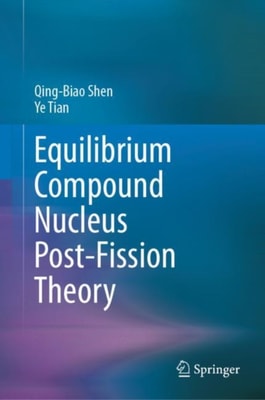
This book proposes and develops the equilibrium compound nucleus post-fission theory, a powerful tool for studying the fission process and making numerical calculations of post-fission nuclear data.
With the World desperate to find energy sources that do not emit carbon gasses, nuclear power is back on the agenda and in the news, following the increasing cost of fossil fuels and concerns about the security of their future supply.
With the World desperate to find energy sources that do not emit carbon gasses, nuclear power is back on the agenda and in the news, following the increasing cost of fossil fuels and concerns about the security of their future supply.
The first systematic experiments in neutron scattering were carried out in the late 1940s using fission reactors built for the nuclear power programme.
This book is on inertial confinement fusion, an alternative way to produce electrical power from hydrogen fuel by using powerful lasers or particle beams.
At the Geneva Superpower Summit in November 1985, Secretary of the former Soviet Union Mikhail Gorbachev and US President Ronald Regan agreed to pursue an international effort to develop fusion energy for peaceful purposes.
Nuclear Waste Management Strategies: An International Perspective presents worldwide insights into nuclear waste management strategies from a technical engineering perspective, with consideration for important legal aspects.
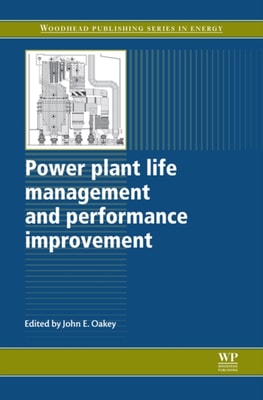
Coal- and gas-based power plants currently supply the largest proportion of the world's power generation capacity, and are required to operate to increasingly stringent environmental standards.
Fractional-Order Models for Nuclear Reactor Analysis presents fractional modeling issues in the context of anomalous diffusion processes in an accessible and practical way.
Desalination in Nuclear Power Plants presents the latest research on a variety of nuclear desalination techniques for different nuclear reactor systems; it includes also several aspects regarding competitiveness, sustainability, safety, and licensing process.
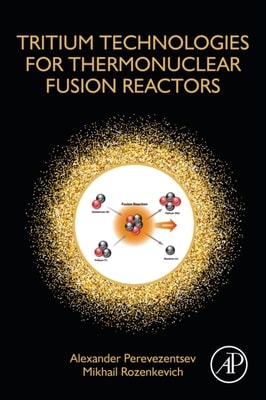
Tritium Technologies for Thermonuclear Fusion Reactors summarizes the most recent research and practice in tritium technologies for the processing of hydrogen isotopes in fuel cycles.
Hybrid Nuclear Energy Systems: A Sustainable Solution for the 21st Century provides practical insights on the environmental impact of the hybrid systems discussed, as well as important technical, economic, licensing and safety considerations.
Sodium-cooled Fast Reactors is the third volume in the JSME Series on Thermal and Nuclear Power Generation, which presents a comprehensive view of the latest research and activities from around the globe.
Handbook of Small Modular Nuclear Reactors, Second Edition is a fully updated comprehensive reference on Small Modular Reactors (SMRs), which reflects the latest research and technological advances in the field from the last five years.
Nuclear Decommissioning Case Studies: Accidental Impacts on Workers, the Environment and the Public, Volume One presents a collection of international case studies that show impacts on workers, the public and the environment.
Fractional-Order Models for Nuclear Reactor Analysis presents fractional modeling issues in the context of anomalous diffusion processes in an accessible and practical way.
Desalination in Nuclear Power Plants presents the latest research on a variety of nuclear desalination techniques for different nuclear reactor systems; it includes also several aspects regarding competitiveness, sustainability, safety, and licensing process.
Applications of Nuclear and Radioisotope Technology: For Peace and Sustainable Development presents the latest technology and research on nuclear energy with a practical focus on a variety of applications.
Fast Reactors: A Solution to Fight Against Global Warming presents the current status of fast-reactor nuclear generation technology, with a focus on ecology and sustainability benefits for the future.
Severe Accidents in Nuclear Reactors: Corium Retention Technologies and Insights presents an authoritative and practical analysis of the latest severe accident management strategies based on previous events and experiments.
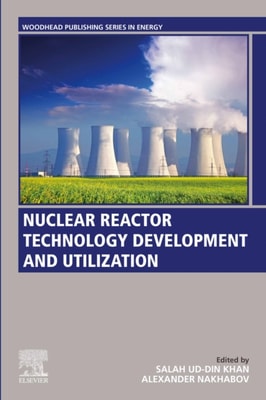
Nuclear Reactor Technology Development and Utilization presents the theory and principles of the most common advanced nuclear reactor systems and provides a context for the value and utilization of nuclear power in a variety of applications both inside and outside a traditional nuclear setting.
Advanced Security and Safeguarding in the Nuclear Power Industry: State of the art and future challenges presents an overview of a wide ranging scientific, engineering, policy, regulatory, and legal issues facing the nuclear power industry.
Deterministic Numerical Methods for Unstructured-Mesh Neutron Transport Calculation presents the latest deterministic numerical methods for neutron transport equations (NTEs) with complex geometry, which are of great demand in recent years due to the rapid development of advanced nuclear reactor concepts and high-performance computational technologies.
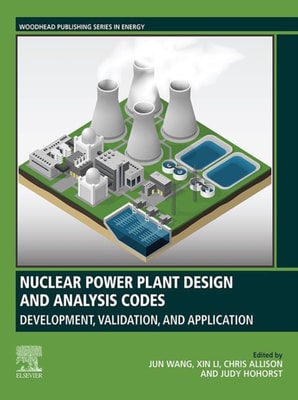
Nuclear Power Plant Design and Analysis Codes: Development, Validation, and Application presents the latest research on the most widely used nuclear codes and the wealth of successful accomplishments which have been achieved over the past decades by experts in the field.
The history of mankind is a story of ascent to unprecedented levels of comfort, productivity and consumption, enabled by the increased mastery of the basic reserves and flows of energy.
This volume constitutes the state-of-the-art in active interrogation, widely recognized as indispensable methods for addressing current and future nuclear security needs.
Goal Oriented Methodology and Applications in Nuclear Power Plants: A Modern Systems Reliability Approach presents the latest data and research on the modern system reliability approach by GO methodology to improve the quality and reliability of nuclear power plants (NPP).
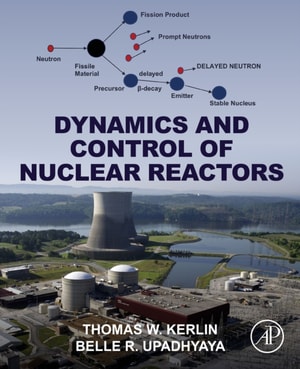
Dynamics and Control of Nuclear Reactors presents the latest knowledge and research in reactor dynamics, control and instrumentation; important factors in ensuring the safe and economic operation of nuclear power plants.