The 50th anniversary of the Disaster Research Center of the University of Delaware provoked a discussion of the field's background, its accomplishments, and its future directions.
This book aims to help students, researchers and policy makers understand the latest research and development trends in the application of WebGIS for Disaster Management and Emergency Response.
This second edition includes updated chapters from the first edition as well as five additional new chapters (Light detection and ranging (LiDAR), CORONA historical de-classified products, Unmanned Aircraft Vehicles (UAVs), GNSS-reflectometry and GNSS applications to climate variability), shifting the main focus from monitoring and management to extreme hydro-climatic and food security challenges and exploiting big data.
This book explains in a didactic way the basic concepts of spectral mixing, digital numbers and orbital sensors, and then presents the linear modelling technique of spectral mixing and the generation of fractional images.
This book is specifically designed to serve the community of postgraduates and researchers in the fields of epidemiology, health GIS, medical geography, and health management.
This books presents some of the most recent and advanced statistical methods used to analyse environmental and climate data, and addresses the spatial and spatio-temporal dimensions of the phenomena studied, the multivariate complexity of the data, and the necessity of considering uncertainty sources and propagation.
This book is composed of 12 review papers invited for the Palmen Memorial Symposium on Extratropical Cyclones held in Helsinki, Finland, 29 August - 2 September 1988.
The present review of weather-satellite systems, data, and environmental applications encompasses the evolution of space-based weather observation, national observing capabilities, sensor data and processing, climate and meteorological applications, applications to land, agriculture, and ocean sciences, and some future directions.
This book offers a comprehensive overview of the environmental challenges posed by emerging pollutants and the innovative strategies available for their management.
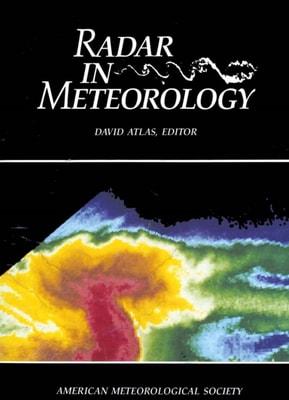
This fully illustrated volume covers the history of radar meteorology, deals with the issues in the field from both the operational and the scientific viewpoint, and looks ahead to future issues and how they will affect the current atmosphere.
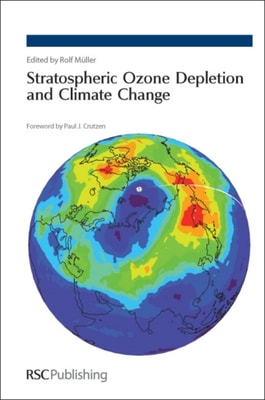
In recent years, several new concepts have emerged in the field of stratospheric ozone depletion, creating a need for a concise in-depth publication covering the ozone-climate issue.
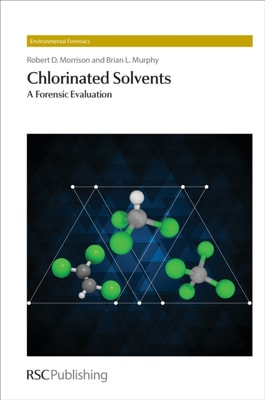
Environmental forensics is emerging and evolving into a recognized scientific discipline with numerous applications, especially regarding chlorinated solvents.
This publication includes peer-reviewed manuscripts from the 2009 International Network of Environmental Forensics (INEF) held in Calgary, Canada on August 31 through September 1, 2009.
As human populations grow, so do the resource demands imposed on ecosystems, and the impacts of anthropogenic use and abuse are becoming ever more apparent.
Fatty alcohols occur naturally in most organisms and can also be used in consumer products including detergents and cosmetics and all of these materials make their way to the sea eventually.
Since the realisation that the ozone layer protecting the earth is suffering massive depletion, atmospheric science has been increasingly in the spotlight.
This book discusses the detrimental consequences of climate-related land changes over a 40-year period between 1981 and 2020, and focuses on how climate warming is deteriorating the agricultural system due to excessive heat, lack of moisture and more intensive and widespread droughts leading to a reduction of agricultural production.
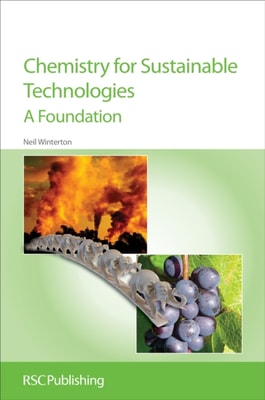
Following the success of the first edition, this fully updated and revised book continues to provide an interdisciplinary introduction to sustainability issues in the context of chemistry and chemical technology.
Time-activity diaries kept by members of the general public indicate that on average people spend around 90% of their time indoors, this is associated with considerable exposure to air pollutants as not only is there infiltration of pollutants from outdoors, there are also emissions indoors that can lead to elevated pollutant concentrations.
Anthropogenic radionuclides have been introduced into the environment by incidents such as nuclear weapon tests, accidents in nuclear power plants, transport accidents and accidental or authorised discharges from nuclear facilities.
Time-activity diaries kept by members of the general public indicate that on average people spend around 90% of their time indoors, this is associated with considerable exposure to air pollutants as not only is there infiltration of pollutants from outdoors, there are also emissions indoors that can lead to elevated pollutant concentrations.
Flood risk management requires a multi-disciplinary approach with experts from the fields of health, town planning, civil engineering, computer science and mathematical statistics.
Flood risk management requires a multi-disciplinary approach with experts from the fields of health, town planning, civil engineering, computer science and mathematical statistics.
This edited book includes over one hundred and eighty short papers that were presented during the third edition of EMCEI, which was held in Sousse, Tunisia, in June 2021.
Environmental analysis techniques have advanced due to the use of nanotechnologies in improving the detection sensitivity and miniaturization of the devices in analytical procedures.
Environmental forensics is emerging and evolving into a recognized scientific discipline with numerous applications, especially regarding chlorinated solvents.
The importance of reconciling the continuing needs of humankind with the protection of the environment and the earth's ability to provide for those needs is now better recognised.
This publication is based on peer-reviewed manuscripts from the 2014 International Network of Environmental Forensics (INEF) Conference held at St John's College, Cambridge.
This publication includes peer-reviewed manuscripts from the 2013 International Network of Environmental Forensics (INEF) Conference held at Pennsylvania State College, USA.
Environmental analysis techniques have advanced due to the use of nanotechnologies in improving the detection sensitivity and miniaturization of the devices in analytical procedures.