This book covers issues pertaining to uranium tailings with special reference to consolidation of radioactivity including systematic ecological strategy for consolidation of radionuclides in uranium tailings.
To properly operate a waterworks or wastewater treatment plant and to pass the examination for a waterworks/wastewater operator's license, it is necessary to know how to perform certain calculations.
To properly operate a waterworks or wastewater treatment plant and to pass the examination for a waterworks/wastewater operator's license, it is necessary to know how to perform certain calculations.
Bioconversion of agricultural and industrial wastes into useful products plays an important role both in the economy and in the prevention of environmental pollution.
Advanced Oxidation Processes for Micropollutant Remediation covers current state-of-the-art in advanced oxidation processes (AOP) for removal of micropollutants from industrial and pharmaceutical wastewater.
To properly operate a waterworks or wastewater treatment plant and to pass the examination for a waterworks/wastewater operator's license, it is necessary to know how to perform certain calculations.
This book covers issues pertaining to uranium tailings with special reference to consolidation of radioactivity including systematic ecological strategy for consolidation of radionuclides in uranium tailings.
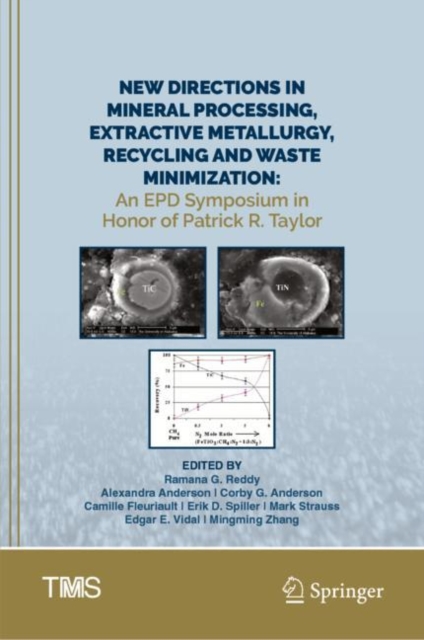
This collection addresses new research and technology for increased efficiency, energy reduction, and waste minimization in mineral processing, extractive metallurgy, and recycling.
Water, Land, and Forest Susceptibility and Sustainability, Volume 2: Insight Towards Management, Conservation and Ecosystem Services brings an interdisciplinary perspective to solving complex problems in sustainability, utilizing the latest research and technologies, and includes case studies that emphasize the applications of remote sensing, GIS, and image processing for addressing the current state and future needs to achieve sustainability.
The authors and editors of this volume state that with the intensive growth of global industrialization and urbanization, the consumption of various resources and materials, such as energy, minerals, and even water, is increasing at an amazing speed, which poses great pressure on material resources.
This book aims to provide academic and industrial applications advancing the critical role of circular economy principles in the sustainability of various resources.
This book explores state-of-art techniques based on methodological and modeling aspects of solid and hazardous waste management, specifically focusing on the recent trends in data acquisition and robust modeling of the results obtained.
The textile waste water is well known to contain many detrimental impacts in terms of its pollutants and the issues pertaining to its discharged without being untreated, or even discharged without meeting all stipulated parameters.
Microbial ecology is pivotal in wastewater treatment, where microorganisms play a vital role in breaking down organic matter and ultimately reduce the levels of contaminants in treated water, making it safe for reuse in agriculture, industry, and other applications.
This book deals with the general principles, policy instruments, sustainability of supply chain, and business of health-care waste (HCW) management including inputs on exercise in immune health defense against COVID 19.
This book highlights novel materials for dye-containing wastewater treatment and presents an up-to-date information on dye degradation/adsorption using new promising materials such as nanocomposites.
This book focuses on the ways in which military installations and small cities can implement and integrate triple net planning and energy, water, and waste sustainability strategies into broad installation operational management, arrive at the best decision, create policy and communicate effectively to stakeholders.
The globally escalating population necessitates production of more goods and services to fulfil the expanding demands of human beings which resulted in urbanization and industrialization.
This book reviews contaminants of emerging nature affecting the agroecosystem and includes important information regarding the their sources, types, transportation, environmental threats and strategies to decontaminate the affected agroecosystems.
This book provides an indispensable reference guide to the sustainable control and treatment of biomass residues from a wide variety of agroindustrial sources, e.
This book constitutes the 25th International Conference on Infrastructure and Environment (infraeco 2018) that focuses on rural problems connected with infrastructural equipment.
Pollution of waters by toxic metals is accelerating worldwide due to industrial and population growth, notably in countries having poor environmental laws, resulting in many diseases such as cancer.
Wastewater pollution is a major issue in the context of the future circular economy because all matter should be ultimately reused, calling for efficient depollution techniques.
This book presents advanced techniques for wastewater treatment and the chapters review the environmental impact of water pollution, the analysis of water quality, and technologies for the preservation of water resources.
In a world where waste incinerators are not an option and landfills are at over capacity, cities are hard pressed to find a solution to the problem of what to do with their solid waste.
A-Z guide to soil/plant/microbe-based wastewatertreatmentEngineers and planners eager to benefit from the costefficiencies and convenience of land treatment of waste will find practical guidelines in this comprehensive manual.
Household hazardous waste (HHW) is a topic that affects every individual and community given the nearly universal use, storage, and disposal of chemical consumer products.
Environmental Management of Waste Electrical and Electronic Equipment illustrates the socioeconomic, technical and environmental perspectives of WEEE, allowing for a better understanding on how to manage this rapidly growing waste stream.
Advanced Zero Waste Tools: Present and Emerging Waste Management Practices, Volume One in the Concepts of Advanced Zero Waste Tools series addresses the fundamental principles of zero waste that encourages the redesign of resource lifecycles so that products are reused.
Waste: A Handbook for Management, Second Edition, provides information on a wide range of hot topics and developing areas, such as hydraulic fracturing, microplastics, waste management in developing countries, and waste-exposure-outcome pathways.
The text comprehensively highlights the key issues surrounding the implementation of waste-to-energy systems, such as site selection, regulatory aspects and financial, and economic implications.