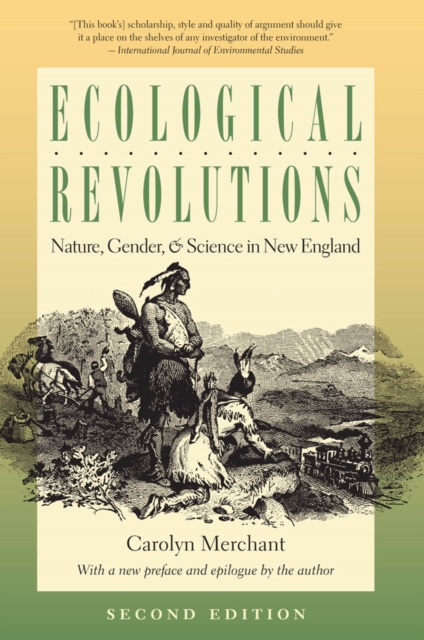
With the arrival of European explorers and settlers during the seventeenth century, Native American ways of life and the environment itself underwent radical alterations as human relationships to the land and ways of thinking about nature all changed.
This book offers a critical examination of the current approach to waste management, focusing on the fascinating idea of a circular economy is basically on: a homogeneous closed system, in which all waste is recycled and seamlessly recycled into production cycles , a concept that could be questioned in this book as the ultimate solution to our growing waste dilemma.
This book explores the transformative potential of artificial intelligence (AI) in addressing some of the most pressing global challenges identified by the United Nations' Sustainable Development Goals (SDGs).
Essay from the year 2004 in the subject Politics - Environmental Policy, grade: HD (High Distinction), Murdoch University (Institute for Sustainability and Technology Policy), course: Policy, Technology and Democracy, language: English, abstract: IntroductionToday's Windmills are taller than the cathedrals of the Middle Ages and the cooling towers of the atomic age.
In early North America, carrying watercraftusually canoesand supplies across paths connecting one body of water to another was essential in the establishment of both Indigenous and European mobility in the continents interior.
In early North America, carrying watercraftusually canoesand supplies across paths connecting one body of water to another was essential in the establishment of both Indigenous and European mobility in the continents interior.
Landfilling has been and still remains an important means of municipal solid waste management but it poses a threat to the purity of the environment, especially air.
Studienarbeit aus dem Jahr 2021 im Fachbereich Politik - Klima- und Umweltpolitik, Note: 10, Friedrich-Schiller-Universität Jena, Sprache: Deutsch, Abstract: In dieser Arbeit sollen zunächst die Begriffe Lärm und Luftreinhaltung aus technischer und juristischer Sicht dargestellt werden.
Studienarbeit aus dem Jahr 2020 im Fachbereich Politik - Klima- und Umweltpolitik, Note: 1,7, Gottfried Wilhelm Leibniz Universität Hannover (Institut für Politikwissenschaft), Sprache: Deutsch, Abstract: Wissenschaftler sind sich einig: Der Klimawandel ist real und muss zum Wohle der Umwelt gestoppt werden.
Artificial Intelligence in Tribology presents the use of machine learning, AI, neural networks, and optimization algorithms in studying friction, wear, and lubrication.
Artificial Intelligence in Tribology presents the use of machine learning, AI, neural networks, and optimization algorithms in studying friction, wear, and lubrication.
Academic Paper from the year 2021 in the subject Politics - Environmental Policy, grade: 1,3, University of Applied Sciences Augsburg, language: English, abstract: This paper addresses the risks posed by climate change in terms of financial instability.
Studienarbeit aus dem Jahr 2020 im Fachbereich Umweltwissenschaften, Note: 1,3, FernUniversität Hagen, Sprache: Deutsch, Abstract: Ziel dieser Arbeit ist es, die Umweltwirkungen der Fütterung von Insekten anstelle von Soja in Deutschland zu analysieren, wobei die beiden aktuell vielversprechendsten Insektenarten Schwarze Soldatenfliege (Hermetia illucens) und Mehlkäfer(larve) (Tenebrio molitor) betrachtet werden.
Academic Paper from the year 2020 in the subject Politics - Environmental Policy, , course: BALLB, language: English, abstract: The public trust doctrine (PTD) is a legal concept with ancient roots, and it is increasingly being examined as a framework for modern conservation.
Seminar paper from the year 2022 in the subject Politics - Environmental Policy, University of Heidelberg (Institut fur Politische Wissenschaft), language: English, abstract: This paper illustrates the conflict between the Sami and the Swedish mining industry in the famous case of Kallak (Sami: Gallok).
Studienarbeit aus dem Jahr 2020 im Fachbereich Politik - Klima- und Umweltpolitik, Note: 1,5, Hochschule Bremen (Gesellschaftswissenschaften), Veranstaltung: Europäisierung der Verwaltung, Aktuelle Probleme der Europapolitik, Sprache: Deutsch, Abstract: Diese Ausarbeitung beschäftigt sich mit der Europa 2020-Strategie, deren Ziele die Europäische Union nicht erreichen wird.
Studienarbeit aus dem Jahr 2022 im Fachbereich Politik - Klima- und Umweltpolitik, Note: 2,0, Technische Universität München, Sprache: Deutsch, Abstract: Die Arbeit befasst sich mit der Frage, welche Auswirkungen der Klimawandel auf die Sicherheit Europas beziehungsweise die Europäische Union hat und inwiefern sich diese auf deren politische Strategien niederschlagen.
Studienarbeit aus dem Jahr 2021 im Fachbereich Politik - Klima- und Umweltpolitik, Note: 1,7, Technische Universität München, Veranstaltung: Governance auf lokaler, nationaler und internationaler Ebene, Sprache: Deutsch, Abstract: Inwiefern können Smart Cities eine effektive Rolle im Kampf gegen den Klimawandel einnehmen?
Scientific Study from the year 2018 in the subject Engineering - Mining Engineering, grade: Masters Program graduation, Ethiopian Civil Service University (Institute of Leadership and Governance), course: Public policy Study, language: English, abstract: The objective of this study was to assess the Ethiopian Mining Policy and its Effect on natural and socio-economic environment in case of gold mining in Dhiba Batte, Reji and Sawana localities of Oddo Shakisso Wereda, Ethiopia.
Studienarbeit aus dem Jahr 2023 im Fachbereich Politik - Klima- und Umweltpolitik, Universität Hamburg, Sprache: Deutsch, Abstract: Diese Arbeit zielt darauf ab, die Verknüpfungen zwischen Klimaschutz, Kolonialismus und sozialer Gerechtigkeit zu beleuchten.
Bachelor Thesis from the year 2015 in the subject Environmental Sciences, grade: A, University of Nairobi (SBS), language: English, abstract: This project's aim was assessing the effectiveness of these bins in waste separation.
Academic Paper from the year 2020 in the subject Environmental Sciences, grade: 1,7, Pforzheim University, language: English, abstract: In this paper, the scientific background of the greenhouse effect, which is decisive for climate change, is presented.
Bachelor Thesis from the year 2020 in the subject Environmental Sciences, Royal University of Bhutan (College of Natural Resources), course: Environment and Climate studies, language: English, abstract: This study investigated the total Soil Organic Carbon (SOC) density and its distribution under two different forest types considering the change in carbon with elevation in two different depths of the soil in Nahi Gewog, Bhutan.
Master's Thesis from the year 2019 in the subject Organisation and administration - Public administration, grade: Very Good, , course: Business Administration, language: English, abstract: The main objective of the study is to establish the performance of GWSSS in terms of quality of water services, economicalefficiency, and operational sustainability against widely accepted key standard performance indicators and benchmarking the water utility against other well-performing utilities around East Africa for purposes of development of decision support tools for better management of the system.
Masterarbeit aus dem Jahr 2020 im Fachbereich Umweltwissenschaften, Note: 2,0, FernUniversität Hagen, Sprache: Deutsch, Abstract: Diese Arbeit skizziert die Geschichte der Klimawissenschaft, ihrer Erkenntnisse sowie ihrer Bündelung im IPCC sowie die Geschichte der Klimakontroverse.
Bachelorarbeit aus dem Jahr 2020 im Fachbereich Politik - Klima- und Umweltpolitik, Note: 1, Universität für Bodenkultur Wien (Department für Wirtschafts- und Sozialwissenschaften (WiSo)), Veranstaltung: Nachhaltige Entwicklung Grundlagen und Umsetzung, Sprache: Deutsch, Abstract: Österreich hat sich verpflichtet die von den Vereinten Nationen ins Leben gerufene Agenda für nachhaltige Entwicklung umzusetzen.
Seminar paper from the year 2021 in the subject Politics - Environmental Policy, grade: 1,0, , language: English, abstract: The following paper examines the implementation of indigenous rights in international climate policy to date.
Scientific Study from the year 2014 in the subject Environmental Sciences, , language: English, abstract: In this work, the author classifies various human activities that cause pollution, discusses water pollution in detail according to their characteristics, and takes a general view of water pollution taking into effect the legal regime existing in India.
Studienarbeit aus dem Jahr 2020 im Fachbereich Politik - Klima- und Umweltpolitik, Note: 1,0, Universität Münster, Sprache: Deutsch, Abstract: Die Frage nach der individuellen und staatlichen Verantwortung für nachhaltigen Konsum soll mit der Anwendung von staatlichen Green Nudges kombiniert werden.
Studienarbeit aus dem Jahr 2021 im Fachbereich Politik - Klima- und Umweltpolitik, Note: 1,3, Hochschule Anhalt - Standort Bernburg, Veranstaltung: Seminar, Sprache: Deutsch, Abstract: Die vorliegende Hausarbeit setzt sich mit dem Thema des Klimaschutzes als öffentliches Gut auseinander.
Studienarbeit aus dem Jahr 2020 im Fachbereich Politik - Klima- und Umweltpolitik, Note: 1, Zeppelin University Friedrichshafen, Sprache: Deutsch, Abstract: Gegenstand der Hausarbeit ist die Identifikation zentraler Berührungspunkte der Geoengineering-Anwendung mit der Ethik.
Master's Thesis from the year 2019 in the subject Politics - Environmental Policy, , language: English, abstract: The thesis at hand examines whether human capital endowment has significant explanatory power on foreign direct investments in OECD countries between 1985 and 2017.
Master's Thesis from the year 2022 in the subject Politics - Environmental Policy, grade: 1,5, University of Potsdam, language: English, abstract: This thesis aims to clarify how feasible Carbon Contracts for Difference (CCfDs) are and how they compare to other policy instruments.
Studienarbeit aus dem Jahr 2020 im Fachbereich Politik - Klima- und Umweltpolitik, Note: 1,30, Universitat Passau, Sprache: Deutsch, Abstract: Inwiefern beschreitet die Alternative fur Deutschland als Erganzung zur Leugnung der menschengemachten globalen Erwarmung eine weiterfuhrende programmatische Umweltpolitik?
Essay aus dem Jahr 2023 im Fachbereich Politik - Klima- und Umweltpolitik, , Sprache: Deutsch, Abstract: Gegen die hohen Vorgaben, Klimaschutzpolitik aktiv zu betreiben, kämpft dieser Tage die deutsche Bundespolitik:Das Titelbild von der Zeitschrift DER SPIEGEL Nr.
Studienarbeit aus dem Jahr 2021 im Fachbereich Politik - Klima- und Umweltpolitik, Note: 1,3, Hochschule Fulda, Sprache: Deutsch, Abstract: Die Hausarbeit soll erörtern, welche Akteure Einfluss auf die klimapolitischen Entscheidungen der Bundesregierung haben.
Seminar paper from the year 2020 in the subject Politics - Environmental Policy, grade: 1,0, University of Bamberg, language: English, abstract: This research paper deals with the current issue of the global climate crisis and the personal responsibility to act against it.
Essay aus dem Jahr 2023 im Fachbereich Politik - Klima- und Umweltpolitik, Note: 1,3, Ludwig-Maximilians-Universität München, Sprache: Deutsch, Abstract: Das Ziel dieses Essays ist es, das Thema der globalen Erwärmung aus Sicht der Klima-Ethik mit Fokus auf die Generationsgerechtigkeit zu betrachten.
Studienarbeit aus dem Jahr 2022 im Fachbereich Politik - Klima- und Umweltpolitik, Note: 1,7, Zeppelin University Friedrichshafen, Sprache: Deutsch, Abstract: Um die Forschungsfrage "Wie hängen die politische Orientierung und das Vertrauen in die Wissenschaft mit der Perzeption des Klimawandels zusammen?
Seminar paper from the year 2019 in the subject Politics - Environmental Policy, grade: 1,3, University of Applied Sciences Essen, language: English, abstract: This essay aims to first provide a theoretical basis to the reader, explaining the elemental scientific consent about climate change.