Managing colour from the design stage to the finished product can be a difficult activity as colour perception is subjective and can therefore be inconsistent.
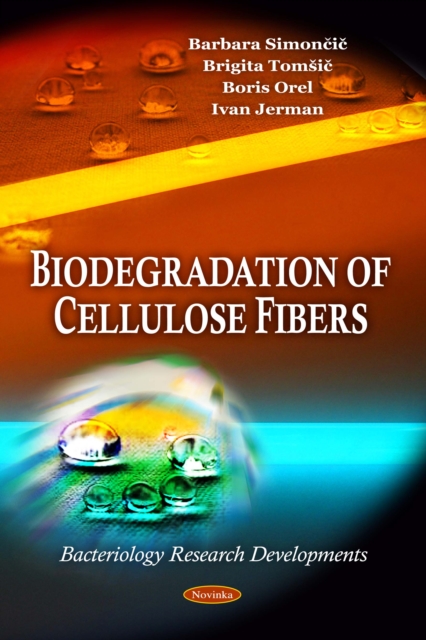
With increasing concerns regarding the effect the textile industry is having on the environment, more and more textile researchers, producers and manufacturers are looking to biodegradable and sustainable fibres as an effective way of reducing the impact textiles have on the environment.
It is a consumer's instinct to use the sense of touch when choosing a garment; to describe and assess the fabric quality and its suitability for a specific end use.
The technical developments in the sports clothing industry has resulted in the use of functional textiles for highly-specialised performances in different sports.
Electrochemistry is the study of chemical reactions with an exchange of electrons, and of the chemical phenomena that are caused by the action of applied currents and voltages.
The term 'textile composites' is often used to describe a rather narrow range of materials, based on three-dimensional reinforcements produced using specialist equipment.
Bast and Other Plant Fibres, a title in Woodhead Publishing's series on fibres published in association with The Textile Institute, UK, is the first book in over 50 years to cover the most interesting plant fibres and those with high annual production.
Fabric mechanics are fundamental to the way textiles are designed, tested and manufactured and underpin the way woven fabrics are used in the modern world.
Fashion and beauty have helped shape history and today more than ever, we find ourselves under increasing pressure to think about what we wear, what we look good in and how best to enhance our body shape and size.
The role of the textile finisher has become increasingly demanding, and now requires a careful balance between the compatibility of different finishing products and treatments and the application processes used to provide textiles with desirable properties.
This book examines the physical testing of textiles in the form of fibre, yarn and fabric, the emphasis throughout eing on standard and reproducible tests.
Understanding and predicting the structure and properties of woven textiles is important for achieving specific performance characteristics in various woven applications.
Despite the increased variety of manufactured fibres available to the textile industry, demand for cotton remains high because of its suitability on the basis of price, quality and comfort across a wide range of textile products.
It is a consumer's instinct to use the sense of touch when choosing a garment; to describe and assess the fabric quality and its suitability for a specific end use.
Electrochemistry is the study of chemical reactions with an exchange of electrons, and of the chemical phenomena that are caused by the action of applied currents and voltages.
Purple dye is extracted from the glands of the molluscs Hexaplex trunculus, Bolinus Brandaris and Stramonita Haemastoma which, through a chemical reaction of photosynthesis, produces hues ranging from dark red to bluish purple color.
Purple dye is extracted from the glands of the molluscs Hexaplex trunculus, Bolinus Brandaris and Stramonita Haemastoma which, through a chemical reaction of photosynthesis, produces hues ranging from dark red to bluish purple color.
Persian blue, pomegranate flower, spiny lobster, wine soup, pale flesh, dove breast, golden wax, grass green, green sand, rotten olive, modest plum, agate, rich French gray, gunpowder of the English…….
Persian blue, pomegranate flower, spiny lobster, wine soup, pale flesh, dove breast, golden wax, grass green, green sand, rotten olive, modest plum, agate, rich French gray, gunpowder of the English…….
This unique volume presents the latest developments in the field of advanced woven and braided textile composites, with particular emphasis on computational approaches (finite elements, meshfree).
Applications of Polymers and Plastics in Medical Devices: Design, Manufacture, and Performance is a comprehensive guide to plastic materials for medical devices, covering fundamentals, materials, applications and regulatory requirements.
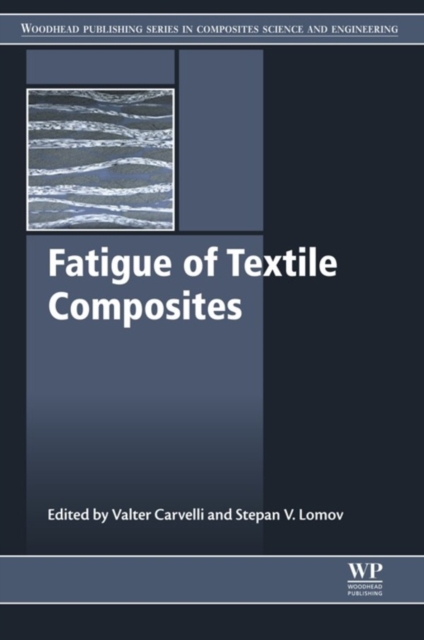
Fatigue of Textile Composites provides a current, state-of-art review on recent investigations on the fatigue behavior of composite materials, mainly those reinforced with textiles.
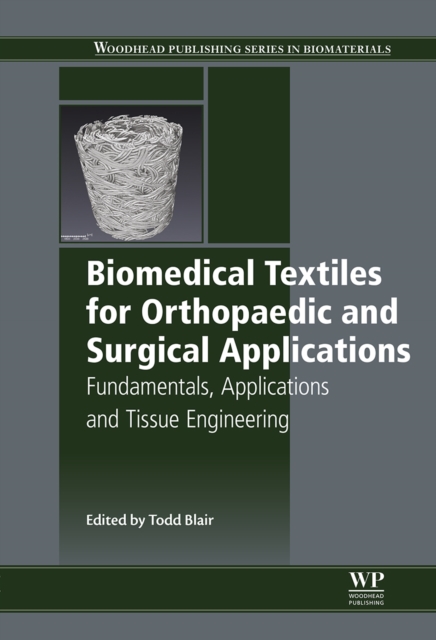
Recent concerns over the possible effects of metal-on-metal orthopaedic implants and the evolution of more natural structures made from fibre have made medical device manufacturers consider the potential of fibre.
In the Dictionary of textile finishing the textile engineer will find the correct technical terms for 16,000 keywords within their field of activity in the German language and vice versa.
The textile industry impacts the environment in a number of ways, including its use of resources, its impact on global warming, and the amount of pollution and waste it generates.
Natural fiber-reinforced composites have the potential to replace synthetic composites, leading to less expensive, stronger and more environmentally-friendly materials.
Silk is a natural, environmentally-friendly fibre with a remarkable range of properties, making it ideal for use in apparel and many other applications.
Textiles for Sportswear is an important book that systematically covers key trends in design and materials, the use of novel and smart fabrics, and a range of specific applications.
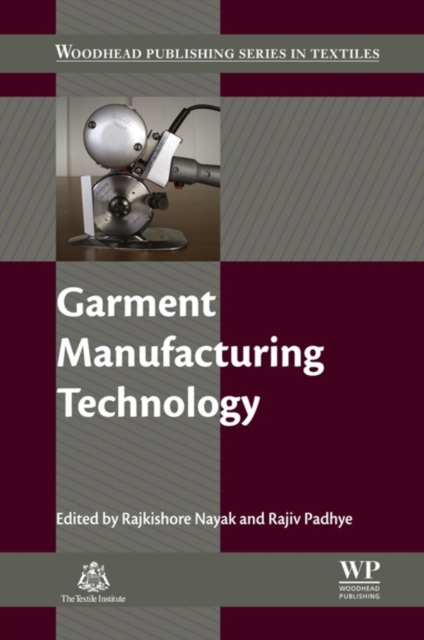
Garment Manufacturing Technology provides an insiders' look at this multifaceted process, systematically going from design and production to finishing and quality control.
Fabric Structures in Architecture covers the varying ways textiles and their properties are used in building construction, with particular focus given to tensile structures.
This student lab manual reinforces the chapter content and lecture material from Apparel Quality, but may also be used as a standalone product in conjunction with another apparel quality textbook.
In this book, the results of the chemical modification of cellulose fibres were presented, aimed at protecting the textile material against biodegradation.